
Lifestyle
Irish Exit Meaning: What It Is and Whether It’s Rude

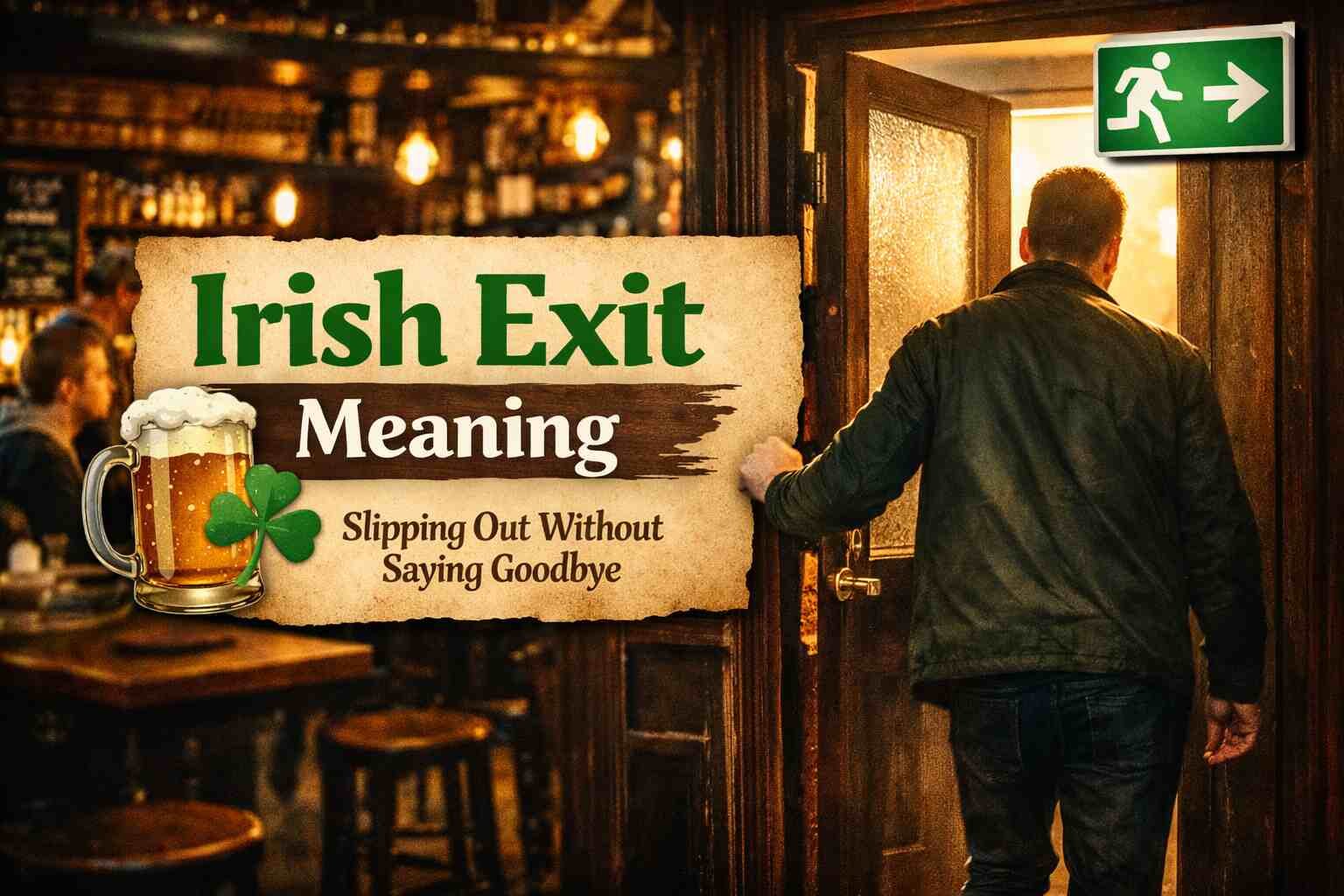
Many people have heard the term “Irish exit” but are unsure what it really means. Understanding the Irish exit meaning can help you navigate social situations more smoothly and decide when it is appropriate to use. This article explains the concept, its origins, social implications, and why some consider it rude while others see it as practical.
What Does Irish Exit Mean?
The Irish exit refers to leaving a social event without announcing your departure. Instead of saying goodbye or informing hosts, the person quietly slips away. This is most common at parties, gatherings, or casual events where saying goodbye to everyone might be inconvenient. The focus is on leaving without drawing attention, allowing a person to exit without interrupting the flow of the event.
Origins of the Term
The term has its roots in Irish social culture and American slang. While the exact origin is unclear, it became popular in the United States in the mid-20th century. Some sources suggest it arose as a playful stereotype about Irish social habits, while others claim it simply reflects a practical approach to leaving parties. Regardless of its origin, the term is now widely recognized in English-speaking countries.
Why People Use an Irish Exit
People choose an Irish exit for several reasons:
- Avoiding long or awkward goodbyes
- Minimizing attention or disruption
- Feeling shy or socially anxious
- Simply wanting to leave without fuss
In many cases, the Irish exit is not about disrespect but convenience. It allows people to exit efficiently without drawing focus to themselves or creating awkward moments for others.
Social Perceptions of an Irish Exit
Whether an Irish exit is considered rude often depends on the social context. Among close friends, leaving without notice may be acceptable. At formal events, it might seem impolite. Hosts may feel disappointed if they never got a chance to say goodbye, but for casual gatherings, many understand it as a practical way to leave. Social etiquette experts often advise balancing your need for a quiet exit with awareness of the host’s expectations.
The Difference Between an Irish Exit and Ghosting
An Irish exit should not be confused with ghosting. Ghosting happens when someone abruptly cuts off communication without explanation, often in personal relationships. An Irish exit is a brief, situational act of leaving a social event quietly, not ending a relationship. Understanding this distinction is important, as the social consequences differ significantly.
Tips for a Polite Irish Exit
If you plan to leave quietly, there are ways to do it politely:
- Slip out when conversation naturally pauses
- Leave a note or message for the host afterward
- Say a quick goodbye to one or two people close to you
- Avoid leaving without any acknowledgment at formal events
These strategies allow you to respect the host and attendees while still avoiding prolonged farewells.
When an Irish Exit Might Be Rude
Despite its practicality, an Irish exit can sometimes be perceived as rude:
- At intimate gatherings where personal farewells matter
- During events with small groups, where your absence is noticed
- When the host expects acknowledgment from all guests
In these situations, a quiet word or message expressing gratitude can prevent hurt feelings and maintain social harmony.
Cultural Differences in Social Departures
Different cultures have varying expectations for leaving events. Some places encourage long, drawn-out goodbyes, while others value discretion and efficiency. Understanding local social norms can help you decide whether an Irish exit is appropriate, minimizing the risk of offending others while respecting personal comfort.
Conclusion
The Irish exit meaning reflects a social practice of leaving events without formal goodbyes. While it is not inherently rude, context matters. People use it for convenience, efficiency, or to avoid awkward moments. By understanding when and how to use an Irish exit politely, you can leave gatherings gracefully without upsetting hosts or guests.
More Details : Gyatt Meaning: Understanding Its Origins and Significance
FAQs
- Is an Irish exit considered rude?
It depends on the event. At casual gatherings, it is usually fine, but at formal events, it might be seen as impolite. - Where did the term Irish exit come from?
It originated from Irish social habits and American slang, becoming popular in the mid-20th century. - How can I do an Irish exit politely?
Slip out quietly, leave a message for the host, or say a quick goodbye to a close friend. - Is an Irish exit the same as ghosting?
No. An Irish exit is leaving a social event quietly, while ghosting ends communication in a relationship. - When should I avoid an Irish exit?
Avoid it at intimate or formal gatherings where personal farewells are expected.

12 Best Omegle Alternatives for Random Video Chat and Meeting New People

Dbxbqm Meaning: Why It Appears When You Try to Type YouTube

Immediate Loading Implants: How “Fixed Teeth in 48 Hours” Really Works

How UK Mobile Proxies Help Businesses Test Their Websites

Gen AI in Supply Chain: Using Supply Chain Benchmarks to Improve Performance

What Is the UK Theory Test? How It Works, Cost and Pass Mark

Weather the Storm: Why Totally Branded Umbrellas are the UK’s Most Appreciated Gift

How to Store, Wind, and Travel With Your Automatic Watch Collection Without Damaging It

What Do HubSpot Onboarding Services Include?

AI in Supply Chain: How AI Consulting Services Help Build More Intelligent and Resilient Operations
Immediate Loading Implants: How “Fixed Teeth in 48 Hours” Really Works
How UK Mobile Proxies Help Businesses Test Their Websites
Gen AI in Supply Chain: Using Supply Chain Benchmarks to Improve Performance
12 Best Omegle Alternatives for Random Video Chat and Meeting New People
Dbxbqm Meaning: Why It Appears When You Try to Type YouTube
12 Best Omegle Alternatives for Random Video Chat and Meeting New People
Dbxbqm Meaning: Why It Appears When You Try to Type YouTube
Immediate Loading Implants: How “Fixed Teeth in 48 Hours” Really Works
How UK Mobile Proxies Help Businesses Test Their Websites
Gen AI in Supply Chain: Using Supply Chain Benchmarks to Improve Performance
What Is the UK Theory Test? How It Works, Cost and Pass Mark
Weather the Storm: Why Totally Branded Umbrellas are the UK’s Most Appreciated Gift
How to Store, Wind, and Travel With Your Automatic Watch Collection Without Damaging It
What Do HubSpot Onboarding Services Include?
AI in Supply Chain: How AI Consulting Services Help Build More Intelligent and Resilient Operations
-

 Tech9 months ago
xxx is equal to 2022: A Complete Informative Explanation of a Cubic Equation
-

 Celebrity8 months ago
Izzie Balmer Partner: A Deep Dive into the Relationship with Will Hawley
-

 Entertainment9 months ago
The Artistic World of Gege Akutami: A Mastermind Behind Jujutsu Kaisen
-

 Food5 months ago
Best Sushi Rice Brands: A Complete Guide to Choosing the Right Rice for Sushi