
Tech
Best Cameras for Vlogging: A Complete Buyer’s Guide for Modern Content Creators

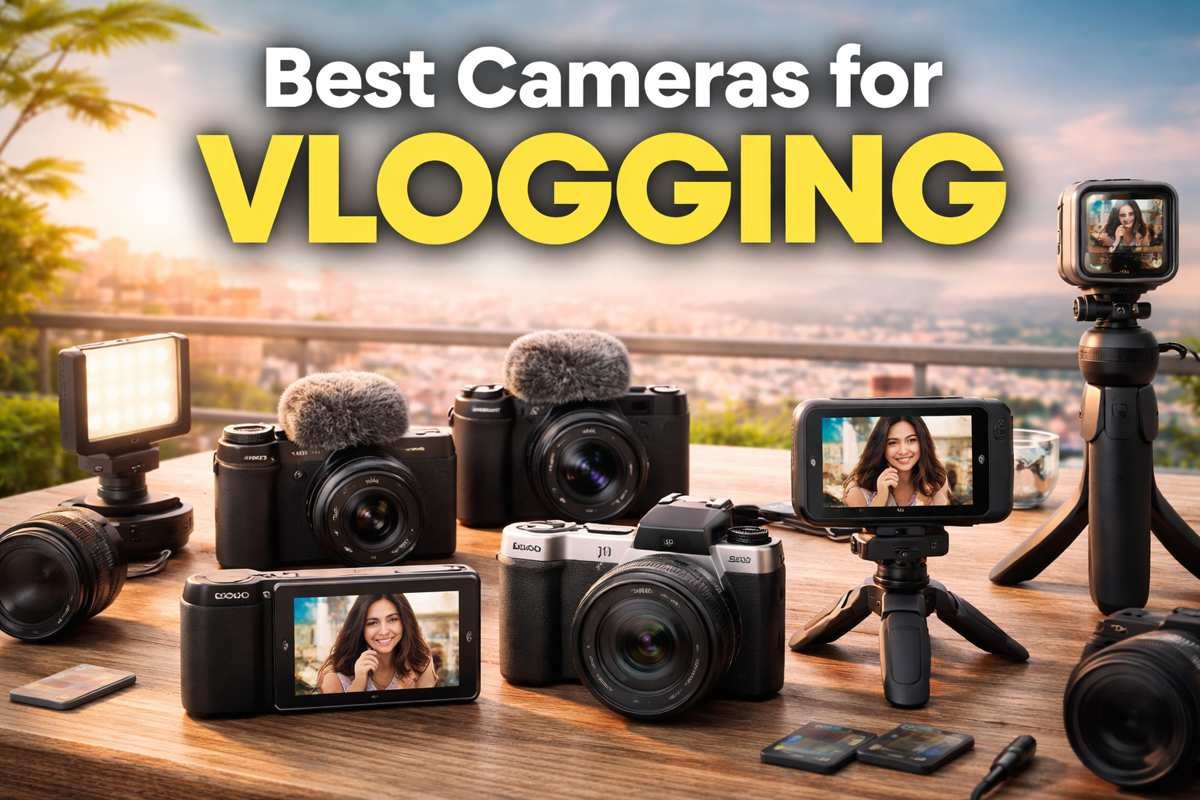
Vlogging is no longer just about turning on a camera and talking. Today’s viewers expect clean visuals, stable footage, and clear audio. Whether you are filming daily life, travel adventures, or educational content, your camera plays a big role in how professional your videos feel. The best cameras for vlogging are not just about high resolution; they are about reliability, ease of use, and how well they fit your style of content.
A good camera helps you focus on storytelling instead of fighting technical problems. When your gear works smoothly, you spend less time fixing issues and more time creating better videos.
Understanding Your Vlogging Style First
Before looking at any camera model, it is important to understand what kind of videos you want to make. A travel vlogger usually needs something small, light, and well-stabilized. A studio-based creator may prefer better lens options and stronger low-light performance. Someone who records long talking videos needs good heat management and solid battery life.
Your content style should guide your buying decision. The right camera is the one that fits your workflow, not just the one with the most impressive specifications on paper.
Image Quality and Sensor Size Explained
Sensor size affects how your videos look, especially in low light. Larger sensors usually capture more light, which means cleaner footage and better background blur. Smaller sensors can still look great in good lighting and often come in more compact bodies.
For most vloggers, modern cameras with medium or small sensors are more than enough. The key is not chasing the biggest sensor, but choosing a camera that gives consistent, reliable results in the situations you actually film in.
Resolution and Real-World Use
4K video has become the standard for many creators, mainly because it allows cropping and reframing during editing without losing much quality. That said, high-quality 1080p is still perfectly usable for many platforms. What matters more than resolution is bitrate, color quality, and sharpness.
If you want some future-proofing and editing flexibility, 4K is a smart choice. If you value faster workflows and smaller files, good Full HD can still serve you well.
Autofocus: The Feature You Should Not Ignore
For solo creators, reliable autofocus is one of the most important features. A camera that can track your face and eyes smoothly makes a huge difference in video quality. Nothing looks more unprofessional than a video that keeps going in and out of focus.
Modern cameras with advanced autofocus systems allow you to move naturally while staying sharp in the frame, which is especially useful for walking shots or dynamic scenes.
Stabilization for Handheld Shooting
Most vlogs are shot handheld, which makes stabilization extremely important. Some cameras offer in-body stabilization, others rely on lens stabilization or digital stabilization. The best results usually come from combining these systems.
Good stabilization makes your videos easier to watch and gives them a more polished, professional feel, even when you are filming while walking or moving quickly.
Audio Quality Is Just as Important as Video
Viewers will often tolerate average video quality, but they rarely forgive bad audio. Wind noise, echo, or muffled sound can quickly push people away from your content. That is why a camera with an external microphone input is a big advantage.
Even a small external microphone can dramatically improve your sound quality and make your videos feel more serious and trustworthy.
Screen Design and Ease of Use
A flip-out or fully articulating screen is almost essential for vlogging. It lets you see yourself while recording, check framing, and make sure focus and exposure are correct. Touchscreen controls also make it easier to change settings quickly, especially when filming in public or in fast-changing environments.
Battery Life and Recording Limits
Short battery life can interrupt your shooting and slow you down. Some cameras allow charging through USB-C or can run on a power bank, which is very useful for long recording sessions. It is also important to check whether a camera has recording limits or overheating issues, especially if you plan to record long videos.
A camera that stops recording unexpectedly can be very frustrating, particularly during interviews or important moments.
Camera Example 1: Sony ZV-E10
The Sony ZV-E10 is designed specifically with content creators in mind. It offers excellent autofocus, good 4K video quality, and interchangeable lenses in a relatively compact body.
Pros of Sony ZV-E10
- Excellent and reliable autofocus with eye tracking
- Interchangeable lenses for future upgrades
- Good 4K video quality with sharp details
- Lightweight and easy to carry
Cons of Sony ZV-E10
- No in-body image stabilization
- Battery life is average, not great
- Rolling shutter can be noticeable in fast movements
This camera is a strong choice for creators who want flexibility and top-tier autofocus without moving to a bulky setup.
Camera Example 2: Canon EOS R10
The Canon EOS R10 is a fast and responsive mirrorless camera that works well for both video and photography. It offers good color science, reliable autofocus, and solid 4K performance.
Pros of Canon EOS R10
- Very good autofocus with face and eye detection
- Beautiful color straight out of the camera
- Good 4K video quality with oversampling
- Comfortable grip and easy controls
Cons of Canon EOS R10
- No in-body stabilization
- Battery life could be better
- RF lenses can be more expensive
This camera is ideal for creators who want great colors, fast performance, and a camera that can also handle photography alongside video work.
Camera Example 3: Sony ZV-1
The Sony ZV-1 is a compact, all-in-one camera that is extremely popular among vloggers. It comes with a built-in lens, strong autofocus, and good stabilization for its size.
Pros of Sony ZV-1
- Very compact and travel-friendly
- Excellent autofocus for its class
- Built-in lens designed for vlogging
- Good image quality in a small body
Cons of Sony ZV-1
- No interchangeable lenses
- Smaller sensor compared to mirrorless cameras
- Can overheat in long 4K recordings
This camera is perfect for creators who want something simple, portable, and easy to use without worrying about lenses.
Camera Example 4: GoPro Hero Series (Latest Models)
Action cameras like the GoPro are built for movement, adventure, and rough conditions. They are not traditional vlogging cameras, but they are extremely useful for travel, sports, and outdoor content.
Pros of GoPro Cameras
- Excellent stabilization
- Very rugged and waterproof
- Extremely wide field of view
- Great for action and travel shots
Cons of GoPro Cameras
- Not ideal for indoor talking-head videos
- Small sensor struggles in low light
- Limited control over depth of field
A GoPro works best as a secondary camera or for creators who focus heavily on action and outdoor content.
Lenses and Future Growth
If you choose a camera with interchangeable lenses, you open the door to future upgrades. A wide-angle lens is great for vlogging, but later you might want a fast prime lens for low light or a zoom lens for events. A good lens ecosystem means your camera can grow with your content instead of being replaced too soon.
Workflow, Connectivity, and File Handling
Fast file transfer can save a lot of time. Cameras with good Wi-Fi, Bluetooth, or USB-C connections make it easier to move footage to your phone or computer. This is especially useful if you post frequently and want a smooth, fast workflow.
Good file management and reliable memory cards are also important. Losing footage due to corrupted files or slow cards can be very frustrating.
Build Quality and Daily Use
If you vlog outdoors or travel often, build quality matters. A camera that can handle dust, light rain, and temperature changes will last longer and cause fewer problems. You do not need a fully rugged camera, but solid construction is always a plus.
Budget and Smart Spending
There is no single price point that defines quality. Some affordable cameras already offer excellent results, while more expensive models add comfort, reliability, and flexibility. The smart approach is to spend money where it actually improves your content, such as autofocus, audio support, and stabilization.
Chasing the most expensive option rarely makes sense if it does not match your real needs.
Final Thoughts on Choosing the Right Camera
The best cameras for vlogging are the ones that disappear into your workflow and let you focus on your story. When your camera is easy to use, reliable, and suited to your style, your content naturally improves. Instead of chasing trends, choose a tool that supports how you actually create videos.
Good storytelling, clear audio, and consistent quality will always matter more than having the newest gear.
More Details : A Practical Look at the Most Impactful Marketing Campaigns of 2025
Short FAQs
Is 4K necessary for vlogging?
4K is useful for cropping and future-proofing, but high-quality 1080p is still perfectly fine for many platforms.
Do I need interchangeable lenses?
Not necessarily. Fixed-lens cameras are simpler and more portable, while interchangeable lenses offer more creative flexibility.
How important is autofocus?
Very important, especially for solo creators. Good autofocus keeps you sharp and saves you from ruined shots.
Should I buy a camera or use my phone?
Modern phones are great for starting out. A dedicated camera makes sense when you want better control, audio, and consistency.
What matters more: camera or microphone?
Both matter, but bad audio ruins videos faster than average visuals. Always prioritize good sound.

The Life of Chuck: A Deep Dive into an Enigmatic Film

Encanto Characters Explained: The Madrigal Family, Their Gifts, and What They Mean

I Tested Originality.AI’s AI Detector: A Comprehensive Review

The Ultimate Guide to Literary Devices: Exploring the Tools of Writing

What Does “Tralalero Tralala” Mean? Unpacking the Mystery

Apothecary Diaries Season 3: Everything You Need to Know About the Upcoming Installment

10 Things You Should Know About Yuta Okkotsu Before Jujutsu Kaisen Season 3

Jurassic World Rebirth Dinosaurs: A Deep Dive into the New Dinosaurs and Their Threat Levels

The Red String Theory: Exploring Fate and Connection

ReMarkable 2 Writing Tablet: A Comprehensive Review of Its Features, Performance, and Benefits

Semana Santa 2026: Dates, Traditions, and Global Celebrations

Understanding pi123: Meaning, Uses, and Why It Matters

Pedantic: Meaning, Importance, and Why Being Pedantic Can Actually Be a Strength

What Is a Runtime Environment? A Complete Beginner-Friendly Guide

10 Best Coding Podcasts Every Developer Should Listen to in 2026

A Practical Look at the Most Impactful Marketing Campaigns of 2025

Claude Cowork: A Complete Guide to Anthropic’s AI Desktop Agent

Debate Unlocked: Are There More Doors or Wheels in the World?

Beyond the Hype: A Practical Look at SOUL AI

Playing Games On Blog Playbattlesquare Gaming Hub: Smart Ways to Learn, Play, and Improve Online
The Life of Chuck: A Deep Dive into an Enigmatic Film
Encanto Characters Explained: The Madrigal Family, Their Gifts, and What They Mean
I Tested Originality.AI’s AI Detector: A Comprehensive Review
The Ultimate Guide to Literary Devices: Exploring the Tools of Writing
What Does “Tralalero Tralala” Mean? Unpacking the Mystery
Apothecary Diaries Season 3: Everything You Need to Know About the Upcoming Installment
10 Things You Should Know About Yuta Okkotsu Before Jujutsu Kaisen Season 3
Jurassic World Rebirth Dinosaurs: A Deep Dive into the New Dinosaurs and Their Threat Levels
The Red String Theory: Exploring Fate and Connection
ReMarkable 2 Writing Tablet: A Comprehensive Review of Its Features, Performance, and Benefits
-

 Tech1 month ago
xxx is equal to 2022: A Complete Informative Explanation of a Cubic Equation
-

 Entertainment2 months ago
The Artistic World of Gege Akutami: A Mastermind Behind Jujutsu Kaisen
-

 Entertainment2 months ago
Jujutsu Kaisen Modulo: A Deep Informative Exploration of Power Systems, Symbolism, and Modern Anime Culture
-

 Entertainment2 months ago
Muichiro Personality Explained: Traits, Mindset, and Emotional Depth