
Tech
How to Fix the P0420 Engine Code: Catalyst System Efficiency Below Threshold

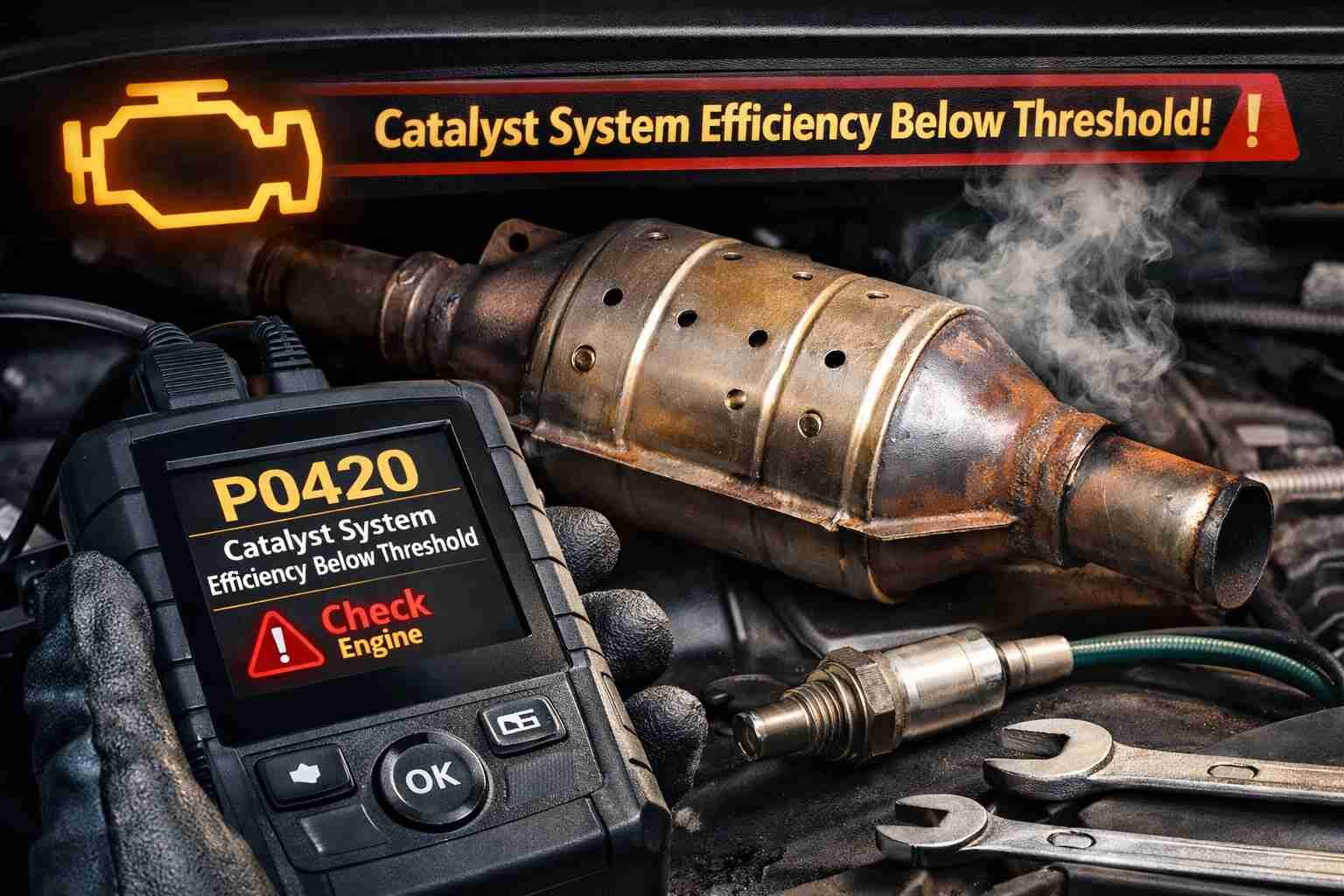
The P0420 engine code is one of the most common alerts drivers see when their check engine light turns on. It indicates that the vehicle’s catalytic converter is not performing as efficiently as it should. This condition is officially known as “Catalyst system efficiency below threshold.” The catalytic converter plays a crucial role in reducing harmful emissions, making your vehicle compliant with environmental standards. Ignoring this issue can lead to increased emissions, poor fuel economy, and long-term engine damage.
Understanding the Catalytic Converter
The catalytic converter is a component in the exhaust system designed to convert harmful gases, such as carbon monoxide, hydrocarbons, and nitrogen oxides, into less harmful emissions like carbon dioxide and water vapor. Sensors located before and after the catalytic converter monitor oxygen levels and send this data to the engine control unit (ECU). When the ECU detects that the conversion efficiency falls below the expected threshold, it triggers the P0420 code, signaling a problem in the catalyst system.
Common Causes of Catalyst System Efficiency Below Threshold
Several factors can trigger a “Catalyst system efficiency below threshold” alert. These include:
- Aging catalytic converter: Over time, the converter’s internal materials degrade, reducing its ability to process exhaust gases efficiently.
- Oxygen sensor failure: Faulty sensors before or after the catalytic converter may send incorrect data to the ECU.
- Exhaust leaks: Leaks can allow unmonitored air into the exhaust system, affecting readings.
- Engine issues: Misfires, fuel system problems, or oil leaks can damage the catalytic converter over time.
- Poor fuel quality: Using low-grade fuel with contaminants can reduce catalyst efficiency.
Symptoms of Catalyst System Efficiency Below Threshold
Drivers can notice several signs when a catalytic converter begins to underperform:
- Check engine light: The most immediate indicator is the illumination of the engine warning light.
- Reduced engine performance: Acceleration may feel sluggish, and the engine may hesitate under load.
- Lower fuel efficiency: The engine may consume more fuel as it compensates for incomplete combustion.
- Strange odors: A failing converter may emit a sulfur-like smell from the exhaust.
- Failed emissions test: Vehicles with reduced catalyst efficiency often fail regulatory emissions tests.
Diagnostic Process
Proper diagnosis is essential before replacing any components. Steps include:
- OBD-II scanner reading: Confirm the P0420 code and check for additional codes that may point to related issues.
- Visual inspection: Look for exhaust leaks, damaged wiring, or signs of overheating near the catalytic converter.
- Oxygen sensor testing: Measure voltage fluctuations and response times to ensure accurate readings.
- Temperature checks: Use an infrared thermometer to compare temperatures at the converter’s inlet and outlet. A significant difference may indicate inefficient processing.
- Fuel system check: Ensure injectors, spark plugs, and ignition components are functioning correctly.
Repair Options for Catalyst System Efficiency Below Threshold
After diagnosing the root cause, there are several repair strategies:
- Oxygen sensor replacement: If sensors are faulty, replacing them can restore proper readings and temporarily resolve the P0420 code.
- Catalytic converter replacement: A worn or damaged converter often requires a full replacement. OEM parts are recommended for long-term efficiency.
- Repairing exhaust leaks: Sealing leaks can correct oxygen readings and improve catalyst performance.
- Addressing engine issues: Fix misfires, oil consumption, or fuel system problems to prevent further catalyst damage.
- Using fuel additives: Certain additives can help clean deposits in the exhaust system, improving efficiency in minor cases.
Preventive Measures
Maintaining a catalytic converter and its related systems can prevent the P0420 code:
- Use high-quality fuel: Avoid fuels with high sulfur content or additives that leave deposits.
- Regular maintenance: Replace spark plugs, fuel filters, and oxygen sensors as recommended.
- Fix engine issues promptly: Misfires and oil leaks accelerate catalyst deterioration.
- Avoid harsh driving conditions: Excessive short trips and stop-and-go driving can prevent the converter from reaching optimal operating temperatures.
Cost Considerations
Repairing a catalyst system can be expensive. Replacing an oxygen sensor typically costs between $100 and $200, while a new catalytic converter can range from $500 to $2,500 depending on the vehicle make and model. Labor costs can add an additional $100 to $300. Understanding the cost of each repair helps in planning maintenance and deciding between temporary fixes and long-term solutions.
Conclusion
A P0420 engine code, or “Catalyst system efficiency below threshold,” should never be ignored. Identifying the root cause is crucial to restoring engine performance, reducing emissions, and preventing long-term damage. Regular maintenance, prompt attention to engine issues, and using high-quality fuel can significantly extend the life of a catalytic converter and maintain vehicle efficiency.
More Details : First Date Questions: 33 Smart and Engaging Questions to Ask
FAQs
- Can I drive with a P0420 code?
Yes, but driving for long periods may worsen engine performance and emissions. - Will cleaning the catalytic converter fix the problem?
It may help in minor cases, but significant damage usually requires replacement. - How long does a catalytic converter last?
Typically, 70,000 to 100,000 miles, depending on driving habits and maintenance. - Can a bad oxygen sensor trigger P0420?
Yes, faulty sensors can misreport efficiency, causing the P0420 code. - Is it safe to ignore the P0420 code?
No, ignoring it can lead to increased emissions, failed inspections, and potential engine damage.

12 Best Omegle Alternatives for Random Video Chat and Meeting New People

Dbxbqm Meaning: Why It Appears When You Try to Type YouTube

Immediate Loading Implants: How “Fixed Teeth in 48 Hours” Really Works

How UK Mobile Proxies Help Businesses Test Their Websites

Gen AI in Supply Chain: Using Supply Chain Benchmarks to Improve Performance

What Is the UK Theory Test? How It Works, Cost and Pass Mark

Weather the Storm: Why Totally Branded Umbrellas are the UK’s Most Appreciated Gift

How to Store, Wind, and Travel With Your Automatic Watch Collection Without Damaging It

What Do HubSpot Onboarding Services Include?

AI in Supply Chain: How AI Consulting Services Help Build More Intelligent and Resilient Operations
Immediate Loading Implants: How “Fixed Teeth in 48 Hours” Really Works
How UK Mobile Proxies Help Businesses Test Their Websites
Gen AI in Supply Chain: Using Supply Chain Benchmarks to Improve Performance
12 Best Omegle Alternatives for Random Video Chat and Meeting New People
Dbxbqm Meaning: Why It Appears When You Try to Type YouTube
12 Best Omegle Alternatives for Random Video Chat and Meeting New People
Dbxbqm Meaning: Why It Appears When You Try to Type YouTube
Immediate Loading Implants: How “Fixed Teeth in 48 Hours” Really Works
How UK Mobile Proxies Help Businesses Test Their Websites
Gen AI in Supply Chain: Using Supply Chain Benchmarks to Improve Performance
What Is the UK Theory Test? How It Works, Cost and Pass Mark
Weather the Storm: Why Totally Branded Umbrellas are the UK’s Most Appreciated Gift
How to Store, Wind, and Travel With Your Automatic Watch Collection Without Damaging It
What Do HubSpot Onboarding Services Include?
AI in Supply Chain: How AI Consulting Services Help Build More Intelligent and Resilient Operations
-

 Tech9 months ago
xxx is equal to 2022: A Complete Informative Explanation of a Cubic Equation
-

 Celebrity8 months ago
Izzie Balmer Partner: A Deep Dive into the Relationship with Will Hawley
-

 Entertainment9 months ago
The Artistic World of Gege Akutami: A Mastermind Behind Jujutsu Kaisen
-

 Food5 months ago
Best Sushi Rice Brands: A Complete Guide to Choosing the Right Rice for Sushi