
Entertainment
Kaigaku: The Rise, Fall, and Meaning of a Forgotten Warrior

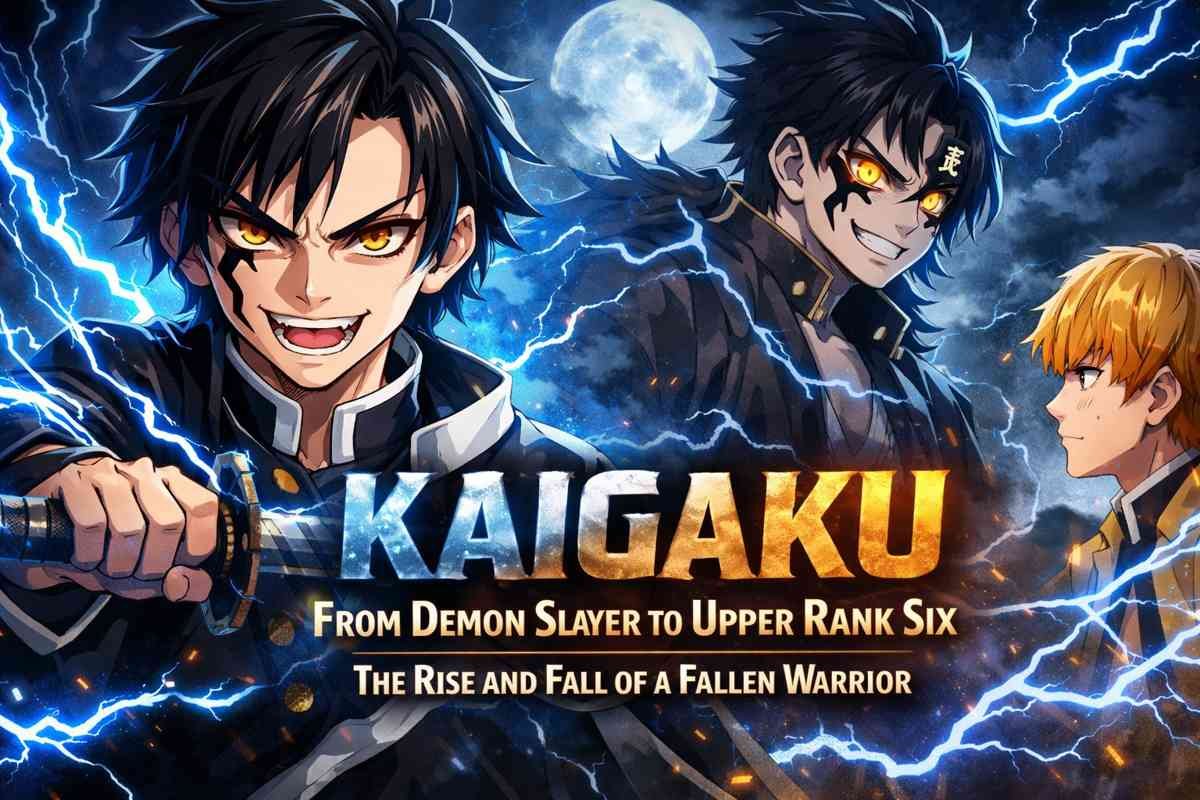
Kaigaku is one of the most morally complex figures in Demon Slayer: Kimetsu no Yaiba. His journey is not defined by heroism or redemption but by fear, envy, and poor choices. Through his story, the series explores how talent alone is meaningless without discipline, humility, and moral strength. His arc adds emotional weight and realism to the narrative by showing how internal weakness can be more destructive than external enemies.
Childhood Shaped by Fear and Survival
Kaigaku grew up in harsh conditions where survival outweighed morality. Living in constant danger taught him to value self-preservation above all else. Unlike other characters who used suffering as motivation to grow stronger emotionally, he allowed fear to shape his decisions. This early mindset became the foundation for his later betrayals and moral collapse.
Life Under Gyomei Himejima’s Care
During his childhood, Kaigaku was taken in by Gyomei Himejima, who offered shelter, kindness, and structure. Despite this rare opportunity for safety, he failed to embrace responsibility. When danger arrived, he chose self-interest over the lives of others, an act that permanently scarred everyone involved. This moment represents the first major turning point in his descent.
Training as a Demon Slayer
After escaping his past, Kaigaku became a disciple of Jigoro Kuwajima, the former Thunder Hashira. He showed strong physical ability and quickly mastered combat techniques. However, his training was fueled by pride and competition rather than respect for the discipline. This imbalance prevented him from fully understanding the philosophy behind the sword.
Rivalry with Zenitsu Agatsuma
Sharing the same mentor as Zenitsu Agatsuma intensified Kaigaku’s jealousy. While Zenitsu lacked confidence, he possessed humility and sincerity, traits that earned genuine respect. Kaigaku, on the other hand, believed talent alone entitled him to recognition. This rivalry highlights the contrast between external skill and internal character.
Personality and Inner Conflict
Kaigaku’s personality is defined by arrogance masking deep insecurity. He feared being seen as weak and constantly measured himself against others. Instead of learning from failure, he blamed circumstances and people around him. This refusal to self-reflect trapped him in a cycle of resentment and emotional isolation.
The Choice That Changed Everything
Faced with death during a confrontation with demons, Kaigaku made a defining decision: he chose transformation over mortality. This was not an act of manipulation but a conscious surrender to fear. By rejecting death, he also rejected honor, discipline, and accountability. This choice sealed his fate and erased any chance of redemption.
Position Among the Upper Moons
After becoming a demon, Kaigaku achieved the rank of Upper Moon Six. While this position reflected his raw power, it also exposed his lack of emotional control. Compared to other Upper Moons, he lacked patience, experience, and strategic depth. His strength was real, but it was unstable and poorly managed.
Combat Style and Abilities
Kaigaku retained Thunder Breathing techniques but distorted them using demonic power. His attacks became faster and more destructive, focusing on overwhelming force rather than precision. This fighting style mirrored his personality—aggressive, reckless, and driven by insecurity rather than mastery.
Symbolism Within the Story
Kaigaku symbolizes wasted potential. His arc demonstrates that strength without values leads to destruction. Where other characters grow through pain, he collapses under it. His story reinforces the idea that fear-driven decisions ultimately destroy both purpose and identity.
Narrative Importance in Demon Slayer
Within the larger story, Kaigaku serves as a dark reflection of what a Demon Slayer can become when discipline is abandoned. His presence deepens the emotional impact of the final arcs and strengthens the moral themes of the series. He exists not as a simple villain, but as a warning.
The Final Confrontation
Kaigaku’s final battle represents more than physical defeat. It is the culmination of every poor decision he made throughout his life. His loss proves that power obtained without inner growth is fragile. The confrontation brings emotional closure to long-standing conflicts and reinforces the triumph of perseverance over fear.
Legacy and Fan Perspective
Among fans, Kaigaku remains one of the most debated characters. While his actions are widely condemned, his motivations are understood. Many view him as a tragic example of how fear and pride can destroy someone with great potential. This complexity keeps discussions about his character alive.
Cultural and Moral Themes
Kaigaku’s story aligns with traditional themes found in Japanese storytelling, emphasizing accountability, discipline, and honor. His downfall illustrates the consequences of rejecting responsibility and choosing shortcuts to power. These lessons resonate beyond the series itself.
Why Kaigaku Still Matters
Kaigaku matters because his journey feels real. Not everyone rises above hardship, and not every skilled individual becomes a hero. His story reminds audiences that character, not talent, defines destiny. This realism adds depth and credibility to the world of Demon Slayer.
Short FAQs
Who is Kaigaku in Demon Slayer?
Kaigaku is a former Demon Slayer who later became an Upper Rank demon due to fear and ambition.
Why did Kaigaku betray others?
He consistently chose self-preservation over responsibility and moral duty.
What makes Kaigaku different from other demons?
He willingly chose transformation instead of being manipulated or forced.
Was Kaigaku stronger than Zenitsu?
He had power, but Zenitsu surpassed him through discipline and emotional growth.
What lesson does Kaigaku’s story teach?
Talent without integrity leads to downfall.
Read More About : Alice in Borderland Anime: Inside the Deadly Games and Their Hidden Meaning

The Life of Chuck: A Deep Dive into an Enigmatic Film

Encanto Characters Explained: The Madrigal Family, Their Gifts, and What They Mean

I Tested Originality.AI’s AI Detector: A Comprehensive Review

The Ultimate Guide to Literary Devices: Exploring the Tools of Writing

What Does “Tralalero Tralala” Mean? Unpacking the Mystery

Apothecary Diaries Season 3: Everything You Need to Know About the Upcoming Installment

10 Things You Should Know About Yuta Okkotsu Before Jujutsu Kaisen Season 3

Jurassic World Rebirth Dinosaurs: A Deep Dive into the New Dinosaurs and Their Threat Levels

The Red String Theory: Exploring Fate and Connection

ReMarkable 2 Writing Tablet: A Comprehensive Review of Its Features, Performance, and Benefits

Semana Santa 2026: Dates, Traditions, and Global Celebrations

Understanding pi123: Meaning, Uses, and Why It Matters

Pedantic: Meaning, Importance, and Why Being Pedantic Can Actually Be a Strength

What Is a Runtime Environment? A Complete Beginner-Friendly Guide

10 Best Coding Podcasts Every Developer Should Listen to in 2026

A Practical Look at the Most Impactful Marketing Campaigns of 2025

Claude Cowork: A Complete Guide to Anthropic’s AI Desktop Agent

Debate Unlocked: Are There More Doors or Wheels in the World?

Beyond the Hype: A Practical Look at SOUL AI

Playing Games On Blog Playbattlesquare Gaming Hub: Smart Ways to Learn, Play, and Improve Online
The Life of Chuck: A Deep Dive into an Enigmatic Film
Encanto Characters Explained: The Madrigal Family, Their Gifts, and What They Mean
I Tested Originality.AI’s AI Detector: A Comprehensive Review
The Ultimate Guide to Literary Devices: Exploring the Tools of Writing
What Does “Tralalero Tralala” Mean? Unpacking the Mystery
Apothecary Diaries Season 3: Everything You Need to Know About the Upcoming Installment
10 Things You Should Know About Yuta Okkotsu Before Jujutsu Kaisen Season 3
Jurassic World Rebirth Dinosaurs: A Deep Dive into the New Dinosaurs and Their Threat Levels
The Red String Theory: Exploring Fate and Connection
ReMarkable 2 Writing Tablet: A Comprehensive Review of Its Features, Performance, and Benefits
-

 Tech1 month ago
xxx is equal to 2022: A Complete Informative Explanation of a Cubic Equation
-

 Entertainment2 months ago
The Artistic World of Gege Akutami: A Mastermind Behind Jujutsu Kaisen
-

 Entertainment2 months ago
Jujutsu Kaisen Modulo: A Deep Informative Exploration of Power Systems, Symbolism, and Modern Anime Culture
-

 Entertainment2 months ago
Muichiro Personality Explained: Traits, Mindset, and Emotional Depth