
Lifestyle
Poison Tree Meaning: A Clear and Detailed Analysis of William Blake’s Famous Poem

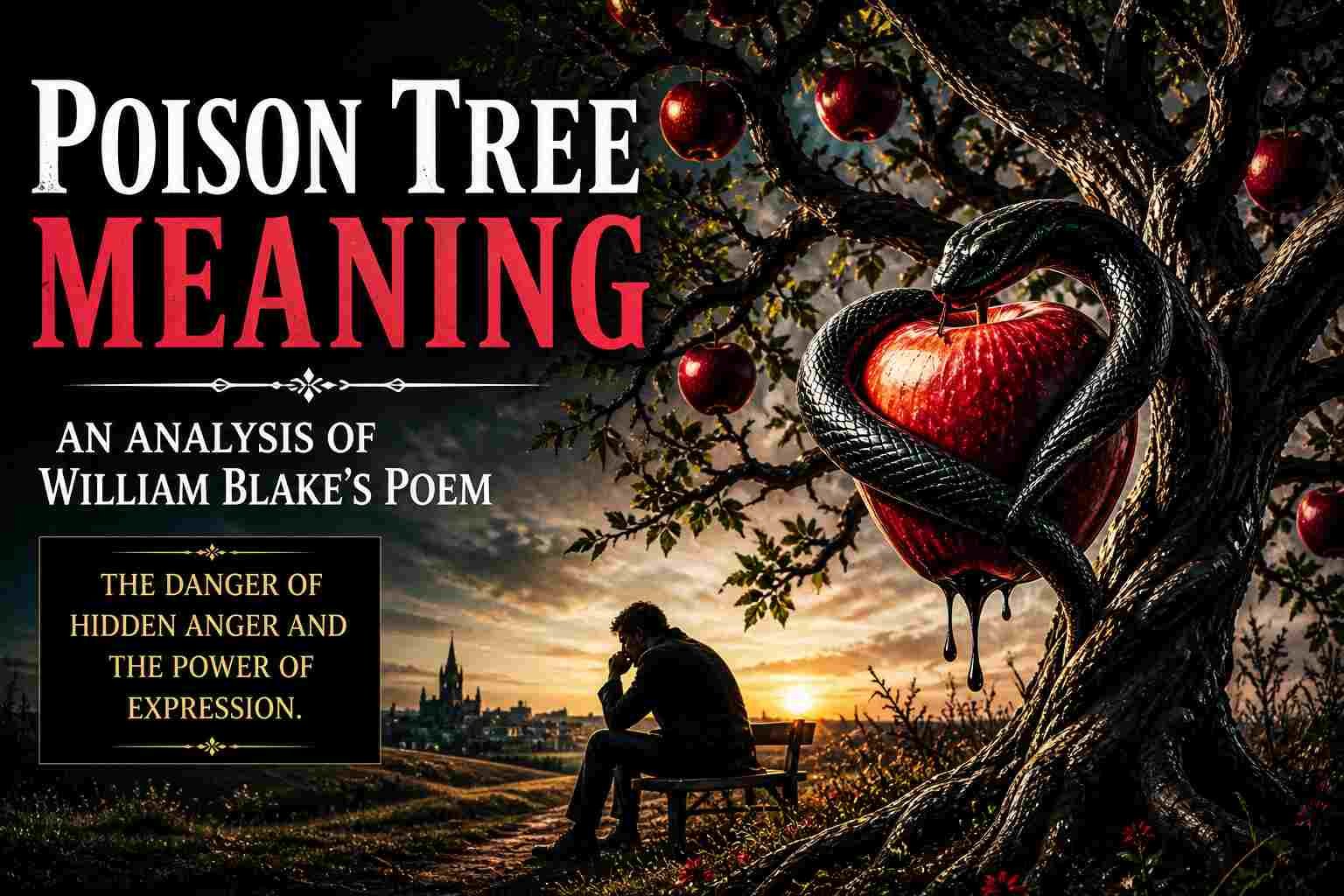
William Blake’s poem A Poison Tree is one of the most insightful literary works that explores human emotions in a simple yet powerful way. Written in the late 18th century, the poem continues to resonate with readers because it reflects real human behavior. The central idea revolves around anger and how people deal with it. Understanding the poison tree meaning requires a closer look at the poem’s message, symbols, and emotional depth.
Background of William Blake and His Work
William Blake was not just a poet but also an artist and thinker. His works often combined simple language with deep philosophical ideas. A Poison Tree was part of his collection Songs of Experience, which focuses on the darker and more complex side of human nature. Blake believed that human emotions, if misunderstood or suppressed, could lead to negative outcomes. This belief plays a major role in shaping the poison tree meaning within the poem.
Summary of the Poem
The poem describes a speaker who feels anger toward two people: a friend and an enemy. When the speaker expresses anger toward the friend, the issue is resolved quickly. However, when the anger is directed toward the enemy, it is hidden and allowed to grow. The speaker nurtures this anger until it becomes a tree that produces a poisonous apple. The enemy eats the fruit and dies, showing the final result of suppressed emotions. This simple story reveals the deeper poison tree meaning tied to human behavior.
Understanding the Theme of Hidden Anger
One of the most important aspects of the poem is its focus on hidden anger. Blake clearly shows that anger itself is not the problem. Instead, the real danger lies in keeping anger inside and allowing it to grow. When feelings are not expressed, they do not disappear; they become stronger over time. The poison tree meaning highlights this idea by showing how unspoken emotions can transform into something destructive.
Symbolism of Growth and Nurturing
Blake uses natural imagery to describe emotional development. The speaker “waters” the anger with fear and “suns” it with smiles and deceit. These actions symbolize how people unintentionally or deliberately feed their negative emotions. Just like a plant grows when it is cared for, anger grows when it is constantly revisited and hidden. This symbolic growth is essential to understanding the poison tree meaning in a deeper way.
The Role of Deception in the Poem
Another key element in the poem is deception. The speaker pretends to be friendly while secretly nurturing anger. This dual behavior reflects how people often hide their true feelings behind polite actions. The smiling face contrasts with the harmful intentions within. The poison tree meaning becomes clearer when we see how dishonesty contributes to the growth of negative emotions.
The Apple as a Symbol of Temptation
The apple in the poem is not just a fruit; it represents temptation and danger. It appears bright and attractive, which draws the enemy toward it. This suggests that harmful actions are often disguised in appealing forms. The enemy’s attraction to the apple symbolizes how people can be misled by appearances. In this context, the poison tree meaning connects to the idea that hidden negativity can eventually harm others in unexpected ways.
Psychological Perspective on the Poem
From a psychological point of view, the poem reflects the concept of emotional repression. When people do not express their feelings, those emotions can build up and lead to stress, resentment, or harmful actions. Blake’s poem aligns with modern ideas about mental health, which emphasize the importance of open communication. The poison tree meaning can therefore be seen as an early exploration of emotional well-being.
Moral Lessons in the Poem
The poem teaches an important moral lesson about honesty and emotional expression. It encourages readers to deal with their feelings directly instead of hiding them. By showing the negative outcome of suppressed anger, Blake warns against letting emotions grow unchecked. The poison tree meaning ultimately suggests that facing emotions honestly leads to healthier relationships and better outcomes.
Literary Devices Used by Blake
Blake uses several literary techniques to make the poem effective. The rhyme scheme is simple and consistent, making the poem easy to read. The use of metaphor and symbolism adds depth to the meaning. The contrast between friend and enemy highlights different ways of handling emotions. These techniques work together to reinforce the poison tree meaning and make the poem memorable.
Relevance in Today’s World
Even though the poem was written centuries ago, its message is still relevant today. People continue to struggle with expressing their emotions, especially anger. Misunderstandings and conflicts often arise بسبب lack of communication. The poison tree meaning reminds modern readers that ignoring emotions can lead to serious consequences, both personally and socially.
Practical Lessons for Everyday Life
The poem is not just a piece of literature; it also offers practical advice. It encourages individuals to talk about their feelings and resolve conflicts early. By doing so, people can prevent small issues from becoming major problems. The poison tree meaning serves as a guide for emotional awareness and personal growth.
Conclusion
A Poison Tree by William Blake is a powerful exploration of human emotions, particularly anger and its consequences. Through simple language and strong symbolism, Blake delivers a message that remains relevant across time. Understanding the poison tree meaning helps readers recognize the importance of emotional honesty and communication. The poem ultimately teaches that what we nurture within ourselves can shape our actions and affect others in profound ways.
More Details: Copium: Meaning, Psychology, and Modern Cultural Impact
FAQs
1. What is the poison tree meaning in simple words?
It means that hidden anger can grow and become harmful if it is not expressed properly.
2. Why does the speaker hide anger from the enemy?
The speaker chooses to suppress anger, which leads to its growth and eventual negative outcome.
3. What does the tree represent in the poem?
The tree symbolizes growing anger and resentment that is not openly addressed.
4. Why is the apple important in the poem?
The apple represents temptation and the final result of hidden anger.
5. What lesson does the poem teach readers?
It teaches the importance of expressing emotions honestly to avoid harmful consequences.

Generative AI in GBS: How LLMs Are Transforming Global Business Services

Healthy Food, Smarter Teams: The Productivity Connection

AI Testimonial Video: The Easiest Way to Build Trust and Boost Sales

5 Ways Real Estate Can Support Long-Term Wealth Goals

Stand Out in the Crowd: The Ultimate Guide to Unforgettable Event Merchandise

Why Every Hookah Owner Needs a Quality Shisha Bag

What Does Assisted Living Look Like for Veterans

How Magnesium Gummies Can Support Everyday Wellness

Hair Systems for Men: Your Complete Guide to Confidence

Why Athletes Trust Oakley Over Other Sports Brands?

How AI Helps Brands Create Memorable Jingles and Marketing Songs

How to Propagate a Snake Plant Successfully: Simple Methods That Really Work

AI Glasses for Hands-Free POV: Inside RayNeo X3 Pro’s 12MP Sony Camera

Latest Development Updates of Naval Anchorage Phase 2 Islamabad – What Investors Need to Know (2026 Guide)
Hair Systems for Men: Your Complete Guide to Confidence
Why Athletes Trust Oakley Over Other Sports Brands?

NASA City Lights: How Satellite Images Reveal the Story of Our Planet

Which Vape Is Good in Germany?
What Does Assisted Living Look Like for Veterans
Why Every Hookah Owner Needs a Quality Shisha Bag
Generative AI in GBS: How LLMs Are Transforming Global Business Services
Healthy Food, Smarter Teams: The Productivity Connection
AI Testimonial Video: The Easiest Way to Build Trust and Boost Sales
5 Ways Real Estate Can Support Long-Term Wealth Goals
Stand Out in the Crowd: The Ultimate Guide to Unforgettable Event Merchandise
Why Every Hookah Owner Needs a Quality Shisha Bag
What Does Assisted Living Look Like for Veterans
How Magnesium Gummies Can Support Everyday Wellness
Hair Systems for Men: Your Complete Guide to Confidence
Why Athletes Trust Oakley Over Other Sports Brands?
-

 Tech6 months ago
xxx is equal to 2022: A Complete Informative Explanation of a Cubic Equation
-

 Celebrity6 months ago
Izzie Balmer Partner: A Deep Dive into the Relationship with Will Hawley
-

 Entertainment6 months ago
The Artistic World of Gege Akutami: A Mastermind Behind Jujutsu Kaisen
-

 Entertainment5 months ago
Semana Santa 2026: Dates, Traditions, and Global Celebrations