
Lifestyle
What Does a Rope Access Electrician Do in High-Rise Maintenance?

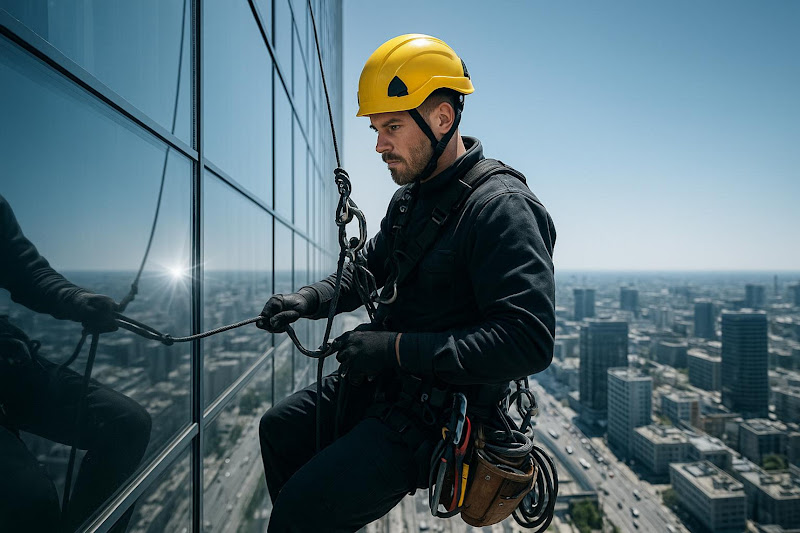
A rope access electrician is a specialist who mixes strong electrical skills with rope access training to carry out installation, maintenance, and repair work on tall buildings and other hard-to-reach structures.
Put simply, they work at height using ropes to reach places that would be difficult or slow to access with normal equipment. Their job is to keep a building’s electrical systems working properly, safe to use, and in line with legal standards. This way of working often removes the need for large scaffolding or heavy lifting machines, which can save time, reduce costs, and keep disruption low.
If you need this type of service, companies like ropeaccessinlondon.co.uk show the mix of skills needed for high-rise electrical work.
What Is a Rope Access Electrician?
A rope access electrician is not a standard electrical contractor. They are trained electricians who are also trained to work on ropes. They know how to climb, descend, and move across structures using a two-rope system, harnesses, and other specialist equipment, while also completing detailed electrical work. This working method is often called industrial abseiling. It started from climbing and caving methods and is now a well-controlled, safety-led trade.
What Sets Rope Access Electricians Apart from Traditional Electricians?
The main difference is how they reach the work area and where they can work. Traditional electricians normally work from the ground, ladders, or fixed platforms. Rope access electricians are trained to work safely while hanging on ropes, often at great height. This lets them reach areas that may be impossible with normal access methods, such as:
- Very tall exterior walls and rooftops
- Buildings with complex shapes and overhangs
- Tight spaces where platforms will not fit
- Sites above water or other restricted areas
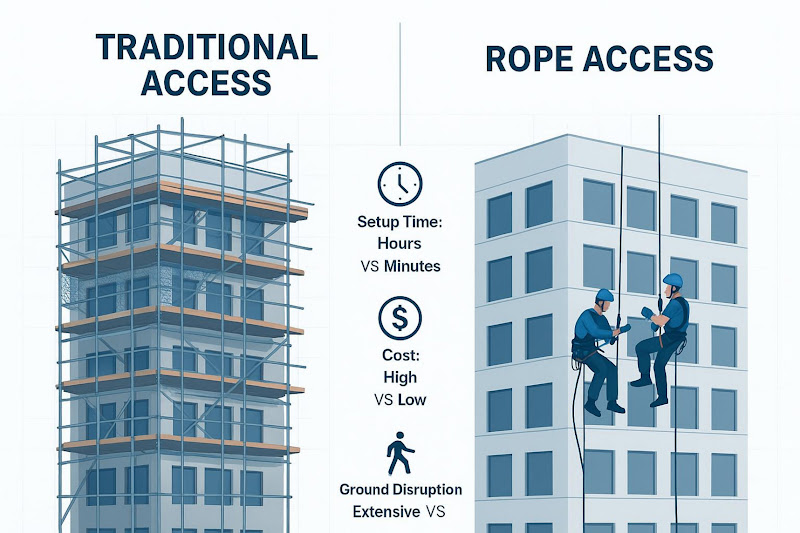
Scaffolding can take days to build and remove. Rope systems can often be set up and taken down the same day. This can cut project time, labour costs, and disruption for people using the building. Rope access electricians also train under strict safety rules (such as IRATA and SPRAT), which helps them work safely in difficult conditions.
Where Are Rope Access Electricians Typically Needed?
These electricians are used on many types of tall and complex structures. This includes glass skyscrapers, office towers, large residential blocks, and industrial buildings where normal access is too expensive or not practical. They also work on major structures such as bridges, dams, wind turbines, and landmark buildings.
Jobs like the Met Tower Beacon Light Replacement or the US Bank Stadium Hardware Replacement show the type of electrical work that can be done safely and quickly with rope access. They are often chosen when the work needs to be done with care, at speed, and without drawing too much attention in busy areas.
Core Skills and Qualifications for Rope Access Electricians
Becoming a rope access electrician takes more than basic trade skills. It needs electrical training, extra safety training, and a strong focus on working to high standards.
Essential Electrical Certifications
Before learning rope access, these workers must already have solid electrical qualifications. This often includes a Class A Journeyman License, which shows strong knowledge and real work experience. Safety certificates such as OSHA 10 or OSHA 30 are also common, showing they understand workplace safety rules for industry or construction. Many rope access electricians also bring years of electrical experience, which helps them handle a wide range of jobs with confidence.
Rope Access Certifications: IRATA and SPRAT Levels
The rope access part of the role requires its own recognised training. Two of the best-known certification bodies are the Industrial Rope Access Trade Association (IRATA) and the Society of Professional Rope Access Technicians (SPRAT). Both use levels:
- Level 1 (Technician): Entry level training in rope access methods, equipment safety, and basic rescue. No work history is needed, but you must be fit and comfortable working at height.
- Level 2 (Lead Technician/Experienced): Needs at least 12 months and 1,000 hours of work as a Level 1. Focuses on more difficult rope setups, movement skills, and rescue work.
- Level 3 (Supervisor/Rescue Lead): The highest level. Needs another 12 months and 1,000 hours since Level 2. Level 3 workers can supervise jobs, carry out full risk checks, plan emergencies, and lead rescues.
These certificates last three years and must be renewed (or the worker must move up a level) to show they still meet current safety rules.
Physical Fitness and Technical Competencies
This job is physically demanding. Rope access electricians must be fit enough to support their own body weight and work for long periods while suspended. They also need good balance, coordination, and the ability to stay calm under pressure, especially in bad weather. On the technical side, they must be skilled in:
- Rope setups and anchor systems
- Safe fitting of fall protection devices
- Using and looking after rope access tools and electrical tools
Good communication, problem-solving, and teamwork also matter. They often work with ground staff and supervisors and must be able to report hazards and fix problems in difficult spots.
Health and Safety Awareness for Working at Height
Safety is the top priority in rope access work. Rope access electricians are trained to follow strict steps and keep safety in mind at all times.
Before starting, they must check hazards, equipment, and weather conditions. They need to know how to carry out risk checks, spot dangers early, and put controls in place.
A key safety feature is the two-rope system: each worker is connected to two separate anchor lines (a main working rope and a backup rope). Rescue plans are also required, and a Level 3 supervisor is normally part of each team.
Key Responsibilities in High-Rise Maintenance
A rope access electrician may do many different tasks, from routine checks to urgent fault repairs.
Installation and Repairs of Electrical Systems at Height
Rope access electricians often install new electrical parts or repair existing ones in high or awkward locations. This can include many types of work, such as:
- Running new wiring and conduit on building exteriors
- Installing and fixing exterior lighting systems
- Replacing light fittings (for example, a single beacon light or many lights across several levels)
- Cable tray pulls
- Installing and maintaining heat tracing systems to help stop pipes freezing
- Installing and maintaining lightning protection systems to protect the building and people inside
Inspection and Preventative Maintenance Tasks
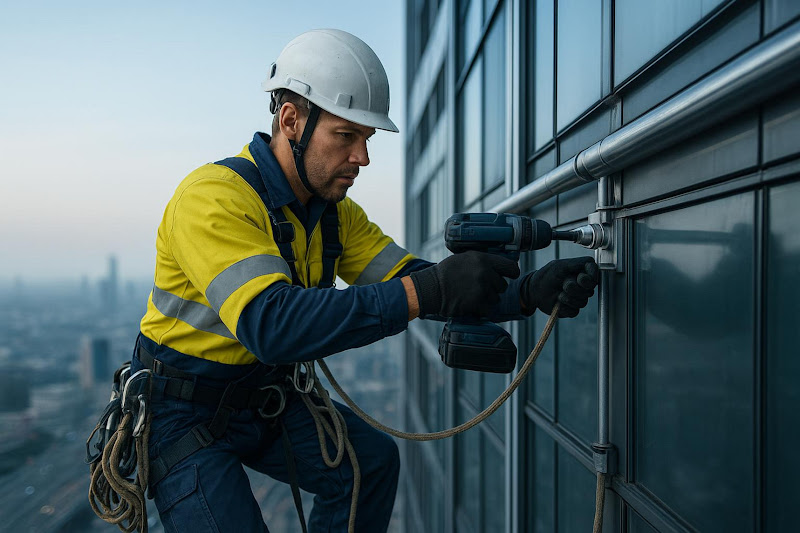
Regular checks help keep high-rise electrical systems safe and reliable. Rope access electricians inspect external wiring, junction boxes, conduits, and other components that are often missed because they are hard to reach. They check for wear, rust, impact damage, and loose connections.
They may also carry out non-destructive testing (NDT) services to check the condition of systems without causing damage. Finding small issues early can prevent larger failures later and helps keep the building within required standards.
Testing for Electrical Safety and Compliance
A major part of the job is checking that electrical systems are safe and meet current rules. Rope access electricians carry out tests to confirm systems work correctly and are safe to use. This can include insulation resistance tests, earth continuity tests, and polarity checks to help prevent shocks and fires.
They also make sure work meets national and international electrical codes, plus any building-specific safety rules.
Emergency Response and Fault Rectification
If there is an electrical fault in a hard-to-reach place, fast action matters. Rope access electricians can respond quickly to problems at height, such as outages, short circuits, or faults in key systems. Because they can reach the area quickly and work safely, they can reduce downtime and lower the risk of further damage.
This can include jobs like fixing a bus bar service issue on a wind turbine tower or repairing low-voltage systems such as fire alarms and security systems on commercial buildings.
Safety Standards and Regulations in Rope Access Electrical Work
Rope access is known for strong safety performance because it is based on strict rules, repeated training, and clear working methods.
International and Local Regulatory Bodies
Two key organisations in rope access safety are IRATA and SPRAT. IRATA started in the UK in the late 1980s and is widely seen as a leading authority for rope access training and work standards.
These groups set rules such as the International Code of Practice (ICoP), which covers system design, equipment use, emergency planning, and risk checks. Local rules also apply. In the UK, for example, rope access work must follow:
| Regulation / Standard | What it covers |
| Work at Height Regulations 2005 | Planning and safe control of working at height |
| LOLER 1998 | Safe use and inspection of lifting equipment |
| PUWER 1998 | Safe use and maintenance of work equipment |
| British Standards (e.g., BS ISO 22846) | Industry standards for rope access systems and methods |
This mix of rules helps keep work safe and professional.
Personal Protective Equipment and Rescue Protocols
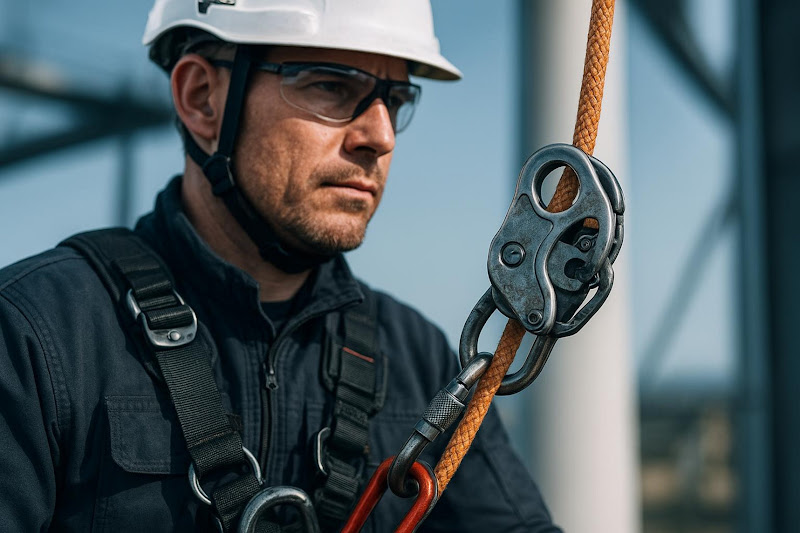
Rope access electrician safety relies on strong PPE and clear rescue plans. Each worker uses two ropes: a main working rope and a separate backup rope, each fixed to its own anchor point to avoid a single failure. They wear full-body harnesses and connect using high-strength carabiners, descenders for controlled lowering, and ascenders for climbing. Backup devices can lock quickly if a fall happens.
A rescue plan must be in place before work starts, and teams normally include at least one Level 3 IRATA-certified supervisor trained to manage the work and lead a rescue if needed. These layers of protection help make rope access one of the safer ways to work at height, with lower incident rates than methods like scaffolding in many comparisons.
Routine Safety Checks and Risk Assessments
Safety is checked every day, not just once. Rope access electricians inspect their equipment before and during work to confirm everything is in good condition. Ropes are cleaned, checked for damage, stored correctly, and removed from use if wear is found. Risk checks are done before each job to identify hazards and set control measures. These checks are updated during the job if conditions change, helping keep risks low for everyone on site.
Common Questions about Rope Access Electricians in High-Rise Maintenance
High-rise maintenance often raises questions, especially about rope access electrical work.
What Types of Buildings and Facilities Require Rope Access Electricians?
Rope access electricians are used on structures where access is difficult. This includes tall office and residential buildings, industrial sites like power plants and petrochemical facilities, and key infrastructure such as bridges, dams, communications towers, and wind turbines. If a building is tall, has awkward design features, or needs work in areas where normal access would be too disruptive, rope access is often a good fit.
Is Rope Access Safe for Electrical Work?
Working at height can look risky, but professional rope access has a strong safety record when done by trained workers following set standards. The required two-rope system, ongoing risk checks, and supervision by trained IRATA/SPRAT staff all support this. Comparisons of accident rates often show fewer reportable accidents than some traditional access methods, such as scaffolding. Regular rescue training also helps keep teams ready if something goes wrong.
How Does Rope Access Compare to Traditional Building Maintenance Methods?
Rope access has clear benefits compared to scaffolding, crane baskets, or mechanical platforms:
- Lower cost: less need for expensive equipment hire and setup
- Faster setup: work can often start in hours rather than days
- Less disruption: fewer blocked entrances, walkways, and public areas
- Lighter equipment: less impact than heavy machines
Traditional methods can still be better for jobs that need heavy lifting or large equipment. For many electrical tasks, though, rope access is often the more practical choice.
How Do I Choose a Qualified Rope Access Electrician or Service?
To pick a rope access electrician or company, focus on safety, training, and proof of past work. Check that they have:
- Relevant electrical qualifications (such as journeyman-level licensing where required)
- Rope access certification from IRATA or SPRAT (Level 2 or Level 3 for lead roles)
- A strong safety record and proper insurance
It also helps to choose a provider who can review your site and give clear recommendations based on what you need. Ask about similar jobs they have done, how they manage safety, and what their emergency plan looks like. A good provider will be open about their process and show a clear commitment to safe work at height and high-quality electrical work.
The rope access electrician plays a key part in keeping modern high-rise buildings running safely. As cities keep building higher, the need for these specialists is likely to keep rising. Their mix of electrical knowledge and rope access skill helps keep complex systems working properly while saving time and reducing disruption in places that are difficult to reach. This practical approach supports safer, longer-lasting buildings and better maintenance for the structures we use every day.
More Details : Can You Really Become a Pilates Instructor Through Online Training?

12 Best Omegle Alternatives for Random Video Chat and Meeting New People

Dbxbqm Meaning: Why It Appears When You Try to Type YouTube

Immediate Loading Implants: How “Fixed Teeth in 48 Hours” Really Works

How UK Mobile Proxies Help Businesses Test Their Websites

Gen AI in Supply Chain: Using Supply Chain Benchmarks to Improve Performance

What Is the UK Theory Test? How It Works, Cost and Pass Mark

Weather the Storm: Why Totally Branded Umbrellas are the UK’s Most Appreciated Gift

How to Store, Wind, and Travel With Your Automatic Watch Collection Without Damaging It

What Do HubSpot Onboarding Services Include?

AI in Supply Chain: How AI Consulting Services Help Build More Intelligent and Resilient Operations
Immediate Loading Implants: How “Fixed Teeth in 48 Hours” Really Works
How UK Mobile Proxies Help Businesses Test Their Websites
Gen AI in Supply Chain: Using Supply Chain Benchmarks to Improve Performance
12 Best Omegle Alternatives for Random Video Chat and Meeting New People
Dbxbqm Meaning: Why It Appears When You Try to Type YouTube
12 Best Omegle Alternatives for Random Video Chat and Meeting New People
Dbxbqm Meaning: Why It Appears When You Try to Type YouTube
Immediate Loading Implants: How “Fixed Teeth in 48 Hours” Really Works
How UK Mobile Proxies Help Businesses Test Their Websites
Gen AI in Supply Chain: Using Supply Chain Benchmarks to Improve Performance
What Is the UK Theory Test? How It Works, Cost and Pass Mark
Weather the Storm: Why Totally Branded Umbrellas are the UK’s Most Appreciated Gift
How to Store, Wind, and Travel With Your Automatic Watch Collection Without Damaging It
What Do HubSpot Onboarding Services Include?
AI in Supply Chain: How AI Consulting Services Help Build More Intelligent and Resilient Operations
-

 Tech9 months ago
xxx is equal to 2022: A Complete Informative Explanation of a Cubic Equation
-

 Celebrity8 months ago
Izzie Balmer Partner: A Deep Dive into the Relationship with Will Hawley
-

 Entertainment9 months ago
The Artistic World of Gege Akutami: A Mastermind Behind Jujutsu Kaisen
-

 Food5 months ago
Best Sushi Rice Brands: A Complete Guide to Choosing the Right Rice for Sushi