
Tech
AI Glasses for Hands-Free POV: Inside RayNeo X3 Pro’s 12MP Sony Camera


AI glasses reached 8.7 million shipments in 2025, according to Omdia, as camera capture, display output, and multimodal AI moved from novelty features into genuine product differentiators. The RayNeo X3 Pro sits at the ambitious end of that wave, pairing a Sony IMX681 RGB camera and an OV spatial camera with RayNeo AI OS and Gemini-powered assistance.
This article breaks down the Sony IMX681 + OV spatial dual-camera setup, explains how the camera feeds Google Gemini for hands-free AI tasks, and benchmarks the hardware against the leading camera-equipped smart glasses shipping today.
Why the Camera Now Defines the Category
Many leading camera-equipped AI glasses now feature 12MP-class sensors, with Meta, Rokid, and RayNeo all shipping products at this resolution tier. The sensor choice itself matters less than what comes after — how each product turns raw frames into AI-driven outputs.
The latest generation of AI Glasses treats the camera view or captured frame as raw input for translation engines, object recognition, and contextual queries. The lens is no longer a passive recording tool. It functions as an on-demand visual input layer for machine intelligence.
That shift changes how buyers evaluate camera-equipped smart glasses in 2026. Megapixels tell part of the story. Sensor pairing, on-device processing, and AI model depth carry equal weight in determining how useful these devices actually become in daily use.
Inside the Dual-Camera Hardware
Most camera-equipped smart glasses rely on a single sensor. The X3 Pro places two on the bridge — each serving a distinct role in an imaging pipeline that feeds both capture and spatial AI processing.
12MP Sony IMX681 RGB Sensor
The primary camera uses Sony’s IMX681, a 12-megapixel wide-angle sensor that captures stills and shoots video up to 4K resolution. Rokid Glasses also list the same IMX681, while Meta and Oakley publicly specify a 12MP camera without confirming the exact sensor model.
OV Spatial Camera and SLAM
Alongside the IMX681 sits an OV black-and-white spatial camera that supports positioning, 6DoF tracking, and SLAM-based spatial features. The RayNeo X3 Pro fuses data from both cameras to anchor digital overlays onto physical surfaces — a capability single-camera competitors do not offer.
Recording Formats and Battery Limits
It captures 12MP photos and supports 4K/3K video. RayNeo lists up to 5 hours for recording-type use and 36 minutes for continuous video. Reviewers report much shorter runtimes under heavy camera, AR, or navigation workloads, often around 30–60 minutes.
What Reviewers Observed
Hands-on tests confirm the camera delivers clear detail in daylight, with colors running warm — acceptable for social sharing. Low-light performance drops, producing visible grain indoors. Dynamic range stays limited compared to flagship smartphones, a known trade-off at this size.
Privacy LED
A white LED on the front of the frame blinks whenever recording is active, alerting bystanders. This hardware-level privacy indicator signals recording status to people nearby — a safeguard that reviewers and RayNeo both highlight as essential for camera-equipped wearables.
From Camera Input to AI Output
On the RayNeo X3 Pro, the IMX681 does more than record — it feeds visual data directly to Google’s Gemini AI, a multimodal engine that reasons across image, voice, and text inputs simultaneously. This integration is what separates AI glasses from basic camera wearables. Three core functions depend on the camera-to-AI pipeline:
- Visual identification — point at any object and ask Gemini what it is
- Text translation — the camera reads foreign-language signs, menus, and labels in 14 languages
- Contextual Q&A — voice and camera data combine for real-time conversational answers
Multimodal Visual Search
Reviewers tested practical use cases in the field. One identified a plant species by pointing and asking Gemini directly. Another analyzed a chessboard position mid-game and received a counter-move suggestion. Response times varied from a few seconds to longer for complex visual queries.
Translation Through the Lens
The camera scans printed text — street signs, restaurant menus, product labels — and the system overlays a translated version powered by Microsoft. Results appear on the binocular MicroLED display at up to 6,000 nits peak brightness, readable even in direct sunlight.
On-Device vs. Cloud Processing
Snapdragon AR1 Gen 1 supports on-glass AI and camera processing, keeping basic tasks responsive on the device. Complex Gemini queries and high-accuracy translation may depend on cloud connectivity, where RayNeo’s official translation spec cites a 2.1-second response. This architecture gives AI glasses faster local handling while reserving full multimodal reasoning for cloud-dependent queries.
How the RayNeo X3 Pro Camera Compares
Specifications differ across the current competitive field in camera-equipped smart glasses. The table below highlights camera-specific parameters for four currently shipping products, showing where each device leads and where others hold a measurable technical edge.
| Spec | RayNeo X3 Pro | Meta Ray-Ban Display | Rokid Glasses | Ray-Ban Meta Gen 2 |
|---|---|---|---|---|
| Sensor | 12MP Sony IMX681 + OV spatial | 12MP (undisclosed) | 12MP Sony IMX681 | 12MP |
| Video | 4K / 3K | 1440×1920 @30fps | 1680P / 12MP photo | 3K / 1200p 60fps |
| Display | Binocular MicroLED, 6,000 nits | Monocular, 5,000 nits | Dual-eye, 1,500 nits | None |
| AI | Google Gemini | Meta AI | GPT + Gemini | Meta AI |
| Standalone | Yes | No | No | No |
| Weight | 76 g | 69 g | 49 g | ~52 g |
| Claimed Battery | Up to 5 hrs recording; 36 min video | Up to 6 hrs mixed | 210mAh; all-day use claimed | Up to 8 hrs |
| Price | $1,299 | $799 | $699 | $379 |
The RayNeo X3 Pro is the only model here combining a dual-camera system, binocular display, and standalone operating system. That integration comes at the highest price point and with shorter battery life than every rival listed — a trade-off reflecting the power demands of running full on-device AR and AI.
Practical Scenarios for POV Camera Wearables
The camera on the RayNeo X3 Pro is built for more than snapshots. Its value emerges in specific workflows that demand continuous hands-free visual input combined with real-time AI processing. Three categories of users benefit most.
Travel and Real-Time Translation
International travelers gain instant visual translation — point at a sign, menu, or printed label and the system overlays the translated text in the field of view. The device supports 14 languages through Microsoft, with results displayed on both lenses simultaneously for comfortable reading.
Daily Assistance Through AI Glasses
Commuters, students, and professionals use AI glasses for tasks that require seeing and knowing in the same motion. Ask about a storefront, identify a product on a shelf, or get walking directions overlaid on the real world — all without reaching for a phone.
Hands-Free Content Creation
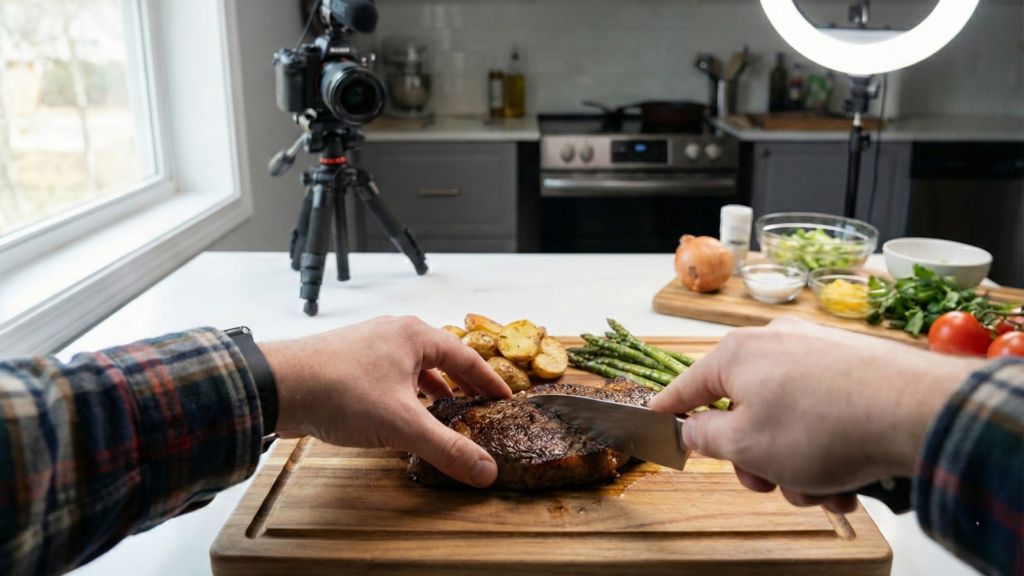
Vloggers and field journalists get authentic first-person footage without handheld rigs. The 12MP sensor captures detailed stills and 3K video from eye level, producing natural framing and a sense of presence that phone cameras struggle to replicate. Common POV recording formats include:
- Eye-level POV clips — hands-free shooting that maintains the wearer’s natural perspective
- Quick 12MP photo bursts — high-resolution stills ready for immediate social sharing
- Short-form 3K video — resolution suited for TikTok, Instagram, and YouTube Shorts
Why the RayNeo X3 Pro Earns Its Place
The RayNeo X3 Pro combines a dual-camera spatial system, binocular MicroLED display, and Gemini AI in a standalone 76-gram frame — one of the fullest AI-plus-AR feature sets currently shipping in glasses form. Its edge is not all-day battery life but a camera-to-AI pipeline that points toward one possible direction for AI glasses.

12 Best Omegle Alternatives for Random Video Chat and Meeting New People

Dbxbqm Meaning: Why It Appears When You Try to Type YouTube

Immediate Loading Implants: How “Fixed Teeth in 48 Hours” Really Works

How UK Mobile Proxies Help Businesses Test Their Websites

Gen AI in Supply Chain: Using Supply Chain Benchmarks to Improve Performance

What Is the UK Theory Test? How It Works, Cost and Pass Mark

Weather the Storm: Why Totally Branded Umbrellas are the UK’s Most Appreciated Gift

How to Store, Wind, and Travel With Your Automatic Watch Collection Without Damaging It

What Do HubSpot Onboarding Services Include?

AI in Supply Chain: How AI Consulting Services Help Build More Intelligent and Resilient Operations
Immediate Loading Implants: How “Fixed Teeth in 48 Hours” Really Works
How UK Mobile Proxies Help Businesses Test Their Websites
Gen AI in Supply Chain: Using Supply Chain Benchmarks to Improve Performance
12 Best Omegle Alternatives for Random Video Chat and Meeting New People
Dbxbqm Meaning: Why It Appears When You Try to Type YouTube
12 Best Omegle Alternatives for Random Video Chat and Meeting New People
Dbxbqm Meaning: Why It Appears When You Try to Type YouTube
Immediate Loading Implants: How “Fixed Teeth in 48 Hours” Really Works
How UK Mobile Proxies Help Businesses Test Their Websites
Gen AI in Supply Chain: Using Supply Chain Benchmarks to Improve Performance
What Is the UK Theory Test? How It Works, Cost and Pass Mark
Weather the Storm: Why Totally Branded Umbrellas are the UK’s Most Appreciated Gift
How to Store, Wind, and Travel With Your Automatic Watch Collection Without Damaging It
What Do HubSpot Onboarding Services Include?
AI in Supply Chain: How AI Consulting Services Help Build More Intelligent and Resilient Operations
-

 Tech9 months ago
xxx is equal to 2022: A Complete Informative Explanation of a Cubic Equation
-

 Celebrity8 months ago
Izzie Balmer Partner: A Deep Dive into the Relationship with Will Hawley
-

 Entertainment9 months ago
The Artistic World of Gege Akutami: A Mastermind Behind Jujutsu Kaisen
-

 Food5 months ago
Best Sushi Rice Brands: A Complete Guide to Choosing the Right Rice for Sushi