
Blog
Understanding the Significance of Saying “Alhamdulillah”

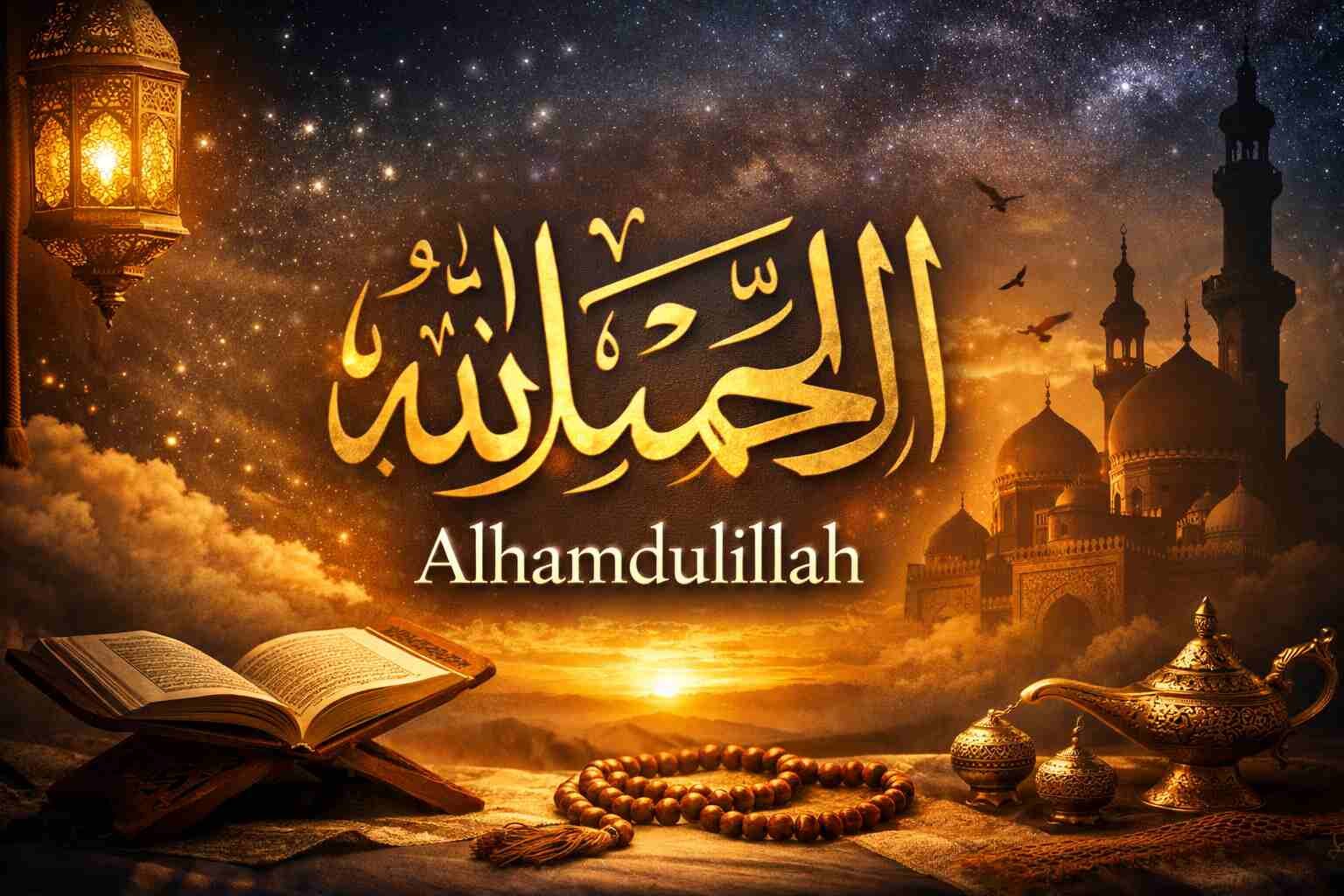
The Arabic phrase “Alhamdulillah” is a powerful expression often heard by Muslims in everyday conversations, prayers, and moments of gratitude. It holds profound meaning that transcends simple words. This article aims to explore why Muslims use this phrase, its significance, and its various uses in different contexts. Whether you are familiar with the phrase or new to its meaning, this article will provide a deeper understanding of why “Alhamdulillah” is such an integral part of Islamic life.
What Does “Alhamdulillah” Mean?
“Alhamdulillah” translates to “All praise is due to Allah” or “Praise be to Allah.” The phrase consists of two words: “Alhamdu” meaning “praise” and “lillah” meaning “for Allah.” It is used by Muslims to express gratitude, praise, and acknowledgment of Allah’s mercy and blessings. The phrase reflects an acknowledgment that all good things in life come from Allah, and it serves as a reminder of His greatness and benevolence.
The Importance of Saying “Alhamdulillah” in Islam
In Islam, gratitude is a central theme, and saying “Alhamdulillah” is an expression of that gratitude. Muslims believe that every blessing, whether big or small, is a gift from Allah. Saying “Alhamdulillah” serves as a reminder to remain humble, recognizing that one is not self-sufficient but dependent on Allah’s mercy.
1. A Spiritual Practice
For Muslims, saying “Alhamdulillah” is an act of worship. It reminds them to be thankful for the countless blessings they receive from Allah. The Quran emphasizes gratitude as an important virtue, and “Alhamdulillah” becomes a way to fulfill this spiritual obligation. It is a reminder that Allah is the ultimate source of all blessings.
2. A Tool for Positivity
In difficult times, saying “Alhamdulillah” can provide comfort and perspective. Muslims believe that expressing gratitude during hardship helps cultivate a positive mindset. It shifts the focus from what is lacking to the countless blessings one already has. This simple phrase serves as a reminder of Allah’s wisdom and the ultimate purpose of trials in life.
The Role of “Alhamdulillah” in Daily Life
Muslims use “Alhamdulillah” in many daily situations. It’s not just reserved for formal occasions or moments of prayer, but it is also uttered during everyday activities. Here’s how:
1. After Every Meal
When a Muslim finishes a meal, it is common to say “Alhamdulillah” to thank Allah for the food and the opportunity to eat. This practice connects everyday life with spiritual awareness, reinforcing the idea that even the simplest activities are blessings.
2. During Prayers (Salah)
“Alhamdulillah” is also an integral part of Islamic prayers (Salah). It is recited in various parts of the prayer, particularly in the Fatiha, the opening chapter of the Quran. Saying “Alhamdulillah” during prayer brings a deeper sense of connection with Allah.
3. Expressing Gratitude in General
Whenever something good happens in life, whether it’s a success, a blessing, or a moment of relief, Muslims say “Alhamdulillah.” It is a way of acknowledging that Allah is behind every good thing.
Why Do Muslims Always Say “Alhamdulillah”?
The frequent use of “Alhamdulillah” reflects a mindset of continuous gratitude in Islam. It’s not just about saying the phrase out of habit, but rather embodying the attitude of thankfulness in every aspect of life. Here are a few reasons why Muslims make it a point to always say “Alhamdulillah”:
1. Spiritual Growth and Humility
The constant repetition of “Alhamdulillah” reminds Muslims to remain humble, knowing that all success and happiness come from Allah. It is a form of spiritual growth, where one seeks to acknowledge Allah’s presence in all aspects of life.
2. A Connection to Allah
By saying “Alhamdulillah,” Muslims develop a closer connection to Allah. This phrase serves as an ongoing conversation with Allah, reinforcing the understanding that all good things are from Him and that His mercy is boundless.
3. A Form of Worship
Gratitude is a form of worship in Islam. “Alhamdulillah” is not merely a polite expression; it is an act of worship that keeps the individual aware of Allah’s blessings.
The Power of Gratitude: “Alhamdulillah” in Islam
Gratitude is a core principle in Islam. Allah commands Muslims to express thankfulness for His countless gifts. Saying “Alhamdulillah” is an acknowledgment of Allah’s supreme role as the provider and sustainer of life. Here are a few insights into the power of gratitude in Islam:
1. Increase in Blessings
Islam teaches that gratitude leads to more blessings. In the Quran, Allah says, “If you are grateful, I will surely increase your favor upon you” (Quran 14:7). By saying “Alhamdulillah,” Muslims express their appreciation, which, according to the teachings of Islam, invites even more blessings from Allah.
2. A Shield Against Negative Emotions
Gratitude is also seen as a shield against negative emotions like envy, jealousy, and despair. Focusing on the positive aspects of life through expressions like “Alhamdulillah” helps maintain mental peace and emotional stability.
3. Promoting a Positive Community
In Islamic culture, gratitude is contagious. When one person expresses gratitude, it encourages others to do the same. Saying “Alhamdulillah” can uplift the spirits of a community and foster a culture of appreciation and mutual respect.
More Details : The Rise of a Cult Icon: Why Eddie Munson Became a Fan Favorite
FAQs
1. What Does “Alhamdulillah” Mean in Simple Terms?
“Alhamdulillah” means “All praise is due to Allah.” It is a way of expressing gratitude and acknowledging that all good things come from Allah.
2. When Should I Say “Alhamdulillah”?
“Alhamdulillah” can be said at any time to express gratitude. It is often used after eating, in moments of joy, after prayers, and when experiencing blessings.
3. Is “Alhamdulillah” Only for Muslims?
While “Alhamdulillah” is an Arabic phrase commonly used by Muslims, its meaning can be understood by people of all faiths who appreciate the concept of gratitude.
4. Can Saying “Alhamdulillah” Make Me Happier?
Yes, expressing gratitude regularly can improve mental well-being and lead to a more positive outlook on life.
5. How Does “Alhamdulillah” Impact My Faith?
Saying “Alhamdulillah” strengthens one’s faith by continually acknowledging Allah’s blessings and mercy. It helps maintain a deep spiritual connection with Allah.
Conclusion: The Timeless Power of “Alhamdulillah”
In conclusion, “Alhamdulillah” is much more than just a phrase. It is a cornerstone of the Islamic faith, encouraging Muslims to remain humble, grateful, and spiritually aware. Whether in times of ease or hardship, “Alhamdulillah” serves as a reminder that all blessings come from Allah, and expressing gratitude fosters a deeper connection with the Creator. By incorporating this phrase into daily life, Muslims can cultivate positivity, humility, and a constant awareness of Allah’s mercy.

How to Start a Conversation Without Feeling Awkward

Best Free Mac Cleaners: Tools to Boost Your Mac’s Speed and Storage

How to Fix the P0420 Engine Code: Catalyst System Efficiency Below Threshold

Let Your Child Play Quotes: Encouraging Healthy Development Through Play

How to Download All Snapchat Memories: A Complete Guide

How to Ask a Girl Out: A Simple Guide to Making the First Move

Twisted Games by Ana Huang: A Captivating Review of the Forbidden Romance Novel

First Date Questions: 33 Smart and Engaging Questions to Ask

Claude Cowork: Transforming the Modern Workspace

Inspiring Thought of the Day in English: Boost Your Mindset and Motivation

Latest Breakthroughs in Quantum Computing 2024: Major Innovations Shaping the Future of Technology

Understanding Black Box AI: Unlocking the Secrets of Unexplained Algorithms

Encanto Characters Explained: The Madrigal Family, Their Gifts, and What They Mean

Makima Chainsaw Man: The Power, Mystery, and Meaning Behind One of Anime’s Most Talked About Characters

The Red String Theory: Exploring Fate and Connection

Best AI Tools to Create Professional Faceless Videos Quickly

10 Things You Should Know About Yuta Okkotsu Before Jujutsu Kaisen Season 3

NVIDIA DGX Spark: A Practical Look at the Compact AI Powerhouse

Open Claw vs. Claude Code: A Comprehensive Comparison

Dolores Encanto: Understanding the Quiet Strength of a Unique Character
How to Start a Conversation Without Feeling Awkward
Best Free Mac Cleaners: Tools to Boost Your Mac’s Speed and Storage
How to Fix the P0420 Engine Code: Catalyst System Efficiency Below Threshold
Let Your Child Play Quotes: Encouraging Healthy Development Through Play
How to Download All Snapchat Memories: A Complete Guide
How to Ask a Girl Out: A Simple Guide to Making the First Move
Twisted Games by Ana Huang: A Captivating Review of the Forbidden Romance Novel
First Date Questions: 33 Smart and Engaging Questions to Ask
Claude Cowork: Transforming the Modern Workspace
Inspiring Thought of the Day in English: Boost Your Mindset and Motivation
-

 Entertainment2 months ago
Semana Santa 2026: Dates, Traditions, and Global Celebrations
-

 Tech2 months ago
xxx is equal to 2022: A Complete Informative Explanation of a Cubic Equation
-

 Entertainment2 months ago
The Artistic World of Gege Akutami: A Mastermind Behind Jujutsu Kaisen
-

 Celebrity2 months ago
Izzie Balmer Partner: A Deep Dive into the Relationship with Will Hawley