
Entertainment
To Your Eternity Season 3: When Immortality Begins to Feel Heavy

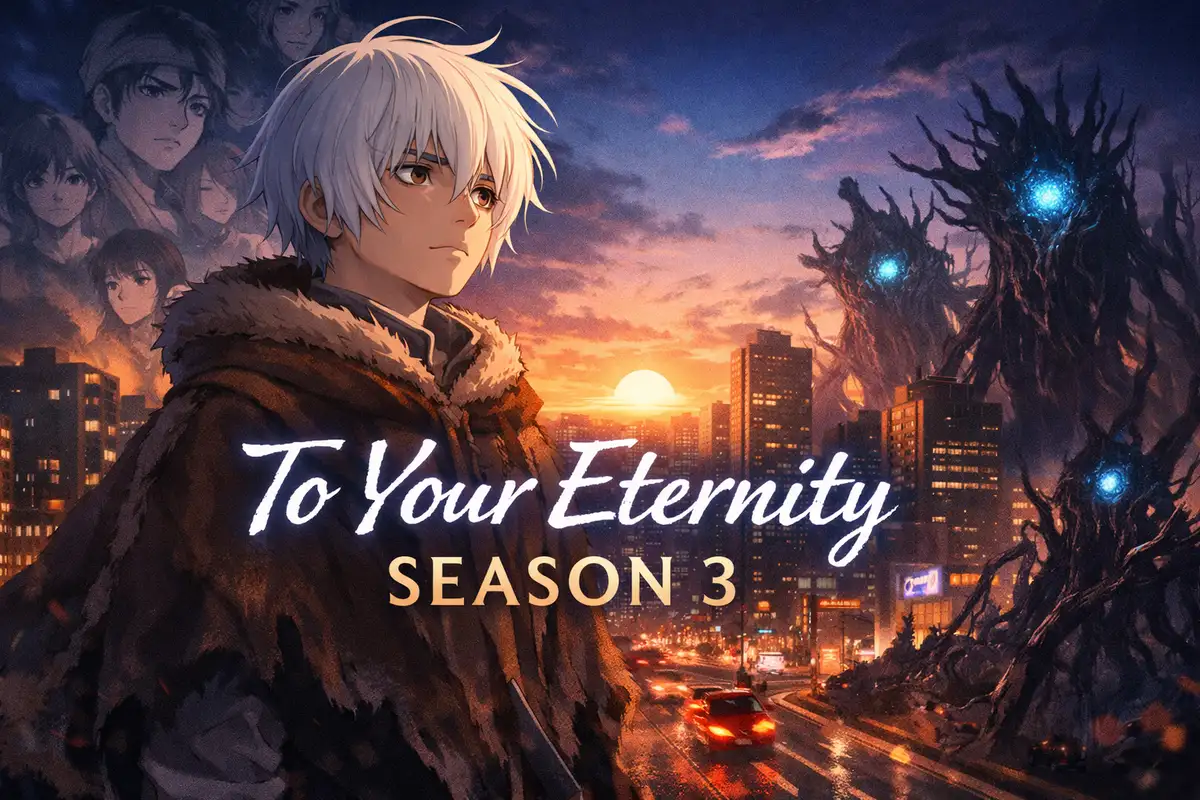
To Your Eternity has never been an easy anime to watch, and that is exactly why it stands out. It does not chase trends or rely on constant action. Instead, it asks uncomfortable questions about life, death, and emotional attachment. With to your eternity season 3, the story enters a phase where immortality is no longer mysterious or inspiring—it becomes exhausting. This season feels less like a continuation and more like a reflection on everything that has happened so far.
Understanding the Journey Before Season 3
The emotional weight of this season only works because of what came before it. The early story focused on discovery, companionship, and sudden loss. Each character Fushi met shaped his understanding of humanity. By the end of the second season, he had already lived through centuries of pain and responsibility. These experiences form the emotional backbone of to your eternity season 3, where survival is no longer the challenge—endurance is.
A New Era, A New Kind of Conflict
One of the boldest choices in this season is the shift toward a modern setting. Instead of villages and ancient battlefields, the story now explores cities, institutions, and structured societies. This change is not cosmetic; it directly impacts the narrative. In a modern world, an immortal being cannot simply wander unnoticed. Curiosity, control, and exploitation become realistic threats, making Fushi’s existence more complicated than ever.
Fushi’s Emotional State Takes Center Stage
Fushi is no longer a blank slate learning from others. He is emotionally aware, deeply empathetic, and painfully tired. His immortality forces him to watch people grow old, change, and disappear while he remains the same. This season focuses heavily on his inner struggle, showing how endless life slowly erodes motivation and emotional safety. Rather than dramatic speeches, the story uses quiet moments to express his exhaustion.
Less Action, More Meaning
Viewers expecting constant battles may find this season slower, but that pacing is intentional. Action scenes exist, yet they are never the main focus. Conversations, choices, and emotional consequences carry more weight than physical conflict. To your eternity season 3 prioritizes meaning over momentum, asking viewers to engage with the story rather than simply consume it.
The Nokkers as a Philosophical Threat
The Nokkers evolve significantly in this season. Instead of functioning as simple enemies, they become an ideological challenge. Their opposition to immortality forces the story to question whether endless life is truly desirable. This moral complexity adds depth to the conflict, turning battles into debates about existence, suffering, and balance rather than good versus evil.
Humanity Through a Modern Lens
Placing the story in a modern environment allows it to explore how society reacts to the unknown. Fear, fascination, and exploitation coexist. Miracles are studied, controlled, or monetized rather than respected. This portrayal feels uncomfortably realistic and gives the season a grounded tone that resonates beyond fantasy. The story subtly critiques how modern humanity treats what it does not fully understand.
Loneliness as the True Cost of Immortality
More than anything, this season highlights loneliness. Immortality isolates Fushi emotionally, making meaningful connections feel temporary and fragile. Even moments of happiness are shadowed by inevitable loss. The narrative does not rush past this pain, allowing viewers to feel its weight. This emotional honesty is one of the strongest aspects of to your eternity season 3.
Visual Direction That Supports the Mood
The animation remains restrained and expressive rather than flashy. Urban environments are drawn with a muted tone, reinforcing the sense of isolation even in crowded spaces. Framing and lighting often place Fushi at a distance from others, visually representing his emotional separation. The consistency in visual storytelling helps maintain immersion throughout the season.
Music That Knows When to Stay Silent
Music in this season is subtle and carefully placed. Silence is used as a storytelling tool, allowing emotions to breathe naturally. When music does appear, it enhances moments rather than directing how the audience should feel. This restraint makes emotional scenes feel authentic and earned.
A Deliberate and Mature Pacing
The pacing of this season demands patience. It is not designed for binge-driven excitement but for thoughtful viewing. Each episode builds on emotional themes rather than cliffhangers. This approach may not appeal to everyone, but it rewards viewers who appreciate character-driven storytelling and philosophical depth.
Why This Season Feels Like a Turning Point
Rather than pushing toward a clear ending, this season reshapes the entire narrative. It questions whether an immortal journey even needs a conclusion. The choices made here influence the direction of the story’s final chapters, making to your eternity season 3 one of the most important parts of the series.
Who This Season Is Really For
This season is best suited for viewers who value emotional complexity over spectacle. If you enjoy stories that explore morality, loss, and identity, this chapter will likely resonate deeply. Those seeking fast-paced action may struggle, but the series has never been about comfort—it is about honesty.
Final Thoughts
To Your Eternity continues to prove that anime can be both emotionally devastating and intellectually engaging. By embracing a modern setting and deeper philosophical questions, the series matures alongside its audience. To your eternity season 3 does not try to impress—it tries to understand, making it one of the most quietly powerful arcs in the story so far.
FAQs
1. Is to your eternity season 3 slower than previous seasons?
Yes, the pacing is more deliberate and emotionally focused.
2. Does the modern setting change the story significantly?
Yes, it introduces new conflicts related to society, control, and exposure.
3. Is Fushi still the central focus?
Absolutely, his emotional and psychological journey drives the season.
4. Are the Nokkers still enemies?
They remain antagonistic but are presented with deeper philosophical motives.
5. Is this season important for the series’ ending?
Yes, it plays a major role in shaping the final direction of the story.
More Details : Sakamoto Days Season 2: What the Next Chapter Means for the Story and Characters

What Happens to Gold Investments When Interest Rates Change?

Generative AI in GBS: How LLMs Are Transforming Global Business Services

Healthy Food, Smarter Teams: The Productivity Connection

AI Testimonial Video: The Easiest Way to Build Trust and Boost Sales

5 Ways Real Estate Can Support Long-Term Wealth Goals

Stand Out in the Crowd: The Ultimate Guide to Unforgettable Event Merchandise

Why Every Hookah Owner Needs a Quality Shisha Bag

What Does Assisted Living Look Like for Veterans

How Magnesium Gummies Can Support Everyday Wellness

Hair Systems for Men: Your Complete Guide to Confidence

How AI Helps Brands Create Memorable Jingles and Marketing Songs

How to Propagate a Snake Plant Successfully: Simple Methods That Really Work

AI Glasses for Hands-Free POV: Inside RayNeo X3 Pro’s 12MP Sony Camera

Latest Development Updates of Naval Anchorage Phase 2 Islamabad – What Investors Need to Know (2026 Guide)
Hair Systems for Men: Your Complete Guide to Confidence

Why Athletes Trust Oakley Over Other Sports Brands?

Which Vape Is Good in Germany?

NASA City Lights: How Satellite Images Reveal the Story of Our Planet
What Does Assisted Living Look Like for Veterans
Why Every Hookah Owner Needs a Quality Shisha Bag
What Happens to Gold Investments When Interest Rates Change?
Generative AI in GBS: How LLMs Are Transforming Global Business Services
Healthy Food, Smarter Teams: The Productivity Connection
AI Testimonial Video: The Easiest Way to Build Trust and Boost Sales
5 Ways Real Estate Can Support Long-Term Wealth Goals
Stand Out in the Crowd: The Ultimate Guide to Unforgettable Event Merchandise
Why Every Hookah Owner Needs a Quality Shisha Bag
What Does Assisted Living Look Like for Veterans
How Magnesium Gummies Can Support Everyday Wellness
Hair Systems for Men: Your Complete Guide to Confidence
-

 Tech6 months ago
xxx is equal to 2022: A Complete Informative Explanation of a Cubic Equation
-

 Celebrity6 months ago
Izzie Balmer Partner: A Deep Dive into the Relationship with Will Hawley
-

 Entertainment6 months ago
The Artistic World of Gege Akutami: A Mastermind Behind Jujutsu Kaisen
-

 Entertainment5 months ago
Semana Santa 2026: Dates, Traditions, and Global Celebrations