
Tech
Best Compact Cameras for Stunning Everyday Photography

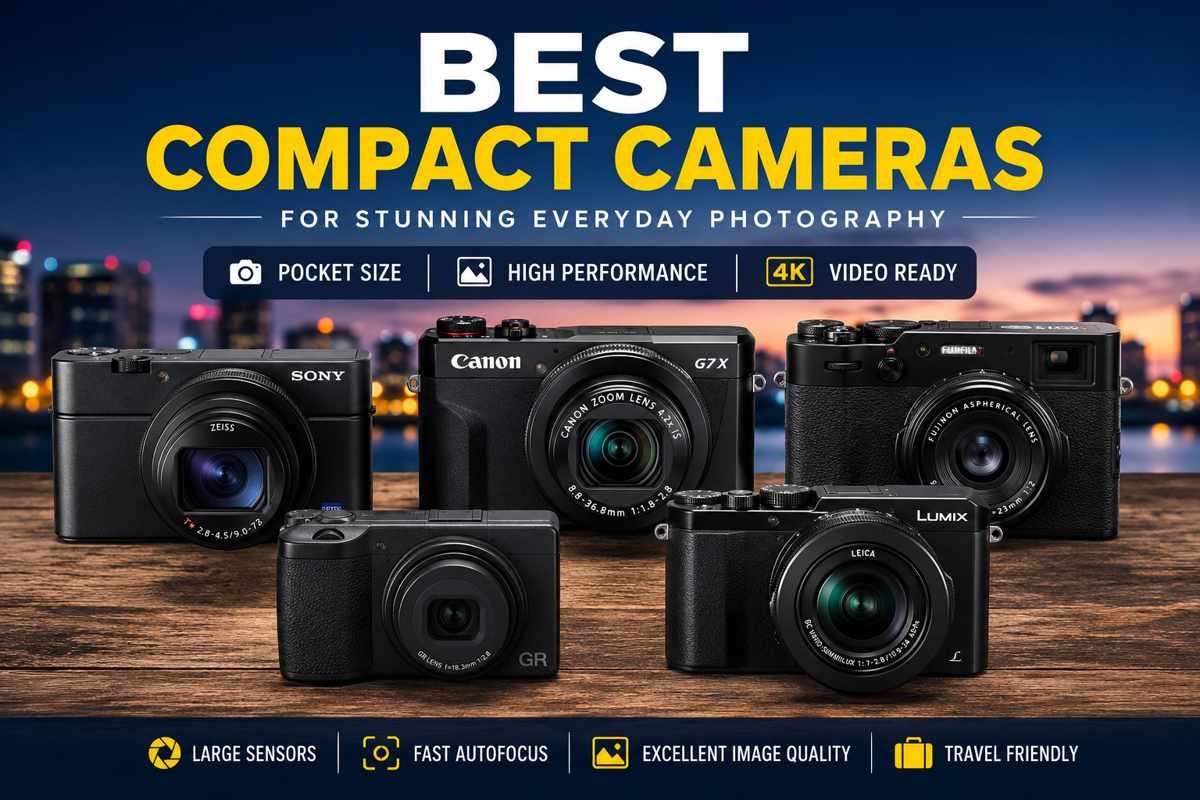
Compact cameras have changed a lot over the last decade. What used to be simple point-and-shoot devices are now powerful tools capable of producing professional-looking images in a lightweight body. While smartphones continue to improve, compact cameras still offer larger sensors, better optics, improved low-light performance, and more creative control. For travelers, content creators, beginners, and photography enthusiasts, choosing the best compact cameras can make a huge difference in image quality and shooting experience.
This guide explores what makes a compact camera worth buying, the key features to consider, and some of the strongest camera options available today for different photography styles.
Why Compact Cameras Still Matter
Many people assume smartphones have replaced compact cameras entirely. In reality, compact cameras remain popular because they solve several limitations that phones still struggle with.
A compact camera usually includes a larger sensor, optical zoom, better stabilization, and more advanced autofocus systems. These features help produce sharper photos, cleaner low-light images, and more natural background blur. Compact cameras also provide manual controls that allow photographers to experiment creatively with exposure, shutter speed, and aperture settings.
Another major advantage is portability. Mirrorless and DSLR cameras can become heavy during long trips or daily use. Compact cameras deliver excellent image quality without requiring a large camera bag.
What Makes a Great Compact Camera
Before buying a camera, it helps to understand the features that separate average models from truly reliable ones.
Sensor Size
Sensor size directly affects image quality. Larger sensors capture more light and detail, especially in darker environments. Most premium compact cameras use 1-inch sensors or APS-C sensors, both of which perform significantly better than standard smartphone sensors.
Lens Quality
A sharp lens improves clarity, color accuracy, and low-light capability. Cameras with bright apertures such as f/1.8 or f/2.0 allow more light into the sensor, creating cleaner night images and softer backgrounds.
Autofocus Performance
Fast autofocus is essential for capturing moving subjects, street scenes, and spontaneous moments. Modern compact cameras now include eye detection and subject tracking features once found only in professional cameras.
Video Capabilities
Many users now create content for YouTube, TikTok, and Instagram. Compact cameras with 4K recording, microphone inputs, and stabilization offer better results than phones for video production.
Battery Life and Portability
A camera should be easy to carry while still offering enough battery life for travel or full-day shooting. Lightweight models with USB charging are especially convenient for everyday use.
Best Compact Cameras Worth Considering
Sony RX100 VII
The Sony RX100 VII is often considered one of the strongest all-around compact cameras available today. Despite its small size, it delivers excellent image quality and incredibly fast autofocus performance.
The camera features a 1-inch sensor paired with a versatile zoom lens. Its autofocus system is especially impressive for sports, wildlife, and street photography. Eye-tracking technology works extremely well for portraits and video recording.
For content creators, the RX100 VII supports high-quality 4K video and includes a microphone input, which is rare for a compact model. Travelers also appreciate its lightweight design and pocket-friendly size.
Best For
- Travel photography
- Street photography
- YouTube creators
- Everyday carry
Canon PowerShot G7 X Mark III
The Canon G7 X Mark III remains a favorite among vloggers and casual photographers because of its simplicity and reliable performance.
Its bright lens performs well in low light, making indoor photography easier without excessive noise. The touchscreen interface feels intuitive, especially for beginners transitioning from smartphone photography.
Canon’s color science also produces pleasing skin tones straight out of the camera, which many users appreciate for portraits and social media content.
The camera includes vertical video support and live-streaming capabilities, making it highly useful for modern creators.
Best For
- Vlogging
- Beginner photographers
- Lifestyle content
- Social media creators
Fujifilm X100VI
Fujifilm has built a loyal following with the X100 series, and the X100VI continues that tradition beautifully. Unlike zoom-based compact cameras, this model uses a fixed lens designed for exceptional image quality.
The camera offers a classic design with tactile manual controls that create a more immersive shooting experience. Fujifilm’s famous film simulation modes also help photographers achieve cinematic colors without heavy editing.
Its APS-C sensor delivers excellent detail and dynamic range, especially for street photography and environmental portraits.
Although it may not suit users needing zoom flexibility, many photographers love the simplicity and artistic feel it provides.
Best For
- Street photography
- Documentary work
- Artistic photography
- Professional everyday shooting
Ricoh GR III
The Ricoh GR III is small enough to fit in a pocket while producing surprisingly professional results. It is highly respected among street photographers because of its discreet appearance and sharp image quality.
The camera uses an APS-C sensor and a fixed wide-angle lens that captures detailed and natural-looking scenes. Its startup speed and quick handling make it ideal for capturing spontaneous moments.
One of the strongest aspects of the GR III is portability. Few cameras combine such strong image quality with such a lightweight design.
Best For
- Minimalist photography
- Travel
- Street photography
- Daily documentation
Panasonic Lumix LX100 II
The Panasonic Lumix LX100 II blends manual controls with strong video features, making it a balanced choice for hybrid shooters.
Its larger Micro Four Thirds sensor helps improve low-light performance and image detail. The camera also includes physical dials for shutter speed and aperture, giving users a more hands-on shooting experience.
Video creators benefit from Panasonic’s strong 4K capabilities and reliable stabilization system.
Although slightly larger than some compact competitors, the extra control and image quality make it worthwhile.
Best For
- Hybrid photo and video work
- Enthusiast photographers
- Travel content
- Manual shooting
Choosing the Right Camera for Your Needs
For Travel Photography
Travel photographers often need lightweight gear that still delivers excellent quality. Cameras like the Sony RX100 VII and Ricoh GR III work especially well because they fit easily into small bags or jacket pockets.
Battery life, portability, and weather resistance become important factors during long trips.
For Content Creation
Video creators should prioritize cameras with stabilization, flip screens, microphone inputs, and strong autofocus systems. The Canon G7 X Mark III and Sony RX100 VII remain popular choices for creators because they are easy to carry and simple to use.
Good audio support is equally important for professional-looking videos.
For Low-Light Photography
Low-light photography depends heavily on sensor size and lens brightness. Cameras with larger sensors and wider apertures produce cleaner images with less digital noise.
Models like the Fujifilm X100VI and Panasonic LX100 II perform especially well in darker environments.
For Beginners
A beginner-friendly camera should feel simple without sacrificing quality. Touchscreen controls, automatic shooting modes, and straightforward menus can make the learning process easier.
Canon’s compact cameras are often praised for their user-friendly interfaces and natural color rendering.
Features You Should Not Ignore
Image Stabilization
Stabilization helps reduce blur caused by shaky hands, especially during handheld shooting or video recording. Optical stabilization becomes particularly useful in low-light conditions.
Flip Screens
A flip or tilting screen improves flexibility for selfies, vlogging, and shooting from creative angles. Many modern creators consider this feature essential.
RAW File Support
RAW shooting allows greater editing flexibility compared to JPEG files. Photographers who enjoy post-processing should choose a camera that supports RAW capture.
Connectivity
Wi-Fi and Bluetooth support make transferring images to phones and laptops much easier. Fast sharing is especially useful for travelers and social media users.
Are Compact Cameras Better Than Smartphones?
Smartphones are convenient, but dedicated compact cameras still offer important advantages. Larger sensors capture more detail and dynamic range, especially in difficult lighting situations. Optical zoom also maintains image quality better than digital zoom found on phones.
Compact cameras additionally provide better ergonomics and creative controls, helping photographers improve their skills over time.
For casual snapshots, smartphones may be enough. But for travel photography, professional-looking portraits, or high-quality content creation, compact cameras remain a strong investment.
Final Thoughts
The market for compact cameras continues to evolve, offering impressive options for nearly every type of photographer. Whether you prioritize portability, low-light performance, video quality, or creative control, there is a camera designed to match your needs.
The best compact cameras are not simply the most expensive models. The right choice depends on how and where you plan to shoot. Travelers may value lightweight portability, while creators may focus more on video features and autofocus performance.
Taking the time to understand sensor size, lens quality, stabilization, and usability will help you make a smarter decision. A well-chosen compact camera can remain useful for years while helping you capture moments with far better quality than a smartphone alone.
More Details : My Honest Journey With the Best Vlogging Camera (2026 Guide)
FAQs
1. Are compact cameras good for beginners?
Yes, many compact cameras are beginner-friendly and offer automatic shooting modes along with simple controls.
2. Can compact cameras shoot professional-quality photos?
Premium compact cameras with larger sensors can produce professional-level images suitable for prints and online content.
3. Which compact camera is best for travel?
The Sony RX100 VII and Ricoh GR III are popular travel choices because of their portability and image quality.
4. Do compact cameras work well in low light?
Yes, models with larger sensors and bright lenses perform very well in low-light conditions.
5. Are compact cameras better than smartphones?
Compact cameras usually offer better image quality, optical zoom, and manual controls compared to smartphones.

12 Best Omegle Alternatives for Random Video Chat and Meeting New People

Dbxbqm Meaning: Why It Appears When You Try to Type YouTube

Immediate Loading Implants: How “Fixed Teeth in 48 Hours” Really Works

How UK Mobile Proxies Help Businesses Test Their Websites

Gen AI in Supply Chain: Using Supply Chain Benchmarks to Improve Performance

What Is the UK Theory Test? How It Works, Cost and Pass Mark

Weather the Storm: Why Totally Branded Umbrellas are the UK’s Most Appreciated Gift

How to Store, Wind, and Travel With Your Automatic Watch Collection Without Damaging It

What Do HubSpot Onboarding Services Include?

AI in Supply Chain: How AI Consulting Services Help Build More Intelligent and Resilient Operations
Immediate Loading Implants: How “Fixed Teeth in 48 Hours” Really Works
How UK Mobile Proxies Help Businesses Test Their Websites
Gen AI in Supply Chain: Using Supply Chain Benchmarks to Improve Performance
12 Best Omegle Alternatives for Random Video Chat and Meeting New People
Dbxbqm Meaning: Why It Appears When You Try to Type YouTube
12 Best Omegle Alternatives for Random Video Chat and Meeting New People
Dbxbqm Meaning: Why It Appears When You Try to Type YouTube
Immediate Loading Implants: How “Fixed Teeth in 48 Hours” Really Works
How UK Mobile Proxies Help Businesses Test Their Websites
Gen AI in Supply Chain: Using Supply Chain Benchmarks to Improve Performance
What Is the UK Theory Test? How It Works, Cost and Pass Mark
Weather the Storm: Why Totally Branded Umbrellas are the UK’s Most Appreciated Gift
How to Store, Wind, and Travel With Your Automatic Watch Collection Without Damaging It
What Do HubSpot Onboarding Services Include?
AI in Supply Chain: How AI Consulting Services Help Build More Intelligent and Resilient Operations
-

 Tech9 months ago
xxx is equal to 2022: A Complete Informative Explanation of a Cubic Equation
-

 Celebrity9 months ago
Izzie Balmer Partner: A Deep Dive into the Relationship with Will Hawley
-

 Entertainment9 months ago
The Artistic World of Gege Akutami: A Mastermind Behind Jujutsu Kaisen
-

 Food5 months ago
Best Sushi Rice Brands: A Complete Guide to Choosing the Right Rice for Sushi