
Anime
Lady Nagant’s Fall and Redemption in My Hero Academia

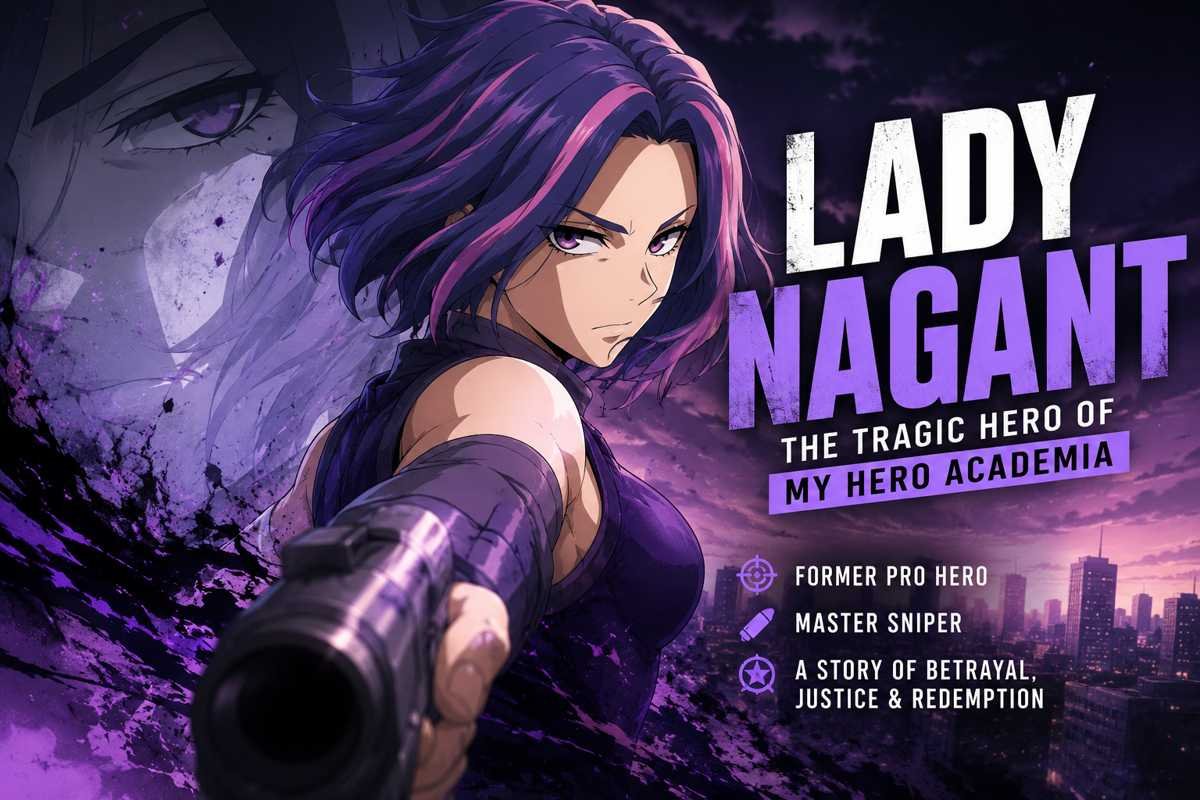
Among the many complex characters introduced in My Hero Academia, few have left as strong an impression as Lady Nagant. She entered the story later than many major heroes and villains, yet her appearance immediately changed the tone of the series. Calm, intelligent, and emotionally broken, she represented the darker side of hero society that had remained hidden for years.
Unlike many characters who simply fight for justice or destruction, Lady Nagant stands between both worlds. Her story is not only about battles and powerful abilities. It is about manipulation, trust, trauma, and the emotional cost of living inside a system that demanded silence. Fans quickly became interested in her because she challenged the idea that heroes are always morally right.
Her tragic journey, combined with her unique abilities and emotional depth, turned her into one of the most memorable figures in the series. This article explores her background, powers, role in the story, and why her character became so important in the final stages of My Hero Academia.
The Origins of Lady Nagant
Before becoming feared as a villain and admired by fans, Lady Nagant was once considered a top professional hero. Her real name is Kaina Tsutsumi, and she worked directly under the Hero Public Safety Commission. From a young age, she was trained to become the perfect symbol of justice.
However, her childhood was far from normal. Instead of enjoying freedom and happiness, she was raised to obey orders without question. The Commission saw her talent as a weapon that could protect society from hidden threats. She was told that heroes must sometimes dirty their hands to maintain peace.
At first, she accepted this responsibility. She believed that protecting society required sacrifice. But over time, the missions became darker and more disturbing. She was ordered to eliminate dangerous individuals in secret, including corrupt heroes and criminals who threatened public trust. These actions slowly destroyed her mental and emotional stability.
The pressure eventually became unbearable. After realizing how deeply corrupted the system truly was, she confronted a member of the Hero Public Safety Commission and killed him during an argument. That moment changed her life forever. She was arrested and sent to Tartarus Prison, where the world viewed her as a dangerous criminal rather than a broken hero.
A Character Built on Moral Conflict
One reason Lady Nagant became so popular is because she represents moral complexity. In many anime stories, heroes and villains are clearly separated. In My Hero Academia, however, her story proves that the line between justice and corruption is not always clear.
She did terrible things, but she was also manipulated by the system she served. Readers and viewers could understand her anger because she spent years carrying out painful tasks in silence. Instead of receiving emotional support, she was expected to continue working as a weapon.
This emotional conflict made her more realistic than many traditional villains. She was not interested in chaos for fun, nor did she seek power for selfish reasons. Her hatred came from betrayal and emotional exhaustion.
Even after joining forces with All For One, she still showed signs of humanity. Deep inside, she had not completely abandoned her belief in justice. That inner conflict became especially important during her interaction with Izuku Midoriya.
The Unique Power of Lady Nagant
One of the most fascinating aspects of Lady Nagant is her Quirk, called Rifle. This ability allows her to transform her right arm into a sniper rifle. She can create bullets using her own hair, shaping them into different forms depending on the situation.
Her Quirk perfectly matches her personality. She is patient, precise, and highly disciplined. Unlike heroes who rely on explosive strength or flashy attacks, she specializes in long-range combat and careful strategy.
What makes her especially dangerous is her incredible accuracy. She can hit moving targets from extremely long distances with almost impossible precision. Combined with her intelligence and combat training, she became one of the deadliest fighters in the series.
After escaping Tartarus, she also received an additional Quirk called Air Walk from All For One. This ability allowed her to float and move freely in the air, making her even harder to defeat. With long-range attacks and aerial mobility, she became a serious threat even to powerful heroes.
Her fighting style stood out because it felt realistic and tactical. Instead of relying on overwhelming force, she studied opponents carefully and attacked with calculated efficiency.
Her Encounter With Deku
The battle between Lady Nagant and Deku became one of the most emotional confrontations in the later arcs of My Hero Academia. At this point in the story, society was collapsing, trust in heroes was fading, and Deku was struggling under the burden of carrying One For All.
All For One sent Lady Nagant to capture Deku. Although she accepted the mission, she initially viewed him as just another idealistic hero who did not understand the truth about society.
During their confrontation, Deku surprised her. Instead of treating her as a monster, he tried to understand her pain. He acknowledged the failures of hero society while still believing that people could create a better future.
This conversation deeply affected her. For years, she had lost faith in the idea of genuine heroism. Deku’s determination reminded her of the ideals she once believed in before corruption destroyed her trust.
The battle itself showcased incredible action and strategy. Deku combined multiple Quirks to keep up with her sniper attacks, while she constantly adapted to his movements. Beyond the physical fight, however, the emotional conflict between them carried the greatest weight.
In the end, she began reconsidering her choices. That moment revealed that she was never completely evil. She was simply someone who had been emotionally broken by a flawed system.
The Tragic Explosion and Its Meaning
One of the most shocking moments involving Lady Nagant occurred after she decided to cooperate with Deku. Because All For One never truly trusted anyone, he had secretly planted a destructive trap within the additional Quirk he gave her.
When she turned against him, her body exploded violently.
This scene carried major emotional significance. It demonstrated how All For One treats people as disposable tools. Even someone as powerful and skilled as Lady Nagant was ultimately viewed as replaceable.
The explosion also symbolized the damage caused by manipulation and control. Throughout her life, she was used by powerful organizations. First the Hero Public Safety Commission controlled her actions, and later All For One attempted to use her for his own goals.
Despite suffering terrible injuries, she survived. More importantly, her final actions before the explosion showed that she still possessed courage and humanity.
That moment became one of the emotional turning points of the final arc because it reinforced one of the series’ central themes: people are not born evil, but society can push them into darkness.
Why Fans Connected With Her Story
There are several reasons why Lady Nagant quickly became a fan favorite despite having less screen time than many major characters.
First, her design is unforgettable. Her sharp eyes, dark costume, and calm demeanor create an intimidating yet elegant appearance. She feels mature and realistic compared to many traditional anime characters.
Second, her personality stands out because she speaks with emotional restraint. She rarely shouts or behaves dramatically. Instead, her pain is shown through quiet dialogue and thoughtful expressions.
Another important reason is the realism of her struggles. Many viewers related to the idea of burnout, emotional exhaustion, and disappointment with broken systems. Her story reflects how constant pressure and lack of emotional support can destroy even talented individuals.
Fans also appreciated that she was neither fully heroic nor entirely villainous. Characters with emotional complexity often leave stronger impressions because they feel more human.
Even after her defeat, discussions about her role continued across the anime community. Many viewers considered her one of the best-written female characters in My Hero Academia.
The Dark Side of Hero Society
A major purpose of Lady Nagant’s character was to expose the hidden problems within hero society.
Throughout the series, heroes are usually celebrated as symbols of hope. They appear in advertisements, receive public praise, and inspire citizens. However, her backstory revealed that the system also depended on secrecy and violence.
The Hero Public Safety Commission believed that maintaining public peace justified morally questionable actions. Instead of solving corruption openly, they erased threats quietly to preserve society’s image.
This revelation changed how many fans viewed the world of My Hero Academia. It showed that even institutions created for justice can become corrupted when transparency disappears.
Lady Nagant became the perfect representation of this hidden darkness. She carried the emotional burden of protecting society while sacrificing her own peace of mind.
Her story also forced Deku to mature. He realized that becoming the greatest hero required more than strength. It also meant understanding society’s flaws and finding ways to improve them.
Her Role in the Final Arc
Although Lady Nagant appeared relatively late in the series, her role in the final arc remained important.
After surviving her injuries, she eventually returned to help the heroes during the final battle. This decision symbolized redemption and hope.
Instead of allowing her past mistakes to define her forever, the story gave her another chance to fight for a better future. Her assistance proved that people who fall into darkness can still choose a different path.
Her actions also highlighted one of the key themes of My Hero Academia: saving people emotionally is just as important as defeating them physically.
Deku’s willingness to understand her pain played a major role in changing her perspective. Rather than destroying enemies completely, he tried to reach them emotionally.
This approach separated him from previous generations of heroes and reinforced why he represented the future of hero society.
The Lasting Impact of Lady Nagant
Even with limited appearances, Lady Nagant left a powerful impact on the story and its fans.
She brought emotional depth to the final arcs and challenged simplistic ideas about heroism. Through her, the series explored corruption, trauma, and emotional isolation in a way that felt mature and meaningful.
Her tragic journey also reminded viewers that systems can fail people, especially when individuals are treated as tools instead of human beings.
At the same time, her eventual redemption offered hope. She proved that even after experiencing betrayal and pain, people can still choose compassion and courage.
Because of this balance between tragedy and redemption, many fans continue discussing her character long after her major scenes ended.
Conclusion
Lady Nagant stands as one of the most emotionally compelling characters in My Hero Academia. Her story is not simply about becoming a villain or fighting heroes. It is about trust, manipulation, emotional exhaustion, and the search for genuine justice.
From her childhood training under the Hero Public Safety Commission to her emotional confrontation with Deku, every stage of her journey revealed deeper truths about hero society.
Her powerful Quirk, calm personality, and tragic history made her unforgettable, but it was her emotional complexity that truly connected with audiences.
In the end, she became more than just a supporting character. She became a symbol of how broken systems can damage people and how understanding and compassion can help them recover.
As My Hero Academia moved toward its conclusion, Lady Nagant remained one of the clearest examples that true heroism is not about perfection. It is about continuing to seek hope even after experiencing darkness.
More Details : Understanding Demon Slayer Characters: Roles, Powers, and Story Significance
FAQs
1. Who is Lady Nagant in My Hero Academia?
Lady Nagant is a former professional hero named Kaina Tsutsumi who worked for the Hero Public Safety Commission before becoming imprisoned in Tartarus.
2. What is Lady Nagant’s Quirk?
Her Quirk is called Rifle, which allows her to transform her arm into a sniper rifle and create bullets from her hair.
3. Why did Lady Nagant become a villain?
She lost faith in hero society after being forced to carry out secret and morally questionable missions for the Hero Public Safety Commission.
4. Did Lady Nagant survive the explosion?
Yes, she survived the explosion caused by All For One, although she suffered serious injuries.
5. Why is Lady Nagant popular among fans?
Fans appreciate her emotional depth, tragic backstory, unique fighting style, and morally complex personality

12 Best Omegle Alternatives for Random Video Chat and Meeting New People

Dbxbqm Meaning: Why It Appears When You Try to Type YouTube

Immediate Loading Implants: How “Fixed Teeth in 48 Hours” Really Works

How UK Mobile Proxies Help Businesses Test Their Websites

Gen AI in Supply Chain: Using Supply Chain Benchmarks to Improve Performance

What Is the UK Theory Test? How It Works, Cost and Pass Mark

Weather the Storm: Why Totally Branded Umbrellas are the UK’s Most Appreciated Gift

How to Store, Wind, and Travel With Your Automatic Watch Collection Without Damaging It

What Do HubSpot Onboarding Services Include?

AI in Supply Chain: How AI Consulting Services Help Build More Intelligent and Resilient Operations
Immediate Loading Implants: How “Fixed Teeth in 48 Hours” Really Works
How UK Mobile Proxies Help Businesses Test Their Websites
Gen AI in Supply Chain: Using Supply Chain Benchmarks to Improve Performance
12 Best Omegle Alternatives for Random Video Chat and Meeting New People
Dbxbqm Meaning: Why It Appears When You Try to Type YouTube
12 Best Omegle Alternatives for Random Video Chat and Meeting New People
Dbxbqm Meaning: Why It Appears When You Try to Type YouTube
Immediate Loading Implants: How “Fixed Teeth in 48 Hours” Really Works
How UK Mobile Proxies Help Businesses Test Their Websites
Gen AI in Supply Chain: Using Supply Chain Benchmarks to Improve Performance
What Is the UK Theory Test? How It Works, Cost and Pass Mark
Weather the Storm: Why Totally Branded Umbrellas are the UK’s Most Appreciated Gift
How to Store, Wind, and Travel With Your Automatic Watch Collection Without Damaging It
What Do HubSpot Onboarding Services Include?
AI in Supply Chain: How AI Consulting Services Help Build More Intelligent and Resilient Operations
-

 Tech9 months ago
xxx is equal to 2022: A Complete Informative Explanation of a Cubic Equation
-

 Celebrity9 months ago
Izzie Balmer Partner: A Deep Dive into the Relationship with Will Hawley
-
 Entertainment9 months ago
The Artistic World of Gege Akutami: A Mastermind Behind Jujutsu Kaisen
-

 Food5 months ago
Best Sushi Rice Brands: A Complete Guide to Choosing the Right Rice for Sushi