
Tech
API Testing Strategies: A Practical Guide to Building Reliable and Secure APIs

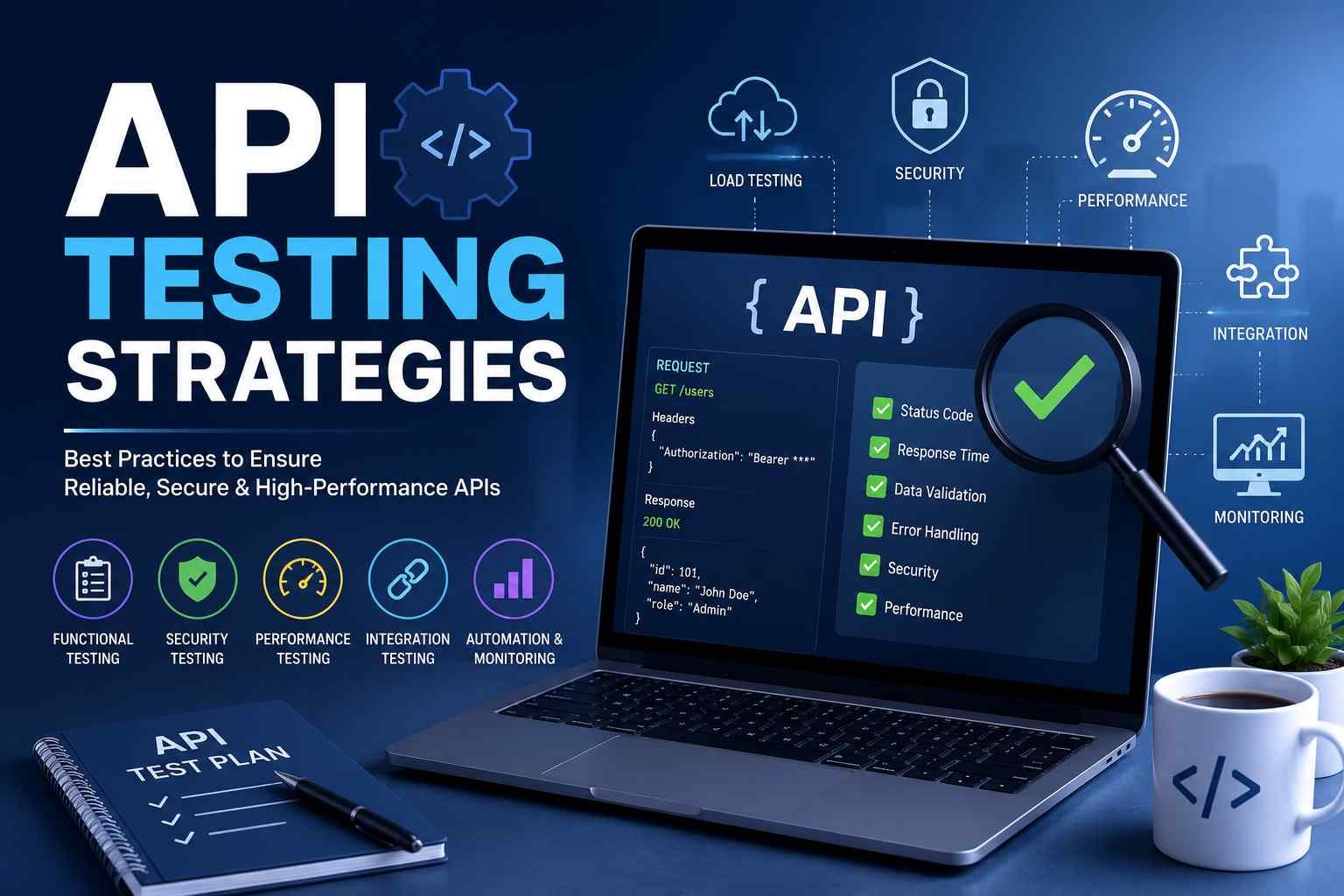
Modern applications depend heavily on APIs to connect services, exchange data, and deliver seamless user experiences. Whether it is a mobile banking app, an e-commerce platform, or a cloud-based business tool, APIs act as the communication layer that keeps systems working together. Because APIs play such a critical role, organizations must ensure they function correctly, remain secure, and perform consistently under different conditions.
This is where api testing strategies become essential. A well-planned testing approach helps development teams identify defects early, reduce downtime, improve security, and deliver dependable digital products. Understanding how to test APIs effectively can significantly improve software quality while reducing maintenance costs over time.
Understanding API Testing
API testing is the process of verifying that an application programming interface behaves as expected. Unlike user interface testing, which focuses on what users see and interact with, API testing examines the communication between software components.
The goal is to validate requests, responses, data handling, business logic, performance, and security. Since APIs often serve as the foundation of modern applications, testing them directly can uncover issues before they affect end users. This makes API testing faster, more reliable, and often more cost-effective than relying solely on interface-based testing.
Why API Testing Matters
APIs are responsible for transferring sensitive information, processing transactions, and connecting multiple systems. Even a small defect can create significant problems, including application failures, security vulnerabilities, or inaccurate data exchange.
Effective testing provides confidence that APIs can handle expected and unexpected situations. It helps ensure that data remains accurate, users receive the correct information, and services continue functioning smoothly during heavy traffic. Organizations that prioritize API quality often experience fewer production issues and improved customer satisfaction.
Defining Clear Testing Objectives
One of the most important api testing strategies is establishing clear objectives before testing begins. Teams should identify what they want to validate and how success will be measured.
For example, testing objectives may include verifying data accuracy, ensuring response times meet performance requirements, confirming authentication mechanisms work correctly, or validating error handling. Clear goals help testers focus on the most critical aspects of the API and avoid unnecessary testing efforts.
Functional Testing for Core Validation
Functional testing verifies that API endpoints perform their intended actions. This type of testing focuses on business requirements and expected behavior.
A tester may send requests with valid inputs and confirm that the correct responses are returned. They may also verify that data is created, updated, retrieved, or deleted properly. Functional testing ensures that every endpoint fulfills its intended purpose and supports business processes accurately.
Strong functional coverage forms the foundation of successful api testing strategies because it confirms the API can perform its primary responsibilities.
Validation of Request and Response Data
Data validation is a critical component of API quality assurance. APIs must accept correctly formatted inputs and return accurate outputs based on established specifications.
Testing should verify response codes, data structures, field types, and required attributes. It is also important to confirm that invalid requests generate appropriate error messages. Proper validation helps maintain consistency across systems and prevents data corruption that could affect downstream services.
Security Testing for Protection Against Threats
Security remains one of the biggest concerns in modern software development. APIs often expose valuable business and customer information, making them attractive targets for attackers.
Security testing evaluates authentication, authorization, encryption, and access control mechanisms. Testers should verify that only authorized users can access protected resources and that sensitive data is transmitted securely.
Among the most valuable api testing strategies, security testing helps identify vulnerabilities before malicious actors can exploit them. Regular security assessments contribute to stronger compliance and better protection of organizational assets.
Performance Testing Under Real-World Conditions
An API may function perfectly during development but struggle under heavy usage. Performance testing evaluates how the API behaves when handling different levels of traffic.
This process includes measuring response times, throughput, resource utilization, and system stability. Teams often simulate realistic user loads to determine how the API performs under stress.
Performance testing helps organizations identify bottlenecks, optimize infrastructure, and ensure a positive user experience during peak demand periods.
Load and Stress Testing
Although closely related to performance testing, load and stress testing serve distinct purposes.
Load testing measures how the API performs under expected traffic levels. It verifies that the system can maintain acceptable performance when serving regular users.
Stress testing pushes the API beyond its normal limits to determine its breaking point. This approach helps teams understand system resilience and identify areas requiring improvement. Including both methods in api testing strategies provides a more complete picture of system reliability.
Automation for Faster and Consistent Testing
Automation has become an essential part of modern software development. Automated API tests can run repeatedly without manual intervention, providing rapid feedback during development cycles.
Automated testing improves consistency, reduces human error, and accelerates release processes. It is particularly useful for regression testing, where previously validated functionality must be rechecked after code changes.
Organizations that integrate automated testing into their development pipelines often achieve faster delivery while maintaining higher quality standards.
Regression Testing for Ongoing Stability
Software evolves continuously through updates, bug fixes, and new features. Every modification introduces the possibility of unintended side effects.
Regression testing ensures that existing functionality continues working after changes are implemented. Automated regression suites are especially valuable because they can quickly verify large portions of the API without extensive manual effort.
Reliable api testing strategies always include regression testing because it protects application stability throughout the software lifecycle.
Error Handling and Edge Case Testing
Real users do not always follow ideal workflows. They may enter incorrect information, submit incomplete requests, or trigger unusual system conditions.
Testing should include edge cases and unexpected scenarios to verify how the API responds. Examples include invalid parameters, missing fields, unsupported formats, and extremely large data payloads.
Proper error handling improves reliability and provides meaningful feedback to developers and users when problems occur.
Contract Testing for Service Compatibility
Many modern applications use microservices and distributed architectures. In these environments, different services communicate through predefined API contracts.
Contract testing verifies that providers and consumers continue adhering to agreed specifications. This helps prevent integration issues that could arise when one service changes without notifying others.
Contract testing is increasingly recognized as one of the most effective api testing strategies for maintaining compatibility across complex software ecosystems.
Monitoring APIs After Deployment
Testing should not stop when an API is released. Continuous monitoring helps organizations detect issues that may appear in production environments.
Monitoring tools track response times, error rates, availability, and usage patterns. These insights allow teams to identify performance degradation, security concerns, or unexpected behavior before users are significantly affected.
Ongoing monitoring complements pre-release testing and contributes to long-term API reliability.
Best Practices for Successful API Testing
Successful API testing requires a structured and consistent approach. Teams should maintain clear documentation, define test cases based on business requirements, automate repetitive processes, and regularly update testing procedures as APIs evolve.
It is also important to test early in the development cycle rather than waiting until deployment approaches. Early detection of issues reduces costs and accelerates resolution efforts. Collaboration among developers, testers, and security specialists further strengthens testing outcomes and improves overall software quality.
Conclusion
APIs serve as the backbone of modern digital applications, making their reliability, security, and performance essential for business success. Effective api testing strategies help organizations identify defects early, maintain service quality, and deliver better user experiences.
By combining functional testing, security validation, performance analysis, automation, regression testing, contract verification, and continuous monitoring, teams can build APIs that remain dependable under real-world conditions. As software systems become increasingly interconnected, investing in comprehensive API testing will continue to be a key factor in creating robust and scalable applications.
More Details : Seeing Beyond the Surface: Understanding Mirror-Testing and Self-Awareness
FAQs
1. What is API testing?
API testing is the process of verifying that an API functions correctly, securely, and efficiently by testing requests, responses, business logic, and data handling.
2. Why is API testing important?
It helps identify defects early, improves security, ensures accurate data exchange, and enhances overall application reliability.
3. What is the difference between API testing and UI testing?
API testing focuses on backend communication and functionality, while UI testing evaluates the visual interface and user interactions.
4. Can API testing be automated?
Yes. Automated API testing is widely used to improve efficiency, support continuous integration, and perform regression testing consistently.
5. What types of API testing are commonly used?
Common types include functional testing, security testing, performance testing, load testing, stress testing, regression testing, and contract testing.

12 Best Omegle Alternatives for Random Video Chat and Meeting New People

Dbxbqm Meaning: Why It Appears When You Try to Type YouTube

Immediate Loading Implants: How “Fixed Teeth in 48 Hours” Really Works

How UK Mobile Proxies Help Businesses Test Their Websites

Gen AI in Supply Chain: Using Supply Chain Benchmarks to Improve Performance

What Is the UK Theory Test? How It Works, Cost and Pass Mark

Weather the Storm: Why Totally Branded Umbrellas are the UK’s Most Appreciated Gift

How to Store, Wind, and Travel With Your Automatic Watch Collection Without Damaging It

What Do HubSpot Onboarding Services Include?

AI in Supply Chain: How AI Consulting Services Help Build More Intelligent and Resilient Operations
Immediate Loading Implants: How “Fixed Teeth in 48 Hours” Really Works
How UK Mobile Proxies Help Businesses Test Their Websites
12 Best Omegle Alternatives for Random Video Chat and Meeting New People
Dbxbqm Meaning: Why It Appears When You Try to Type YouTube
12 Best Omegle Alternatives for Random Video Chat and Meeting New People
Dbxbqm Meaning: Why It Appears When You Try to Type YouTube
Immediate Loading Implants: How “Fixed Teeth in 48 Hours” Really Works
How UK Mobile Proxies Help Businesses Test Their Websites
Gen AI in Supply Chain: Using Supply Chain Benchmarks to Improve Performance
What Is the UK Theory Test? How It Works, Cost and Pass Mark
Weather the Storm: Why Totally Branded Umbrellas are the UK’s Most Appreciated Gift
How to Store, Wind, and Travel With Your Automatic Watch Collection Without Damaging It
What Do HubSpot Onboarding Services Include?
AI in Supply Chain: How AI Consulting Services Help Build More Intelligent and Resilient Operations
-

 Tech9 months ago
xxx is equal to 2022: A Complete Informative Explanation of a Cubic Equation
-

 Celebrity9 months ago
Izzie Balmer Partner: A Deep Dive into the Relationship with Will Hawley
-

 Entertainment9 months ago
The Artistic World of Gege Akutami: A Mastermind Behind Jujutsu Kaisen
-

 Food5 months ago
Best Sushi Rice Brands: A Complete Guide to Choosing the Right Rice for Sushi