
Lifestyle
How Magnesium Gummies Can Support Everyday Wellness

Life can get busy, and it’s not always easy to keep your health on track. Between work, family, and everyday responsibilities, eating well can slip, and key nutrients can be missed. That’s where magnesium comes in. Magnesium is a mineral linked to many parts of overall health.
And if you don’t like swallowing pills, magnesium gummies are a simple, great-tasting way to help fill nutrition gaps and support day-to-day wellness.
Magnesium gummies can be an easy and enjoyable way to get more of this important mineral. They can help with common low-magnesium issues and support a more steady, balanced body. Gummies can also turn a daily supplement into something you actually want to take, which makes it easier to keep up with. Below, we’ll explain how these chewy supplements can fit into a wellness routine, from sleep support to heart and muscle health.
What Is Magnesium and Why Does It Matter for Wellness?
Magnesium is more than just another nutrient you see listed on food labels. It’s an essential mineral found throughout the body, and it takes part in a huge number of processes needed for good health. It’s the fourth most common mineral in the body, and every cell needs it to work properly. Magnesium is found in bones, tissues, and body fluids, and it helps keep basic body functions running smoothly.
Magnesium acts like a helper in over 300 enzyme reactions (some sources say even more). These reactions support core body tasks like making energy and sending nerve signals. If magnesium levels get too low, these systems may not work as well, which can affect how you feel day to day.
Roles of Magnesium in the Body
Magnesium has many jobs in the body. One of the biggest is energy production. It helps the body turn food into energy by supporting the creation of ATP (adenosine triphosphate), which is what cells use for fuel. It also helps the body build proteins and supports the making and repair of DNA and RNA.
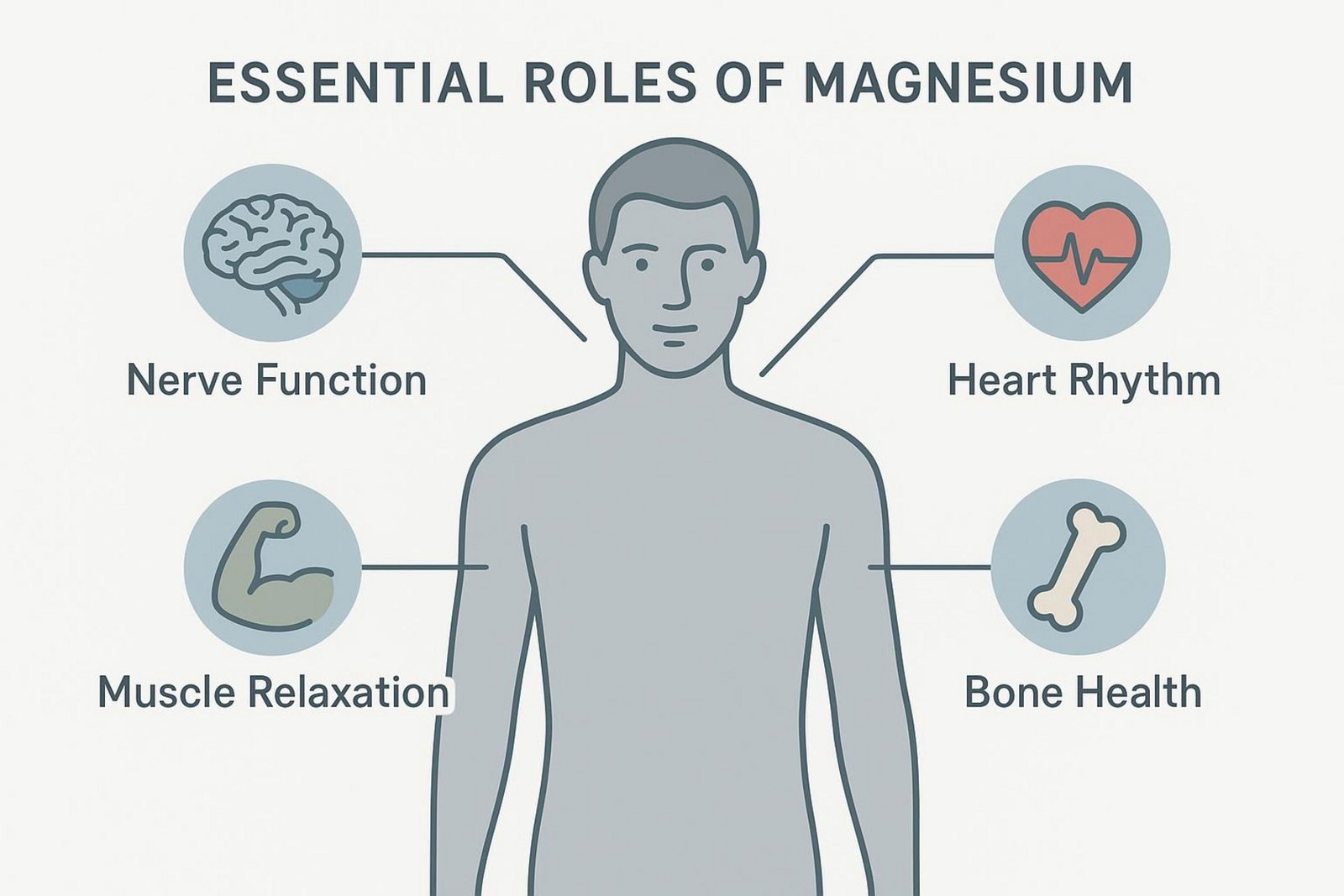
Magnesium is also important for muscles. It helps muscles tighten and relax, which can lower the chance of cramps and spasms. It supports the nervous system by helping control neurotransmitters, which are chemicals that carry messages in the brain and nerves. This links magnesium to brain health as well. It can also support healthy blood pressure and heart rhythm by helping blood vessels relax and keeping electrical signals in the heart steady. Magnesium touches many systems in the body, which is why it matters so much for general wellness.
Recommended Daily Intake and Common Deficiency
Even though magnesium is important, low intake is common. A UCLA Health article (November 2025) reported that nearly half of U.S. adults do not meet the recommended dietary allowance (RDA) for magnesium. For women age 31 and up, the RDA is about 320 mg per day. For men age 31 and up, it’s about 420 mg per day. The RDAs are mainly set to prevent deficiency, and may not match specific goals like better sleep or stress support, as noted by Yasi Ansari, MS, RDN at UCLA Santa Monica Medical Center.
Some people are more likely to fall short. Digestive problems and certain metabolic disorders can reduce absorption. Alcohol dependence and malnutrition can also raise the risk. Diets heavy in ultra-processed foods are another reason many people miss out, since food processing and some cooking methods reduce magnesium. A blood test can catch severe deficiency, but it may not show the full picture, because most magnesium is stored in bones and inside cells, not in the blood. That’s why it helps to pay attention to diet and use supplements if needed.
Key Benefits of Magnesium Gummies for Everyday Wellness
Magnesium gummies are a simple, good-tasting way to get magnesium and support many parts of health. Getting enough magnesium may improve daily comfort and help support sleep, mood, muscles, bones, and more.
Promotes Relaxation and Better Sleep
One of the best-known benefits of magnesium is support for relaxation and sleep. Magnesium helps calm the nervous system by supporting neurotransmitters like GABA (gamma-aminobutyric acid), which helps lower nerve activity. This can make it easier to wind down and fall asleep. Studies suggest magnesium supplements may help older adults with insomnia fall asleep faster (by about 17 minutes on average) and improve sleep quality and length.
Many people find magnesium glycinate helpful for sleep because it absorbs well and is usually gentle on the stomach. By helping muscles relax and lowering “overactive” nerve signals, magnesium can support the body in getting ready for rest, which can lead to better energy during the day.
Supports Muscle Recovery and Reduces Cramps
Magnesium is key for muscle function because it helps control muscle tightening and relaxing. It helps manage calcium and potassium inside muscle cells. Calcium supports muscle tightening, and magnesium helps the muscle relax again. If magnesium is low, muscles may cramp more easily, with more spasms or weakness.
Magnesium may also support recovery after workouts. It helps move blood sugar into muscles for energy and helps clear lactate, which can build up and add to fatigue. A 2019 study in professional male cyclists found that steady magnesium intake supported recovery and helped protect against muscle damage. Magnesium may also help reduce age-related muscle loss (sarcopenia) by supporting protein building, which muscles need to repair and grow.

Helps Regulate Mood and Manage Stress
Magnesium also affects brain health and mood. Low magnesium levels are often linked with a higher risk of depression and anxiety. Magnesium helps control neurotransmitters involved in mood, including serotonin and dopamine. It may also help protect the brain from processes that can harm mood and thinking.
A 2020 review reported that stress can lower magnesium levels, which may create a cycle: stress lowers magnesium, and low magnesium makes stress harder to handle. Some studies show that magnesium supplements can reduce symptoms of depression and anxiety, even when a person is not diagnosed with a clear deficiency. Magnesium glycinate is often chosen for mood and stress support because many people find it calming.
Contributes to Heart Health
Magnesium supports heart health in several ways. It can help support healthy blood pressure by helping blood vessels relax. It also helps keep heart rhythm steady by balancing minerals like calcium and potassium, which are involved in heart muscle movement and electrical signals.
Higher magnesium intake is often linked to a lower risk of high blood pressure, heart disease, and stroke. Magnesium may also help improve other heart-related risk factors, like triglycerides and cholesterol levels, especially in people who are low in magnesium. By supporting blood vessels, metabolism, and heart rhythm, magnesium plays a steady supporting role in cardiovascular health.
Supports Bone Strength and Density
Calcium gets most of the attention for bones, but magnesium is also important and works closely with calcium. Around 50-60% of the body’s magnesium is stored in bones. It supports bone structure and helps control the activity of cells that build and break down bone.
Magnesium also helps control calcium levels in the blood and helps activate vitamin D, which the body needs to absorb calcium. Low magnesium is linked with a higher risk of osteoporosis (weak, brittle bones). A 2024 study found a link between higher magnesium levels and stronger bone properties, showing how magnesium can support bone strength over time.
May Aid Healthy Blood Sugar Levels
Magnesium plays an important role in type 2 diabetes. Studies often show that higher magnesium intake is linked with a lower risk of developing type 2 diabetes. About 48% of people with type 2 diabetes have low magnesium levels in the blood, which can make blood sugar control harder. Magnesium supports glucose transport, insulin signaling, and pancreatic beta-cell function.
Higher magnesium levels are linked to better insulin sensitivity, which helps the body move sugar from the blood into cells. Studies also show magnesium supplements may improve insulin sensitivity and blood sugar control in people with type 2 diabetes, or people at risk, making magnesium a helpful non-drug support tool for some individuals.
Influences Energy Metabolism
Magnesium is needed for basic energy production. It supports hundreds of enzyme reactions, including many that turn food into energy. Magnesium helps form MgATP, the active form of ATP used by cells. When magnesium is low, energy production can drop, which may lead to low energy and fatigue.
Magnesium also supports energy production in mitochondria (the parts of cells that produce energy). Getting enough magnesium each day helps the body use food energy more efficiently, which supports physical and mental performance.
Potential Anti-inflammatory Effects
Long-lasting inflammation and oxidative stress are linked with aging and many chronic health problems. Low magnesium intake is often linked with higher inflammation levels. Magnesium supports the body’s antioxidant systems and helps protect against damage from free radicals. If magnesium is low, the body may produce more reactive oxygen species and have weaker antioxidant defenses.
Low magnesium is also linked with higher levels of inflammation markers like CRP and IL-6. Some studies show magnesium supplements can lower these markers in people with ongoing inflammation. By supporting how cells handle inflammation and oxidative stress, magnesium intake through food and/or supplements may help lower long-term health risks.
Who Might Benefit From Magnesium Gummies?
Because magnesium supports so many body systems, many different people may benefit from magnesium gummies. Gummies are also easy to take, which can help people stick with a supplement routine.
People with Magnesium Deficiency Symptoms
Symptoms like ongoing tiredness, muscle cramps or spasms, numbness and tingling, or unusual heart rhythms may be linked to low magnesium. A blood test can confirm severe deficiency, but it may not show magnesium levels inside cells. With guidance from a healthcare professional, magnesium supplements may help improve these symptoms. Magnesium can also help with constipation because it affects muscle movement in the digestive system.
Those Seeking Improved Sleep and Relaxation
If you deal with stress, anxiety, or trouble falling asleep, magnesium gummies may help. Magnesium supports calming brain chemicals and helps the nervous system settle down. If you often feel “wired” at night or have trouble relaxing, steady magnesium intake may support a calmer state and better sleep.
Individuals With Active Lifestyles
Athletes and people who move a lot may benefit from magnesium support. Exercise can lower magnesium levels, and magnesium is needed for muscle function, energy production, and recovery. It can help reduce cramps and soreness and support muscle repair. Whether you train hard or just work out regularly, magnesium gummies can be a simple way to support performance and recovery.
Women Seeking PMS Symptom Relief
PMS can cause symptoms like bloating, cramps, tiredness, mood changes, depression, and anxiety. Magnesium levels may shift during the menstrual cycle, which can make symptoms worse in some people, especially if magnesium intake is already low. Studies suggest magnesium supplements may help with PMS symptoms, including cramps and menstrual migraines. Taking magnesium daily, including forms like magnesium glycinate, may help with bloating and mood support.
Older Adults with Increased Magnesium Needs
As people age, magnesium intake and absorption can drop. Some older adults absorb less magnesium due to changes in digestion, like lower stomach acid. The body may also lose more magnesium through urine and sweat due to changes in kidneys and hormones. Low magnesium in older adults is linked with issues like heart disease, osteoporosis, muscle weakness, and cognitive decline. Magnesium gummies can be an easy, pleasant way for older adults to get more magnesium and support bone, muscle, and overall energy.
How Do Magnesium Gummies Deliver Magnesium?
Magnesium supplements come in different forms, and each form has different absorption and common uses. Gummies offer a chewable option that many people find easier to take than pills.
What Forms of Magnesium Are Used in Gummies?
Magnesium is usually paired with another compound to create a supplement form. Gummies often use forms that absorb well, such as magnesium citrate and magnesium glycinate. Magnesium citrate is known for good absorption and may have a mild laxative effect, which can help with constipation. Magnesium glycinate also absorbs well and is often used for relaxation and sleep because it tends to be calming and gentle on the stomach.
Other forms include magnesium oxide (less absorbed, often used for constipation or as an antacid). Magnesium malate is linked with energy support and is sometimes used for muscle fatigue. Magnesium sulfate (Epsom salt) is often used in baths for muscle soreness, though research on how well it works through skin absorption is limited. When you buy gummies, checking the magnesium form helps you match the product to your goal.
How Gummies Differ from Capsules, Powders, and Tablets
The main reason people choose magnesium gummies is simple: they’re easy to take and usually taste good. Many people don’t like swallowing pills, so they skip supplements even when they want the benefits. Gummies remove that barrier by being chewable and often fruit-flavored.
Powders need mixing, and tablets can be large. Gummies are ready to take anywhere, which helps people take them regularly. The magnesium form still matters for absorption, but for many people, the biggest benefit is that gummies make daily use easier.
How to Choose the Right Magnesium Gummies
There are many magnesium gummies available, and choosing one can feel confusing. A good choice comes down to the magnesium type, product quality, and what you personally need.
Comparing Magnesium Types in Gummies
The magnesium type can change the experience. Check the label for the exact form. If your main goal is relaxation and better sleep, magnesium glycinate is often a strong choice because it absorbs well and is known for calming support. If you want digestive support as well, magnesium citrate may be helpful. Be careful with gummies that mainly use magnesium oxide, since it does not absorb as well, so you may get less usable magnesium for non-digestive benefits.
Think about your goal and how your stomach reacts to supplements. Some forms may cause stomach upset at higher doses. A good gummy will clearly list the magnesium form so you can choose based on what you want to support.
Quality, Dosage, and Ingredient Considerations
After you check the magnesium type, review the dose per serving. The general daily recommendation is around 310-320 mg for adult women and 400-420 mg for adult men. Choose gummies that give a meaningful dose without needing too many pieces per day, since extra gummies can mean extra sugar or other additives.
Look for products with simple ingredients and fewer artificial colors, flavors, and sweeteners like high-fructose corn syrup. Brands like Circle Organics highlight third-party testing, which can also be a sign of better quality. Check any added nutrients too, so the full formula fits your health plan. Supplements should support a healthy diet, not replace it.
Are Magnesium Gummies Safe for Daily Use?
Most healthy adults can take magnesium gummies daily when staying within recommended amounts. The RDA is 400-420 mg for males and 310-320 mg for females. Still, you should avoid going over the tolerable upper intake level for magnesium from supplements, which is 350 mg per day (this does not include magnesium from food). Too much supplemental magnesium can cause side effects.
Before starting a new supplement, talk with a healthcare professional if you have a medical condition, are pregnant or breastfeeding, or take medications. They can help choose a dose that fits your needs and check for possible interactions.
Are There Any Risks or Side Effects with Magnesium Gummies?
Magnesium is an essential mineral and is generally safe, especially from food. But supplements (including gummies) can cause problems if you take too much or if you have certain health conditions. Knowing the possible issues helps you use them wisely.
Potential Signs of Too Much Magnesium
The most common side effect is a laxative effect, especially with magnesium citrate or magnesium oxide. This may show up as diarrhea, stomach cramps, or nausea. For constipation, this might be helpful, but if it becomes uncomfortable or continues, it may mean you’re taking too much. More serious signs of very high magnesium (hypermagnesemia) can include fatigue, muscle weakness, irregular heart rhythm, and low blood pressure. This is rare from food, but it can happen with high-dose supplements.
Who Should Avoid Magnesium Supplements?
Some people should be careful with magnesium supplements or avoid them unless a doctor is supervising. People with kidney disease have a higher risk of high magnesium levels because their kidneys may not remove extra magnesium well. People with severe heart block or other major heart issues should also be cautious. People with myasthenia gravis (a condition that affects muscle strength) may find symptoms get worse with magnesium.
Interactions with Medications and Health Conditions
Magnesium can affect how some medicines work. Examples include:
- Antibiotics: Magnesium may reduce absorption of some antibiotics, including tetracyclines (like doxycycline) and quinolones (like ciprofloxacin and levofloxacin). A common guideline is to take magnesium at least 2 hours before or 4-6 hours after these medicines.
- Diuretics: Some water pills change how much magnesium your body loses, so a doctor may want to monitor levels.
- Heart Medications: Magnesium may interact with certain heart medicines, including calcium channel blockers, which could lower blood pressure too much or affect heart rhythm. Magnesium can also interact with anesthesia, so tell your doctor before surgery.
- Osteoporosis Medications (Bisphosphonates): Magnesium can lower absorption of bisphosphonates (like alendronate).
- Proton Pump Inhibitors (PPIs): Long-term PPI use (like omeprazole or esomeprazole) can lower magnesium. Supplements may help but should be managed by a healthcare provider.
Talk with your doctor or pharmacist about all supplements and medications you use so you can avoid unwanted interactions.
Tips for Incorporating Magnesium Gummies into Your Wellness Routine
Adding magnesium gummies can be a simple step, but a little planning can help you get better results and avoid taking more than you need.
Ideal Timing and Dosage Strategies
The best time to take magnesium gummies depends on what you want from them. For sleep and relaxation, many people take them in the evening, about 1-2 hours before bed. For muscle recovery or energy support, some prefer taking them in the morning or after exercise. The most important part is taking them regularly, so choose a time that fits your daily routine.
For dosing, follow the product label and any guidance from a healthcare professional. While general daily needs are about 310-420 mg, different goals may use different amounts in studies. For example, some research looks at:
- 400-600 mg/day for migraine prevention
- 300-600 mg/day for type 2 diabetes support
- 200-400 mg/day for mental health support
- 400-800 mg/day for osteoporosis prevention
Starting with a lower dose and slowly increasing can help you see how your body reacts. Also, some benefits may take time. Studies often look at longer use, like 3-12 months for heart health support and 6 months to 2 years for bone health support.
Balancing Magnesium Intake with Dietary Sources
Food is a great place to start. Magnesium is found in many healthy foods, and magnesium from food does not have the same upper limit concerns as supplements. Eating magnesium-rich foods also adds other helpful nutrients.
Good food sources of magnesium include:
- Leafy greens: Spinach, kale, Swiss chard (add to salads, smoothies, or side dishes)
- Nuts and seeds: Pumpkin seeds (37% DV per ounce), chia seeds (26% DV per ounce), dry roasted almonds (19% DV per ounce), cashews (18% DV per ounce)
- Legumes: Black beans (14% DV per ½ cup cooked), edamame (12% DV per ½ cup cooked)
- Whole grains: Brown rice, quinoa
- Fish: Mackerel, salmon (6% DV per 3 ounces cooked), halibut (6% DV per 3 ounces cooked)
- Avocado: ½ cup provides 5% DV
- Dark chocolate: Choose at least 70% cocoa
When you focus on magnesium-rich foods and use gummies as a simple “top-up,” it’s easier to keep magnesium intake steady for daily function and overall wellness.
Key Takeaways for Everyday Wellness
Magnesium is not just a short-term health trend. It’s a basic mineral the body needs for many key tasks that support long-term health and daily energy. It helps with energy production, muscle function, mood balance, bone strength, and more. Many people do not get enough magnesium from modern diets, so paying attention to intake can make a real difference.
Easy options like magnesium gummies make it simpler to add magnesium into a busy routine. If you choose a high-quality gummy and also eat magnesium-rich foods like leafy greens, nuts, seeds, and whole grains, you can help support healthy magnesium levels over time. As always, check with a healthcare professional so the amount and type you use fit your needs, goals, and medications.
FAQs
Supplements can raise a lot of questions. Here are common questions about magnesium gummies and how they may fit into a wellness plan.
Do Magnesium Gummies Work as Well as Other Supplement Forms?
Magnesium gummies can work just as well as other forms if they use a well-absorbed type of magnesium, such as magnesium citrate or magnesium glycinate. Gummies do not always absorb better than capsules or powders, but they are easier for many people to take. Because they are pleasant and simple, people may take them more regularly, and regular use often matters more than the supplement form.
Can Magnesium Gummies Help with Anxiety or Depression?
Magnesium may help with anxiety or depression symptoms, especially if magnesium levels are low. It supports neurotransmitters tied to mood and stress response. Studies show magnesium supplements can reduce symptoms of depression and anxiety, even in some people without a clear deficiency. Research is still ongoing, especially for long-term use past three months. Magnesium is not a replacement for mental health treatment, but it may be a helpful support tool for some people.
Are Magnesium Gummies Suitable for Kids?
Magnesium is important for children too, since it supports growth, bones, nerves, and energy. Even so, parents should talk with a pediatrician before giving magnesium supplements to kids. Children need different doses than adults, and too much magnesium can cause side effects. A pediatrician can help decide if a supplement is needed and what dose is safe.

12 Best Omegle Alternatives for Random Video Chat and Meeting New People

Dbxbqm Meaning: Why It Appears When You Try to Type YouTube

Immediate Loading Implants: How “Fixed Teeth in 48 Hours” Really Works

How UK Mobile Proxies Help Businesses Test Their Websites

Gen AI in Supply Chain: Using Supply Chain Benchmarks to Improve Performance

What Is the UK Theory Test? How It Works, Cost and Pass Mark

Weather the Storm: Why Totally Branded Umbrellas are the UK’s Most Appreciated Gift

How to Store, Wind, and Travel With Your Automatic Watch Collection Without Damaging It

What Do HubSpot Onboarding Services Include?

AI in Supply Chain: How AI Consulting Services Help Build More Intelligent and Resilient Operations
Immediate Loading Implants: How “Fixed Teeth in 48 Hours” Really Works
How UK Mobile Proxies Help Businesses Test Their Websites
Gen AI in Supply Chain: Using Supply Chain Benchmarks to Improve Performance
12 Best Omegle Alternatives for Random Video Chat and Meeting New People
Dbxbqm Meaning: Why It Appears When You Try to Type YouTube
12 Best Omegle Alternatives for Random Video Chat and Meeting New People
Dbxbqm Meaning: Why It Appears When You Try to Type YouTube
Immediate Loading Implants: How “Fixed Teeth in 48 Hours” Really Works
How UK Mobile Proxies Help Businesses Test Their Websites
Gen AI in Supply Chain: Using Supply Chain Benchmarks to Improve Performance
What Is the UK Theory Test? How It Works, Cost and Pass Mark
Weather the Storm: Why Totally Branded Umbrellas are the UK’s Most Appreciated Gift
How to Store, Wind, and Travel With Your Automatic Watch Collection Without Damaging It
What Do HubSpot Onboarding Services Include?
AI in Supply Chain: How AI Consulting Services Help Build More Intelligent and Resilient Operations
-

 Tech9 months ago
xxx is equal to 2022: A Complete Informative Explanation of a Cubic Equation
-

 Celebrity8 months ago
Izzie Balmer Partner: A Deep Dive into the Relationship with Will Hawley
-

 Entertainment9 months ago
The Artistic World of Gege Akutami: A Mastermind Behind Jujutsu Kaisen
-

 Food5 months ago
Best Sushi Rice Brands: A Complete Guide to Choosing the Right Rice for Sushi