
Lifestyle
10 Best Philosophy Books Recommended Reading for Deep Thinking and Personal Growth

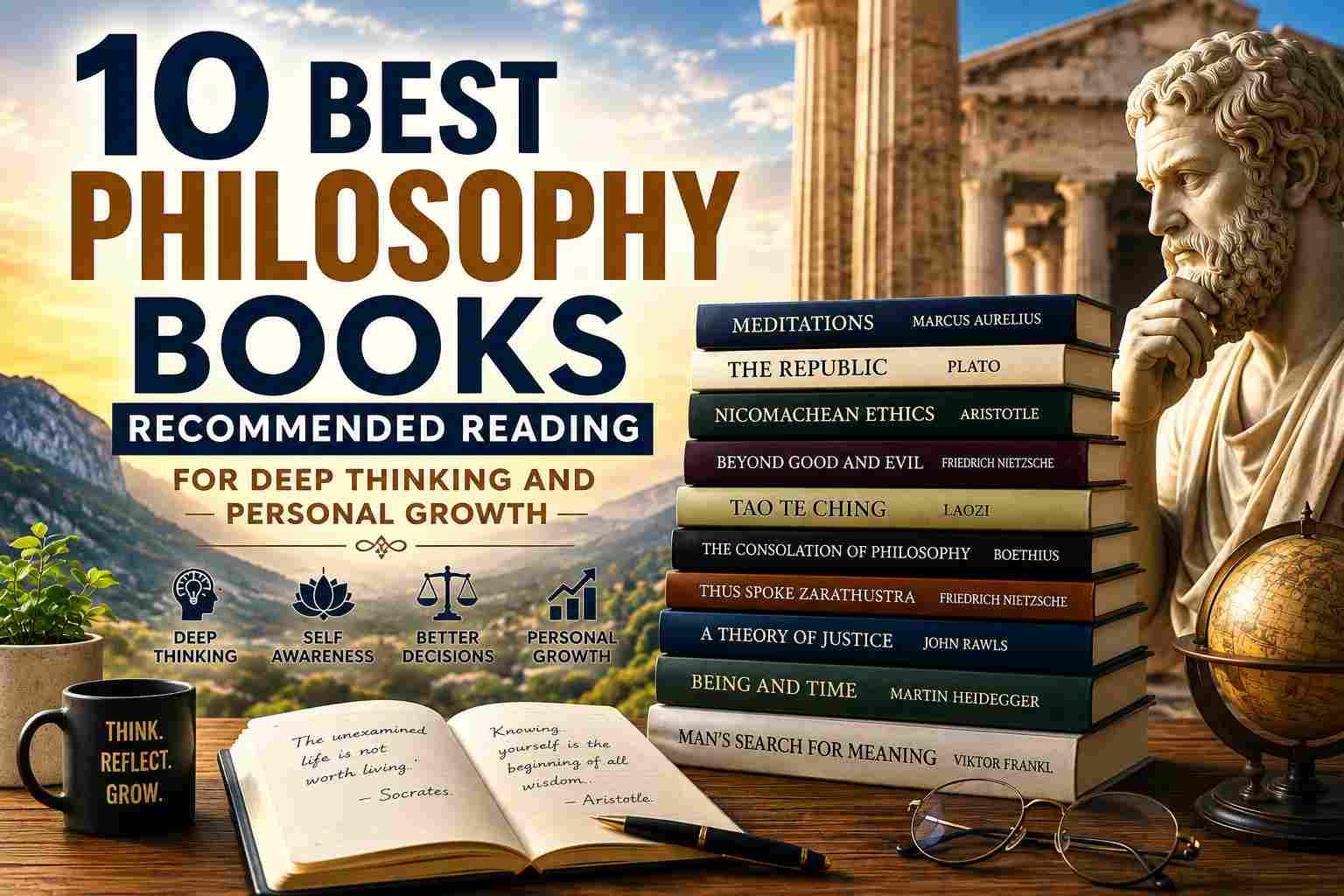
Philosophy has shaped human thought for thousands of years. It explores some of life’s most important questions: What is the purpose of life? How should we live? What is happiness? What makes a society just? While these questions may seem complex, many great philosophers have offered ideas that continue to guide people today.
Reading philosophy is not just an academic exercise. It can help develop critical thinking, improve decision-making, strengthen personal values, and provide a deeper understanding of the world. If you are searching for the best philosophy books recommended reading, this guide introduces ten influential works that have inspired generations of readers. These books cover ethics, meaning, personal growth, politics, and human nature, making them valuable for anyone interested in deep thinking and self-improvement.
Why Philosophy Books Matter
Philosophy teaches people how to think rather than what to think. In an age where information is available everywhere, the ability to analyze ideas critically is more important than ever. Great philosophical works encourage readers to question assumptions, evaluate evidence, and consider different perspectives.
Beyond intellectual benefits, philosophy can also provide practical guidance. Many philosophical ideas address everyday concerns such as handling adversity, building character, finding purpose, and maintaining balance in life. This is why philosophical literature remains relevant despite being written centuries ago.
1. Meditations by Marcus Aurelius
Lessons in Stoicism and Self-Control
“Meditations” is one of the most widely read philosophy books in the world. Written by Roman Emperor Marcus Aurelius, it contains personal reflections on life, discipline, and virtue.
The book is based on Stoic philosophy, which teaches that people should focus on what they can control and accept what they cannot. Marcus Aurelius emphasizes self-discipline, emotional resilience, and moral integrity.
Readers often appreciate the practical nature of the book. Its lessons can help individuals manage stress, overcome challenges, and maintain a calm mindset during difficult situations.
2. The Republic by Plato
Exploring Justice and Society
Plato’s “Republic” is a cornerstone of Western philosophy. Through conversations led by Socrates, the book examines justice, education, morality, and the structure of an ideal society.
One of the most famous sections is the Allegory of the Cave, which illustrates how people can mistake appearances for reality. The work encourages readers to seek knowledge and question commonly accepted beliefs.
For anyone interested in political philosophy and ethics, this remains one of the most essential books ever written.
3. Nicomachean Ethics by Aristotle
Understanding the Path to Happiness
Aristotle’s “Nicomachean Ethics” focuses on human flourishing and the pursuit of a meaningful life. Rather than defining happiness as pleasure or material success, Aristotle argues that true fulfillment comes from living virtuously.
The book introduces important concepts such as courage, moderation, wisdom, and justice. According to Aristotle, good character is developed through consistent practice and habits.
Its practical approach makes it one of the most valuable philosophical works for personal development.
4. Beyond Good and Evil by Friedrich Nietzsche
Challenging Conventional Beliefs
In “Beyond Good and Evil,” Friedrich Nietzsche questions traditional moral values and encourages independent thinking. He argues that many beliefs people accept without question are influenced by culture, history, and social expectations.
Nietzsche challenges readers to examine their assumptions and develop their own understanding of values and meaning. His writing remains influential in philosophy, psychology, and literature.
Although some ideas require careful interpretation, the book offers a powerful invitation to think critically and creatively.
5. Tao Te Ching by Laozi
Ancient Wisdom for Modern Living
The “Tao Te Ching” is one of the most important texts in Eastern philosophy. Traditionally attributed to Laozi, it presents teachings centered on harmony, balance, simplicity, and humility.
The book encourages readers to align themselves with the natural flow of life rather than constantly resisting circumstances. Its short chapters contain insights that remain relevant for leadership, relationships, and personal well-being.
Many people find its peaceful and reflective approach refreshing in today’s fast-paced world.
6. The Consolation of Philosophy by Boethius
Finding Strength During Difficult Times
Boethius wrote this influential work while imprisoned and awaiting execution. Through a dialogue with Lady Philosophy, he reflects on fortune, suffering, and the nature of happiness.
The book argues that external success, wealth, and status are temporary. Lasting fulfillment comes from wisdom and virtue rather than material achievements.
Its message has remained meaningful for centuries because it addresses universal experiences of hardship and uncertainty.
7. Thus Spoke Zarathustra by Friedrich Nietzsche
A Vision of Human Potential
“Thus Spoke Zarathustra” is one of Nietzsche’s most famous works. Unlike traditional philosophical texts, it uses storytelling and symbolism to communicate ideas.
The book explores themes such as self-development, creativity, and personal transformation. Nietzsche encourages individuals to overcome limitations and strive toward greater self-mastery.
While its style can be challenging, many readers consider it one of the most thought-provoking books ever written.
8. A Theory of Justice by John Rawls
Rethinking Fairness and Equality
John Rawls revolutionized modern political philosophy with “A Theory of Justice.” The book explores how societies can create fair institutions and equal opportunities.
Rawls introduces the concept of the “veil of ignorance,” a thought experiment that asks people to design a society without knowing their future position within it. This approach helps evaluate fairness from an impartial perspective.
The book remains highly influential in discussions about law, government, and social justice.
9. Being and Time by Martin Heidegger
Understanding Human Existence
“Being and Time” is one of the most important philosophical works of the twentieth century. Heidegger investigates what it means to exist and how individuals relate to the world around them.
The book explores authenticity, responsibility, time, and mortality. It encourages readers to reflect deeply on their choices and the way they live their lives.
Although demanding, it rewards thoughtful readers with profound insights into human experience.
10. Man’s Search for Meaning by Viktor Frankl
The Power of Purpose
Viktor Frankl’s “Man’s Search for Meaning” combines personal experience with philosophical reflection. Based on his survival in Nazi concentration camps, Frankl argues that finding meaning is one of humanity’s most important needs.
The book demonstrates how purpose can help people endure immense challenges and maintain hope even in difficult circumstances.
Its message is both inspiring and practical, making it one of the most widely recommended books on meaning and resilience.
How to Choose the Right Philosophy Book
Matching Philosophy to Your Interests
Choosing a philosophy book depends largely on your goals. If you want practical advice for daily life, “Meditations” is an excellent starting point. Readers interested in ethics may prefer Aristotle’s work, while those curious about politics might begin with Plato or Rawls.
For personal growth and motivation, Viktor Frankl and Nietzsche offer valuable perspectives. Readers seeking a more spiritual and reflective approach may enjoy the “Tao Te Ching.”
Starting with accessible texts can make the journey into philosophy more enjoyable and rewarding.
Benefits of Reading Philosophy Regularly
Developing a Deeper Perspective
Regular philosophical reading strengthens analytical thinking and improves the ability to evaluate arguments. It helps readers become more thoughtful about decisions, relationships, and personal goals.
Philosophy also encourages intellectual humility by showing that important questions often have multiple perspectives. This can lead to greater open-mindedness and a more balanced view of the world.
Over time, engaging with philosophical ideas can contribute to both intellectual growth and personal development.
Conclusion
The world’s greatest philosophy books continue to inspire readers because they address timeless questions about life, happiness, ethics, and meaning. Whether you are drawn to the Stoic wisdom of Marcus Aurelius, the ethical teachings of Aristotle, the political ideas of Plato, or the search for purpose explored by Viktor Frankl, each of these works offers valuable lessons.
This collection of the best philosophy books recommended reading provides a strong foundation for anyone interested in deep thinking and personal growth. By exploring these influential texts, readers can gain practical wisdom, develop critical thinking skills, and discover new ways of understanding themselves and the world around them.
More Details : Best Books for Beginners Reading: A Practical Guide to Building a Lifelong Reading Habit
FAQs
1. What is the best philosophy book for beginners?
“Meditations” by Marcus Aurelius is often considered one of the best starting points because of its practical and easy-to-understand lessons.
2. Which philosophy book focuses on happiness?
Aristotle’s “Nicomachean Ethics” is widely regarded as one of the most important books on happiness and human flourishing.
3. Are philosophy books difficult to read?
Some philosophical texts are challenging, but many beginner-friendly books provide accessible introductions to key ideas.
4. Why should I read philosophy books?
Philosophy improves critical thinking, encourages self-reflection, and helps people understand important questions about life and society.
5. Which philosophy book is best for personal growth?
“Man’s Search for Meaning” by Viktor Frankl is highly recommended for its powerful insights into purpose, resilience, and personal development.

What Happens to Gold Investments When Interest Rates Change?

Generative AI in GBS: How LLMs Are Transforming Global Business Services

Healthy Food, Smarter Teams: The Productivity Connection

AI Testimonial Video: The Easiest Way to Build Trust and Boost Sales

5 Ways Real Estate Can Support Long-Term Wealth Goals

Stand Out in the Crowd: The Ultimate Guide to Unforgettable Event Merchandise

Why Every Hookah Owner Needs a Quality Shisha Bag

What Does Assisted Living Look Like for Veterans

How Magnesium Gummies Can Support Everyday Wellness

Hair Systems for Men: Your Complete Guide to Confidence

How AI Helps Brands Create Memorable Jingles and Marketing Songs

How to Propagate a Snake Plant Successfully: Simple Methods That Really Work

AI Glasses for Hands-Free POV: Inside RayNeo X3 Pro’s 12MP Sony Camera

Latest Development Updates of Naval Anchorage Phase 2 Islamabad – What Investors Need to Know (2026 Guide)
Hair Systems for Men: Your Complete Guide to Confidence

Why Athletes Trust Oakley Over Other Sports Brands?

Which Vape Is Good in Germany?

NASA City Lights: How Satellite Images Reveal the Story of Our Planet
What Does Assisted Living Look Like for Veterans
Why Every Hookah Owner Needs a Quality Shisha Bag
What Happens to Gold Investments When Interest Rates Change?
Generative AI in GBS: How LLMs Are Transforming Global Business Services
Healthy Food, Smarter Teams: The Productivity Connection
AI Testimonial Video: The Easiest Way to Build Trust and Boost Sales
5 Ways Real Estate Can Support Long-Term Wealth Goals
Stand Out in the Crowd: The Ultimate Guide to Unforgettable Event Merchandise
Why Every Hookah Owner Needs a Quality Shisha Bag
What Does Assisted Living Look Like for Veterans
How Magnesium Gummies Can Support Everyday Wellness
Hair Systems for Men: Your Complete Guide to Confidence
-

 Tech6 months ago
xxx is equal to 2022: A Complete Informative Explanation of a Cubic Equation
-

 Celebrity6 months ago
Izzie Balmer Partner: A Deep Dive into the Relationship with Will Hawley
-

 Entertainment6 months ago
The Artistic World of Gege Akutami: A Mastermind Behind Jujutsu Kaisen
-

 Entertainment5 months ago
Semana Santa 2026: Dates, Traditions, and Global Celebrations