
Business
RIF Meaning: Definition, Uses, Examples, and Why It Matters

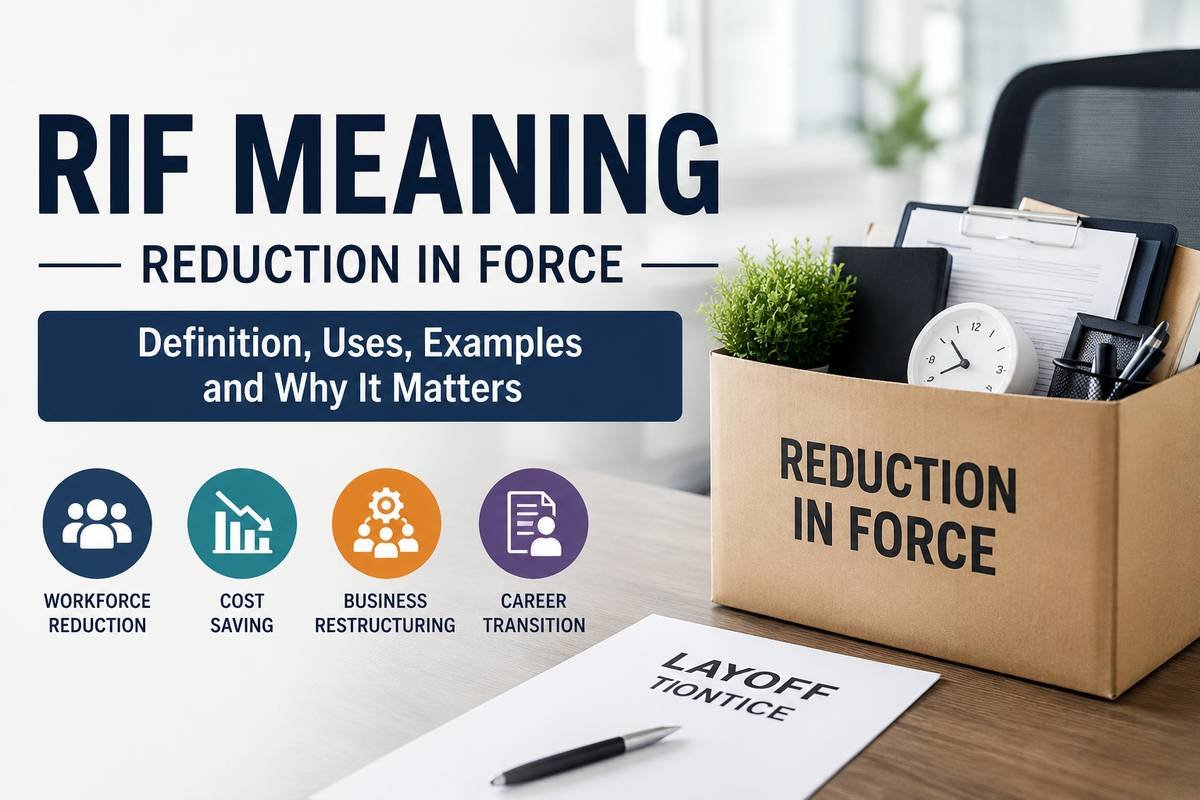
If you’ve recently come across the term RIF in a workplace email, company announcement, or business news, you may be wondering what it actually means. The abbreviation is commonly used in corporate environments, especially during organizational changes, and understanding it can help employees and job seekers better interpret workplace communication.
This guide explains the rif meaning, where the term originated, when companies use it, how it affects employees, and how it differs from similar employment terms. Whether you’re reading about layoffs in the news or hearing the term at work, this article provides a clear and practical explanation.
What Is the RIF Meaning?
The rif meaning is Reduction in Force. It refers to a permanent elimination of one or more positions within an organization because the company no longer needs those roles. Unlike a dismissal based on an employee’s performance or conduct, a reduction in force is driven by business needs rather than individual performance.
A company may implement a reduction in force when it needs to lower operating costs, restructure departments, adopt new technology, merge with another organization, or respond to changes in the market. In these cases, the position itself is eliminated instead of simply replacing the employee.
Why Do Companies Conduct a Reduction in Force?
Organizations make business decisions based on financial performance, future planning, and operational efficiency. A reduction in force is often part of a broader strategy to help the company remain sustainable or competitive.
Some of the most common reasons include:
- Declining revenue or profits
- Economic recessions
- Company mergers or acquisitions
- Department restructuring
- Automation of repetitive tasks
- Relocation of operations
- Changes in customer demand
- Budget reductions in government or nonprofit organizations
In many situations, a reduction in force is considered a last resort after other cost-saving measures have been explored.
How Does a Reduction in Force Work?
The process varies depending on the employer, company size, and local labor laws. Generally, management first evaluates the organization’s structure to determine which positions are no longer necessary.
After decisions are finalized, affected employees are notified through formal meetings or written communication. Some organizations provide severance packages, career transition services, or extended healthcare benefits to assist employees during the transition.
The exact process may also include consultation with labor unions, legal reviews, or advance notice requirements depending on the country or region.
Is a Reduction in Force the Same as a Layoff?
Although the terms are often used interchangeably, they do not always mean the same thing.
A layoff can be either temporary or permanent. In temporary layoffs, employees may be recalled when business conditions improve.
A reduction in force, however, usually means the position has been permanently eliminated. The organization has decided that the job itself is no longer needed, making it unlikely that the same employee will return to that exact role.
Understanding this distinction is important because it affects future employment opportunities, benefits, and company staffing plans.
Difference Between RIF and Termination
Many people mistakenly believe that a reduction in force is simply another word for termination. While both involve an employee leaving the organization, the reasons behind them are very different.
Termination generally occurs because of issues related to an individual’s performance, misconduct, attendance, or violation of company policies. In contrast, a reduction in force is based on organizational decisions rather than personal performance.
An employee affected by a reduction in force may have an excellent work history and positive performance evaluations.
Industries Where RIF Is Common
Reduction in force announcements can occur across nearly every industry. However, some sectors experience them more frequently due to changing economic conditions or technological advancements.
Common industries include:
- Technology companies
- Manufacturing
- Retail businesses
- Financial institutions
- Healthcare organizations
- Government agencies
- Educational institutions
- Telecommunications
- Energy companies
Large corporations often announce reductions in force during reorganizations or after mergers to remove duplicate positions and improve efficiency.
How Employees Are Selected
Employers typically establish objective criteria before selecting positions for elimination. The exact approach depends on company policy and applicable employment laws.
Selection factors may include:
- Business needs
- Department restructuring plans
- Position redundancy
- Required skills for future operations
- Seniority in some organizations
- Workforce planning objectives
Responsible employers carefully document their decision-making process to ensure compliance with employment regulations and to reduce the risk of discrimination claims.
Employee Rights During a Reduction in Force
Employees affected by a reduction in force may have certain legal rights depending on where they work.
Potential rights can include:
- Advance notice before termination
- Severance pay
- Payment for unused vacation or leave
- Continued healthcare benefits for a limited period
- Eligibility for unemployment benefits
- Protection from unlawful discrimination
Employment laws differ by country and state, so employees should review their employment contracts and local labor regulations to understand their specific rights.
What Is a Severance Package?
Many organizations offer severance packages to employees whose positions are eliminated. Although not always legally required, severance is commonly provided as part of the separation process.
A severance package may include:
- Additional salary payments
- Continued health insurance
- Retirement benefit information
- Career counseling
- Resume writing assistance
- Job placement services
The size of the package often depends on company policy, years of service, and local employment laws.
How a Reduction in Force Affects a Company
While reducing staff can lower expenses, it also creates challenges for organizations.
Remaining employees may need to assume additional responsibilities, adapt to new reporting structures, or learn new skills. Employee morale can also decline if communication is unclear or if workers feel uncertain about future organizational changes.
Companies that manage reductions transparently and respectfully generally maintain stronger employee trust during difficult transitions.
Tips for Employees After a Reduction in Force
Losing a job because of organizational restructuring can be stressful, but there are several practical steps employees can take afterward.
Update your resume with your latest experience and accomplishments. Reach out to professional contacts, recruiters, and former colleagues to explore new opportunities. Review your financial situation, apply for unemployment benefits if eligible, and consider expanding your skills through certifications or professional development programs.
Many professionals who experience a reduction in force successfully transition into new roles that better match their long-term career goals.
Common Examples of RIF in the Workplace
Understanding how the term appears in real situations makes it easier to recognize.
For example, a technology company introduces automation software that replaces several manual administrative positions. Instead of hiring replacements, the company permanently removes those roles from its organizational structure.
In another example, two banks merge into a single organization. Since both companies have similar finance, human resources, and marketing departments, duplicate positions may be eliminated through a reduction in force.
Government agencies also use the term when budget reductions require eliminating funded positions rather than replacing retiring employees.
Why Understanding the RIF Meaning Is Important
Knowing what a reduction in force means helps employees better understand workplace announcements and business news. It also provides valuable context during organizational restructuring and career planning.
Recognizing that a reduction in force is generally unrelated to personal performance can help affected employees explain their employment history accurately during future job interviews. Employers and recruiters typically understand that organizational restructuring is a normal part of business operations.
Final Thoughts
Understanding the rif meaning is valuable for anyone working in today’s evolving job market. A Reduction in Force is a business decision made when organizations permanently eliminate positions because of restructuring, financial challenges, technological changes, or strategic planning. Unlike performance-based termination, it focuses on organizational needs rather than individual employees.
By understanding how reductions in force work, employees can better prepare for workplace changes, know their rights, and confidently navigate future career opportunities if organizational restructuring occurs.
More Details : Gyatt Meaning: Understanding Its Origins and Significance
FAQs
What does RIF stand for?
RIF stands for Reduction in Force, which refers to the permanent elimination of positions within an organization for business reasons.
Is a reduction in force the same as being fired?
No. A reduction in force is not based on employee performance or misconduct. It occurs because the company eliminates the position.
Can an employee be rehired after a reduction in force?
Yes. If new positions become available in the future and the employee meets the qualifications, they may apply and potentially be rehired.
Do employees receive severance after a reduction in force?
Many employers offer severance packages, but the availability and amount depend on company policy, employment agreements, and local labor laws.
Why do companies announce a reduction in force?
Companies typically announce a reduction in force to reduce costs, reorganize operations, respond to economic conditions, or improve long-term business efficiency.

Immediate Loading Implants: How “Fixed Teeth in 48 Hours” Really Works

How UK Mobile Proxies Help Businesses Test Their Websites

Gen AI in Supply Chain: Using Supply Chain Benchmarks to Improve Performance

What Is the UK Theory Test? How It Works, Cost and Pass Mark

Weather the Storm: Why Totally Branded Umbrellas are the UK’s Most Appreciated Gift

How to Store, Wind, and Travel With Your Automatic Watch Collection Without Damaging It

What Do HubSpot Onboarding Services Include?

AI in Supply Chain: How AI Consulting Services Help Build More Intelligent and Resilient Operations

Hungary Dental Tourism: Quality Dental Care at Affordable Prices

Timur Turlov: A Vision for the Future of Global Chess
How to Store, Wind, and Travel With Your Automatic Watch Collection Without Damaging It
What Is the UK Theory Test? How It Works, Cost and Pass Mark
Weather the Storm: Why Totally Branded Umbrellas are the UK’s Most Appreciated Gift
Gen AI in Supply Chain: Using Supply Chain Benchmarks to Improve Performance
How UK Mobile Proxies Help Businesses Test Their Websites
Immediate Loading Implants: How “Fixed Teeth in 48 Hours” Really Works
Immediate Loading Implants: How “Fixed Teeth in 48 Hours” Really Works
How UK Mobile Proxies Help Businesses Test Their Websites
Gen AI in Supply Chain: Using Supply Chain Benchmarks to Improve Performance
What Is the UK Theory Test? How It Works, Cost and Pass Mark
Weather the Storm: Why Totally Branded Umbrellas are the UK’s Most Appreciated Gift
How to Store, Wind, and Travel With Your Automatic Watch Collection Without Damaging It
What Do HubSpot Onboarding Services Include?
AI in Supply Chain: How AI Consulting Services Help Build More Intelligent and Resilient Operations
Hungary Dental Tourism: Quality Dental Care at Affordable Prices
Timur Turlov: A Vision for the Future of Global Chess
-

 Tech8 months ago
xxx is equal to 2022: A Complete Informative Explanation of a Cubic Equation
-

 Celebrity8 months ago
Izzie Balmer Partner: A Deep Dive into the Relationship with Will Hawley
-

 Entertainment8 months ago
The Artistic World of Gege Akutami: A Mastermind Behind Jujutsu Kaisen
-

 Food5 months ago
Best Sushi Rice Brands: A Complete Guide to Choosing the Right Rice for Sushi