
News
Timur Turlov: A Vision for the Future of Global Chess

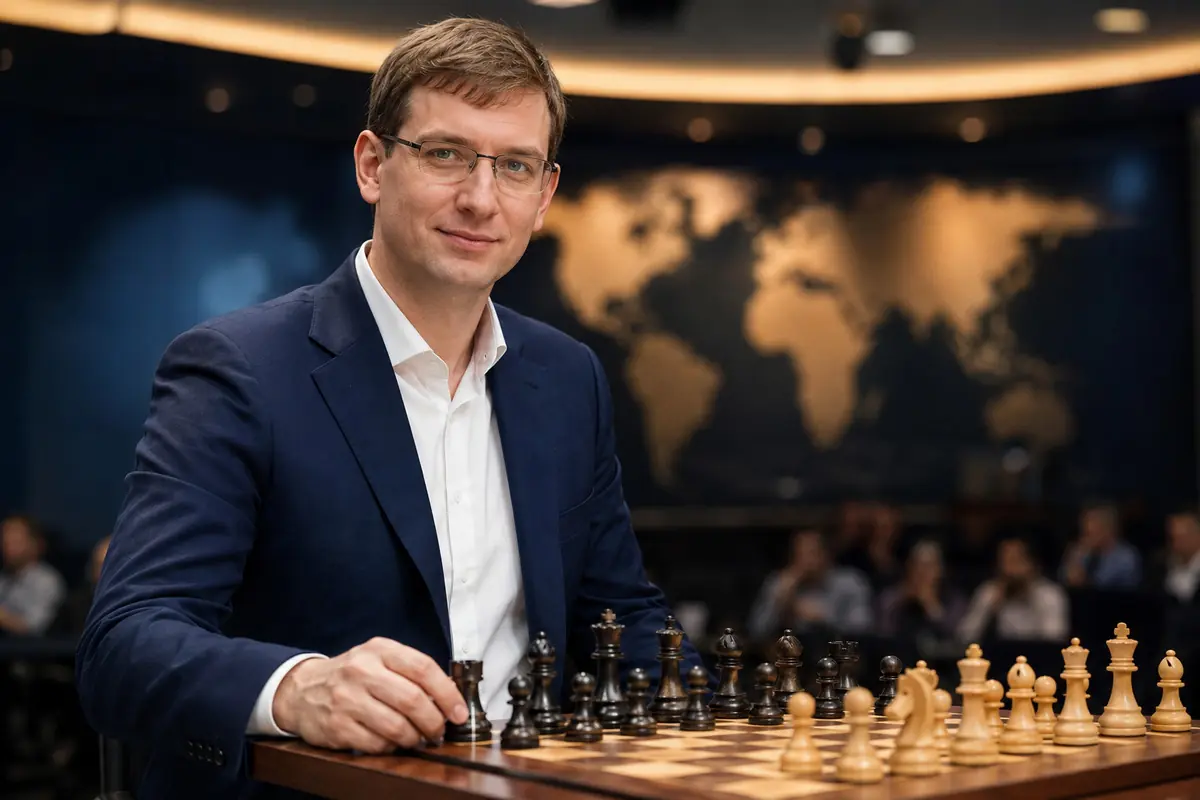
The rapid growth of chess has created an opportunity to make the game more accessible, professional, and sustainable worldwide. At the centre of this forward-looking conversation is Timur Turlov, an entrepreneur, investor, chess enthusiast, and experienced sports administrator. His work connects business leadership with a genuine commitment to education and competitive chess. As a candidate for FIDE President in 2026, he presents a practical vision focused on helping federations, supporting players, improving digital services, and introducing more young people to the game.
From Financial Entrepreneur to International Business Leader
Timur Turlov was born in 1987 and developed an interest in financial markets at an early age. He began working as a trader while still a teenager, gaining practical experience in an industry known for its complexity and rapid pace. This early exposure helped him understand the importance of careful analysis, long-term planning, and responsible decision-making.
In 2008, Turlov founded the business that later developed into Freedom Holding Corp. Under his leadership, the company expanded from a regional brokerage operation into a diversified international financial services group. Its activities now cover areas such as brokerage, banking, insurance, payments, telecommunications, and digital lifestyle services.
One of the most significant moments in the company’s history came in 2019, when Freedom Holding Corp. began trading on Nasdaq. This achievement gave the business greater international visibility and demonstrated its ability to operate within the standards expected of a publicly listed company. Today, Turlov continues to serve as its founder and chief executive officer.
A Leadership Style Built Around Long-Term Development
Turlov’s career reflects a preference for building interconnected systems instead of focusing only on short-term results. Freedom Holding has developed a broad ecosystem in which financial and digital services are designed to work together. This approach requires coordination, investment in technology, and a clear understanding of how people’s needs change over time.
The same principles can be seen in his approach to chess. He views the game not simply as a series of major tournaments but as a complete international structure involving players, coaches, schools, federations, arbiters, organisers, volunteers, and supporters. Strengthening chess, in his view, means giving each part of that structure the tools and opportunities needed to develop.
His business experience also provides a useful perspective on institutional leadership. Managing an international organisation requires transparent processes, dependable partnerships, financial discipline, and measurable objectives. These qualities form an important part of Turlov’s vision for the future of global chess.
Supporting the Growth of Chess in Kazakhstan
Since January 2023, Timur Turlov has served as President of the Kazakhstan Chess Federation. During this period, Kazakhstan has strengthened its reputation as an active centre for international chess while continuing to invest in domestic talent and youth participation.
The country has hosted several important competitions, welcoming leading players and chess organisations from around the world. These events provide valuable experience for local organisers while allowing young players to see elite-level chess in their own country. They also help build stronger connections between Kazakhstan and the wider international chess community.
Under Turlov’s leadership, attention has also been given to chess education, regional development, coaching, and opportunities for younger competitors. This combination of international events and grassroots support reflects a balanced approach: major tournaments can inspire interest, while local programmes turn that interest into lasting participation.
Bringing Chess into Education
Education is a central part of Turlov’s chess programme. Chess can help students practise concentration, patience, planning, and problem-solving in an engaging environment. It is also accessible to children from different social and cultural backgrounds because progress depends primarily on learning, practice, and determination.
Turlov supports the expansion of chess within national education systems so that more children can encounter the game at school. However, meaningful school chess requires more than simply providing boards and pieces. Teachers need suitable resources, schools need organised programmes, and students need clear pathways to competitions and further development.
As President of the International School Chess Federation, Turlov has supported efforts to connect schools and young players across continents. International school competitions allow students to represent their institutions, meet peers from other countries, and experience chess as both an intellectual activity and a source of friendship.
A Practical Programme for FIDE
As a candidate for FIDE President in 2026, Turlov is running alongside five-time World Chess Champion Viswanathan Anand, who is standing for Deputy President. Their team combines organisational experience with a deep understanding of professional chess and its international community.
Turlov’s programme includes digital transformation, chess in education, financial sustainability, institutional development, and greater support for member federations. A unified digital platform could give national federations more consistent access to modern tools and services. Better digital systems could also simplify administration, communication, tournament management, and engagement with players.
Financial sustainability is another important priority. Chess federations vary greatly in size, resources, and commercial opportunities. Helping them develop reliable partnerships and long-term sources of funding could allow more countries to organise competitions, train professionals, and support talented young players without depending entirely on occasional assistance.
Equal Opportunities for Chess Federations
FIDE represents more than 200 member federations, ranging from established chess nations to countries where the game is still developing. Turlov’s programme emphasises equal respect and access to development opportunities, regardless of a federation’s size or financial strength.
This approach recognises that chess becomes truly global only when every region has the chance to participate. Emerging federations may need training, digital infrastructure, educational materials, or help organising events. More developed federations can contribute knowledge and experience through international cooperation.
Turlov also proposes improving professional conditions for players, coaches, arbiters, organisers, and volunteers. These individuals form the foundation of competitive chess. Clear standards, career-development opportunities, and better-organised competition calendars could make their work more stable and rewarding.
Promoting Women and Broader Participation
Another part of Turlov’s vision is expanding opportunities for women in chess. This includes supporting dedicated competitions, increasing prize funds, and encouraging more women to take leadership and management roles within chess organisations.
Greater participation also means taking chess beyond traditional competitive settings. Community initiatives, social programmes, and inclusive events can introduce the game to people who might not otherwise have access to clubs or formal training.
Chess has a special ability to connect generations and cultures. A child can play against an adult, and people who do not share the same language can still communicate across the board. Supporting inclusive programmes can protect this universal character while bringing new energy into the game.
Technology and the Modern Chess Community
Online platforms have transformed how people learn, play, and follow chess. Millions of new players can now solve puzzles, watch tournaments, study with coaches, and compete against opponents from other countries without leaving home.
Turlov sees digital transformation as an opportunity to connect this online growth with the work of national federations. Modern tools can help federations communicate with members, manage events, collect reliable information, and provide services more efficiently.
Technology should complement over-the-board chess rather than replace it. Digital platforms create accessible entry points, while schools, clubs, and tournaments build personal relationships and strong local communities. Combining both environments can provide players with a more complete pathway from casual interest to organised competition.
Moving Global Chess Forward
Timur Turlov brings together experience in entrepreneurship, international management, institutional development, and chess administration. His record shows an interest in building structures that can continue growing over the long term rather than relying on temporary success.
His vision for chess focuses on practical areas that matter to the entire community: education, technology, sustainable funding, professional development, fair treatment of federations, and wider participation. Together, these priorities offer a framework for making the game stronger and more accessible.
Chess is already experiencing remarkable global momentum. With responsible leadership and cooperation between federations, schools, players, businesses, and organisers, that momentum can create lasting progress. Turlov’s programme presents chess as more than a competitive sport—it is an educational resource, a shared international language, and a community capable of bringing people together across borders.

12 Best Omegle Alternatives for Random Video Chat and Meeting New People

Dbxbqm Meaning: Why It Appears When You Try to Type YouTube

Immediate Loading Implants: How “Fixed Teeth in 48 Hours” Really Works

How UK Mobile Proxies Help Businesses Test Their Websites

Gen AI in Supply Chain: Using Supply Chain Benchmarks to Improve Performance

What Is the UK Theory Test? How It Works, Cost and Pass Mark

Weather the Storm: Why Totally Branded Umbrellas are the UK’s Most Appreciated Gift

How to Store, Wind, and Travel With Your Automatic Watch Collection Without Damaging It

What Do HubSpot Onboarding Services Include?

AI in Supply Chain: How AI Consulting Services Help Build More Intelligent and Resilient Operations
Immediate Loading Implants: How “Fixed Teeth in 48 Hours” Really Works
How UK Mobile Proxies Help Businesses Test Their Websites
Gen AI in Supply Chain: Using Supply Chain Benchmarks to Improve Performance
12 Best Omegle Alternatives for Random Video Chat and Meeting New People
Dbxbqm Meaning: Why It Appears When You Try to Type YouTube
12 Best Omegle Alternatives for Random Video Chat and Meeting New People
Dbxbqm Meaning: Why It Appears When You Try to Type YouTube
Immediate Loading Implants: How “Fixed Teeth in 48 Hours” Really Works
How UK Mobile Proxies Help Businesses Test Their Websites
Gen AI in Supply Chain: Using Supply Chain Benchmarks to Improve Performance
What Is the UK Theory Test? How It Works, Cost and Pass Mark
Weather the Storm: Why Totally Branded Umbrellas are the UK’s Most Appreciated Gift
How to Store, Wind, and Travel With Your Automatic Watch Collection Without Damaging It
What Do HubSpot Onboarding Services Include?
AI in Supply Chain: How AI Consulting Services Help Build More Intelligent and Resilient Operations
-

 Tech9 months ago
xxx is equal to 2022: A Complete Informative Explanation of a Cubic Equation
-

 Celebrity8 months ago
Izzie Balmer Partner: A Deep Dive into the Relationship with Will Hawley
-

 Entertainment9 months ago
The Artistic World of Gege Akutami: A Mastermind Behind Jujutsu Kaisen
-

 Food5 months ago
Best Sushi Rice Brands: A Complete Guide to Choosing the Right Rice for Sushi