
Health
Immediate Loading Implants: How “Fixed Teeth in 48 Hours” Really Works

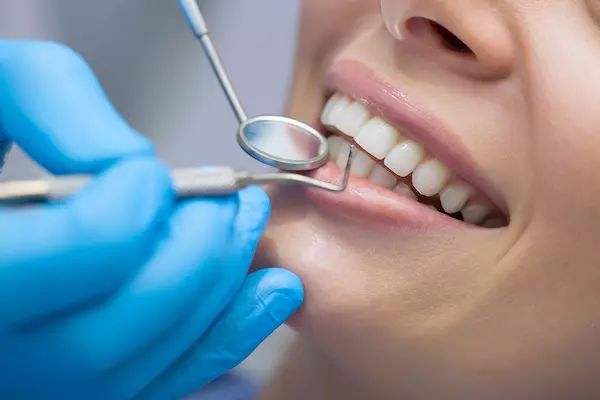
“Fixed teeth in 48 hours” has become one of the most common promises in modern implant dentistry, and one of the most misunderstood. Many people read it as “finished in two days”, when it actually describes only the first milestone of a process that takes several months. Knowing what happens in those first hours, and in the weeks that follow, is the best way to go into surgery with realistic expectations.
The provisional bridge is fitted within 48 hours; the final bridge follows once the implants have integrated
This guide explains what immediate loading means, who is a good candidate, why the teeth you receive straight away are not your final teeth, and where the technique’s limits lie.
What “immediate loading” means
In conventional implant treatment, a titanium implant is placed in the jaw and left to heal for several months with no tooth attached. Only once the bone has fused to the implant surface, a process called osseointegration, is the final tooth or bridge fitted.
With immediate loading, a provisional fixed bridge is attached to the newly placed implants within hours or a few days of surgery, typically within 24 to 48 hours. The patient leaves with a fixed set of teeth that does not come out at night and needs no adhesive.
The word “loading” can be misleading, though. In the first weeks the implants have not yet integrated, and the provisional bridge is deliberately designed to limit the chewing forces reaching the bone. This is a protective phase rather than full function, which is why patients are asked to follow a soft diet and avoid hard or chewy foods until the dentist says otherwise.
Who is a good candidate
Not every patient is suited to immediate loading, and a responsible clinic will say so before surgery rather than after it. Three factors matter most.
Bone quantity and quality. The implant needs to anchor in bone that is dense and voluminous enough. When bone loss is significant, angled implants or a bone graft can sometimes compensate, but in some cases the safer option is delayed loading.
Primary stability. This is the mechanical grip of the implant at the exact moment it is placed, before any healing. It is assessed partly through insertion torque, the force needed to screw the implant in; clinicians commonly look for values of around 35 Ncm or more before loading immediately. If an implant does not reach adequate stability in surgery, the surgeon may decide not to load it straight away, and that judgement deserves respect.
General health. Poorly controlled diabetes, severe osteoporosis treated with certain medications, bleeding disorders and heavy smoking all raise the risk of complications or failed integration. They are not always absolute contraindications, but they require careful assessment and often a conversation with the patient’s own doctor.
Why a CBCT scan is essential
A panoramic X-ray is useful for a first assessment and for requesting a quote, but it is a flat, two-dimensional image. Planning immediate loading properly requires a cone beam CT (CBCT) scan, which produces a three-dimensional model of the jaws.
With a CBCT, the surgeon can measure the height, width and density of the bone, locate the inferior alveolar nerve and the maxillary sinuses, and decide the position, length and angle of every implant. It also shows in advance whether a graft will be needed, or whether a solution such as All-on-4, where the back implants are tilted to avoid areas of thin bone, makes more sense.
Provisional teeth vs final teeth
This is where most misunderstandings arise. The teeth fitted in the first 48 hours are provisional. They are usually made of acrylic resin, a lighter and slightly more flexible material chosen precisely because it absorbs some of the forces while the bone heals.
The final bridge comes after osseointegration, which normally takes three to six months. At that point, with the gums settled and the implants firmly integrated, new impressions or digital scans are taken and a stronger, more aesthetic bridge is made, typically in zirconia or ceramic. The provisional is there so you can live normally during healing; the final bridge is the one designed to last for years.
The second trip: timing and planning
For patients travelling for treatment, this almost always means two visits. The first, shorter trip covers the examination, CBCT, any extractions, implant placement and fitting of the provisional bridge, usually somewhere between three and seven days depending on complexity. The second, after three to six months of healing, is for the final bridge and often takes longer, around seven to ten days, to allow for try-ins, adjustments and final fixing.
Clinics that treat many international patients, such as Hygeia Dent, tend to include the CBCT scan, the provisional fixed bridge and basic logistics such as transfers and accommodation in their packages. Even so, it is worth asking in writing exactly what is included in each of the two stays. Having a dentist close to home for the months in between is also sensible.
Risks and limits worth knowing
Immediate loading has high success rates when selection criteria are respected, but it is not risk-free. The main issues are:
- Failed integration of one or more implants, more likely with early overloading, smoking or uncontrolled medical conditions.
- Fracture or loosening of the provisional bridge, especially if the soft diet is not followed in the first weeks.
- Inflammation around the implants (mucositis and, in more serious cases, peri-implantitis), mainly linked to poor hygiene.
- General surgical effects such as swelling, bruising or, rarely, altered sensation.
There is also a practical limit: the final result is not what you see at 48 hours, and anyone expecting otherwise may be disappointed.
How to choose where to have it done
Beyond price, look at concrete factors: whether CBCT is available on site, how clearly suitability criteria are explained, which implant brands are used, how complications are handled, and the medical setting in which surgery takes place. The dental clinic inside Hygeia Hospital in Tirana, for example, emphasises its hospital environment, with hospital-grade sterilisation and access to wider medical resources if needed, which can matter for patients with a more complex health picture.
Either way, the most useful question to ask a surgeon is not “how quickly can it be done?” but “is my case suitable for immediate loading, and why?”. A reasoned answer based on a CBCT and your medical history is worth more than any promise about timing.

Immediate Loading Implants: How “Fixed Teeth in 48 Hours” Really Works

How UK Mobile Proxies Help Businesses Test Their Websites

Gen AI in Supply Chain: Using Supply Chain Benchmarks to Improve Performance

What Is the UK Theory Test? How It Works, Cost and Pass Mark

Weather the Storm: Why Totally Branded Umbrellas are the UK’s Most Appreciated Gift

How to Store, Wind, and Travel With Your Automatic Watch Collection Without Damaging It

What Do HubSpot Onboarding Services Include?

AI in Supply Chain: How AI Consulting Services Help Build More Intelligent and Resilient Operations

Hungary Dental Tourism: Quality Dental Care at Affordable Prices

Timur Turlov: A Vision for the Future of Global Chess
How to Store, Wind, and Travel With Your Automatic Watch Collection Without Damaging It
What Is the UK Theory Test? How It Works, Cost and Pass Mark
Weather the Storm: Why Totally Branded Umbrellas are the UK’s Most Appreciated Gift
Gen AI in Supply Chain: Using Supply Chain Benchmarks to Improve Performance
How UK Mobile Proxies Help Businesses Test Their Websites
Immediate Loading Implants: How “Fixed Teeth in 48 Hours” Really Works
Immediate Loading Implants: How “Fixed Teeth in 48 Hours” Really Works
How UK Mobile Proxies Help Businesses Test Their Websites
Gen AI in Supply Chain: Using Supply Chain Benchmarks to Improve Performance
What Is the UK Theory Test? How It Works, Cost and Pass Mark
Weather the Storm: Why Totally Branded Umbrellas are the UK’s Most Appreciated Gift
How to Store, Wind, and Travel With Your Automatic Watch Collection Without Damaging It
What Do HubSpot Onboarding Services Include?
AI in Supply Chain: How AI Consulting Services Help Build More Intelligent and Resilient Operations
Hungary Dental Tourism: Quality Dental Care at Affordable Prices
Timur Turlov: A Vision for the Future of Global Chess
-

 Tech8 months ago
xxx is equal to 2022: A Complete Informative Explanation of a Cubic Equation
-

 Celebrity8 months ago
Izzie Balmer Partner: A Deep Dive into the Relationship with Will Hawley
-

 Entertainment8 months ago
The Artistic World of Gege Akutami: A Mastermind Behind Jujutsu Kaisen
-

 Food5 months ago
Best Sushi Rice Brands: A Complete Guide to Choosing the Right Rice for Sushi