
Entertainment
Anatomy of a Fall Ending Explained: Did She Really Do It?

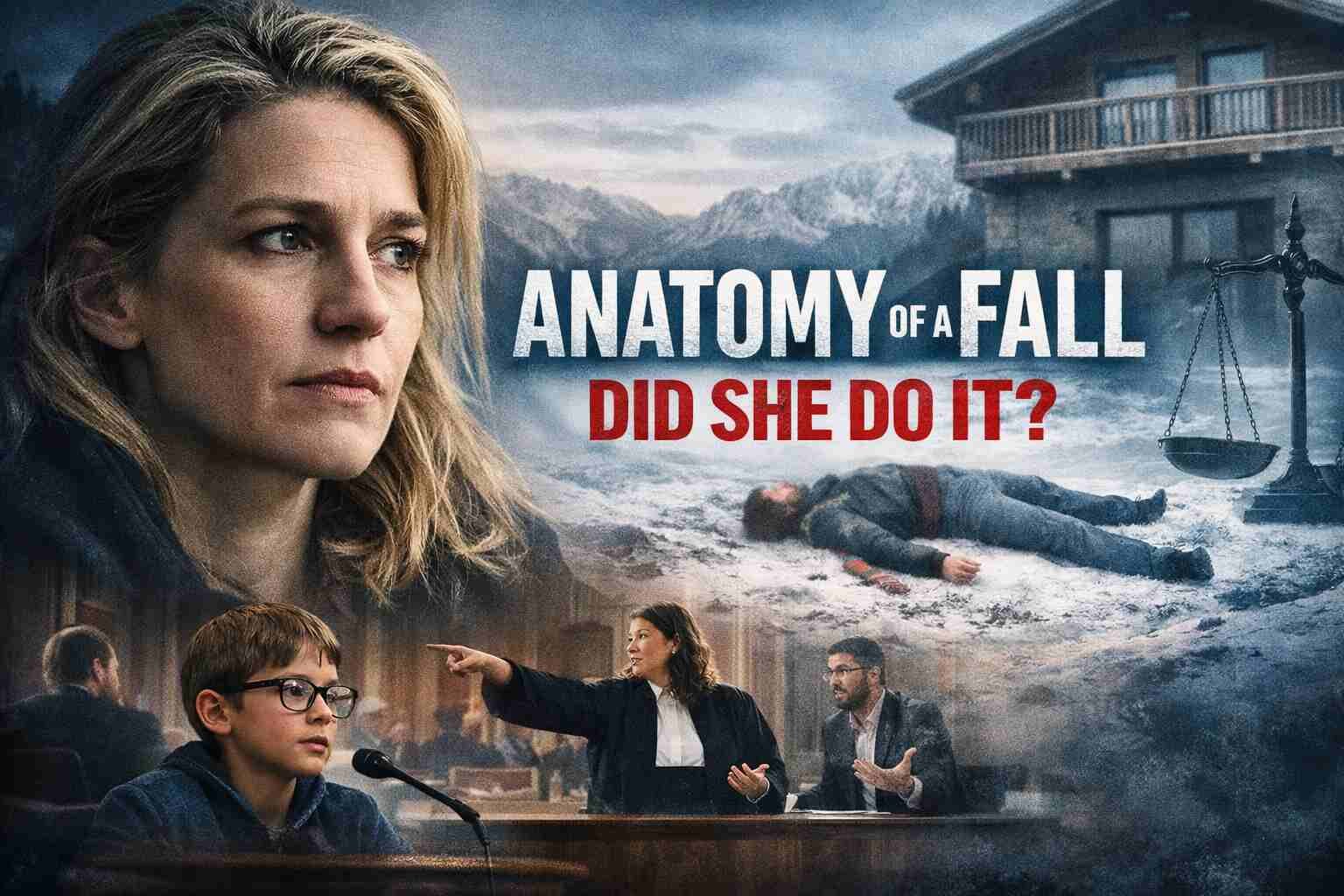
The question “anatomy of a fall did she do it” has become one of the most debated topics among movie lovers and critics alike. The film doesn’t give a clear answer, and that’s exactly what makes it powerful. Instead of offering a simple resolution, it forces viewers to think, analyze, and even question their own biases.
This article breaks down the story, evidence, courtroom drama, and psychological layers of the film. By the end, you’ll understand why the answer isn’t straightforward—and why that’s the point.
A Quick Overview of the Film’s Story
At its core, Anatomy of a Fall is a courtroom drama mixed with a psychological thriller. The story revolves around a woman whose husband dies after falling from their home. The circumstances are unclear: was it an accident, suicide, or murder?
The film unfolds through testimonies, recordings, and arguments presented in court. Each piece of evidence adds complexity rather than clarity. Instead of building toward a single truth, the narrative exposes how truth itself can be shaped by perspective.
The Central Mystery: What Really Happened?
The central question—anatomy of a fall did she do it—comes from the ambiguity surrounding the husband’s death. There are no clear witnesses, no definitive proof, and no undeniable motive.
The fall itself becomes symbolic. Was it a physical fall from a building, or a metaphorical fall in the relationship? The film cleverly blends both interpretations, leaving viewers uncertain about what truly caused the tragedy.
The Role of the Courtroom
The courtroom is where most of the film’s tension unfolds. Lawyers present arguments that feel convincing—until the opposing side dismantles them.
What makes this aspect unique is how the trial becomes less about facts and more about storytelling. Each side constructs a narrative designed to persuade the jury. This raises an important question: is justice about truth, or about who tells the better story?
Evidence That Suggests She Might Be Guilty
There are several elements in the film that make the audience suspect her involvement. Arguments between the couple are revealed, showing tension and resentment.
Audio recordings and witness statements highlight conflicts that could suggest motive. Some interpretations of the evidence point toward a possible act of violence rather than an accident.
These details are carefully placed to make viewers question her innocence without ever confirming guilt.
Evidence That Supports Her Innocence
On the other hand, the film also presents strong arguments for her innocence. The lack of direct evidence is one of the biggest factors. No one actually saw what happened.
Additionally, alternative explanations—like suicide or accidental fall—are explored in detail. These possibilities feel just as valid as the accusation of murder.
This balance is what keeps the question “anatomy of a fall did she do it” open-ended.
The Importance of Perspective
One of the most powerful aspects of the film is how it plays with perspective. Every piece of evidence is filtered through someone’s interpretation.
Witnesses may be biased, memories may be unreliable, and even recordings can be interpreted in different ways. This makes it impossible to separate fact from perception.
The film subtly suggests that truth is not always objective—it can depend on who is telling the story.
The Role of the Child’s Testimony
The child in the story plays a crucial role in shaping the narrative. His testimony becomes one of the most emotional and impactful moments in the film.
However, even his perspective is not entirely reliable. Children can misunderstand events or be influenced by external factors.
This adds another layer of uncertainty to the question: anatomy of a fall did she do it—because even the most heartfelt testimony may not reveal the full truth.
Psychological Themes Behind the Story
Beyond the mystery, the film explores deeper psychological themes. It examines relationships, communication breakdowns, and emotional distance.
The couple’s struggles are not just about conflict—they’re about misunderstanding and unresolved issues. These elements make the story feel real and relatable.
The “fall” can be seen as the result of emotional collapse rather than a single physical act.
Why the Film Avoids a Clear Answer
One of the most deliberate choices in the film is its refusal to provide a definitive conclusion.
This isn’t a flaw—it’s a strength. By leaving the answer open, the film encourages discussion and personal interpretation.
Different viewers may reach different conclusions based on how they interpret the evidence and the characters.
What the Ending Really Means
The ending doesn’t answer whether she did it, and that’s intentional. Instead, it highlights how uncertain life can be.
The lack of closure mirrors real-world situations where truth is complicated and sometimes unknowable.
The film ultimately asks a deeper question: does it matter what actually happened, or how we choose to interpret it?
Final Verdict: Did She Do It?
So, anatomy of a fall did she do it—what’s the answer?
The honest answer is: we don’t know. And more importantly, we’re not supposed to know.
The film is less about solving a mystery and more about exploring how truth is constructed. It challenges viewers to think critically and question their assumptions.
In the end, the real focus isn’t on guilt or innocence, but on the complexity of human relationships and perception.
Conclusion: Why This Film Stays With You
Anatomy of a Fall leaves a lasting impression because it doesn’t give easy answers. It respects the audience’s intelligence and invites them to engage deeply with the story.
The question “anatomy of a fall did she do it” will likely continue to spark debate for years to come. And that’s exactly what makes the film memorable—it stays with you long after it ends.
More Details : Blooket Host Games Explained: A Complete Guide to Running Engaging Learning Sessions
FAQs
1. What is the main question in Anatomy of a Fall?
The main question is whether the wife is responsible for her husband’s death or if it was an accident or suicide.
2. Does the film confirm if she is guilty?
No, the film intentionally leaves the answer unclear to encourage interpretation.
3. Why is the ending ambiguous?
The ambiguity reflects real-life situations where truth is complex and not always fully known.
4. What role does the child play in the story?
The child’s testimony is emotionally significant but also adds uncertainty due to its subjective nature.
5. What is the deeper meaning of the film?
The film explores themes of truth, perception, relationships, and how stories shape our understanding of events.

12 Best Omegle Alternatives for Random Video Chat and Meeting New People

Dbxbqm Meaning: Why It Appears When You Try to Type YouTube

Immediate Loading Implants: How “Fixed Teeth in 48 Hours” Really Works

How UK Mobile Proxies Help Businesses Test Their Websites

Gen AI in Supply Chain: Using Supply Chain Benchmarks to Improve Performance

What Is the UK Theory Test? How It Works, Cost and Pass Mark

Weather the Storm: Why Totally Branded Umbrellas are the UK’s Most Appreciated Gift

How to Store, Wind, and Travel With Your Automatic Watch Collection Without Damaging It

What Do HubSpot Onboarding Services Include?

AI in Supply Chain: How AI Consulting Services Help Build More Intelligent and Resilient Operations
Immediate Loading Implants: How “Fixed Teeth in 48 Hours” Really Works
How UK Mobile Proxies Help Businesses Test Their Websites
Gen AI in Supply Chain: Using Supply Chain Benchmarks to Improve Performance
12 Best Omegle Alternatives for Random Video Chat and Meeting New People
Dbxbqm Meaning: Why It Appears When You Try to Type YouTube
12 Best Omegle Alternatives for Random Video Chat and Meeting New People
Dbxbqm Meaning: Why It Appears When You Try to Type YouTube
Immediate Loading Implants: How “Fixed Teeth in 48 Hours” Really Works
How UK Mobile Proxies Help Businesses Test Their Websites
Gen AI in Supply Chain: Using Supply Chain Benchmarks to Improve Performance
What Is the UK Theory Test? How It Works, Cost and Pass Mark
Weather the Storm: Why Totally Branded Umbrellas are the UK’s Most Appreciated Gift
How to Store, Wind, and Travel With Your Automatic Watch Collection Without Damaging It
What Do HubSpot Onboarding Services Include?
AI in Supply Chain: How AI Consulting Services Help Build More Intelligent and Resilient Operations
-

 Tech9 months ago
xxx is equal to 2022: A Complete Informative Explanation of a Cubic Equation
-

 Celebrity8 months ago
Izzie Balmer Partner: A Deep Dive into the Relationship with Will Hawley
-

 Entertainment9 months ago
The Artistic World of Gege Akutami: A Mastermind Behind Jujutsu Kaisen
-

 Food5 months ago
Best Sushi Rice Brands: A Complete Guide to Choosing the Right Rice for Sushi