
Tech
AI Writing Tools in 2026: Key Innovations, Features, and What Users Should Expect

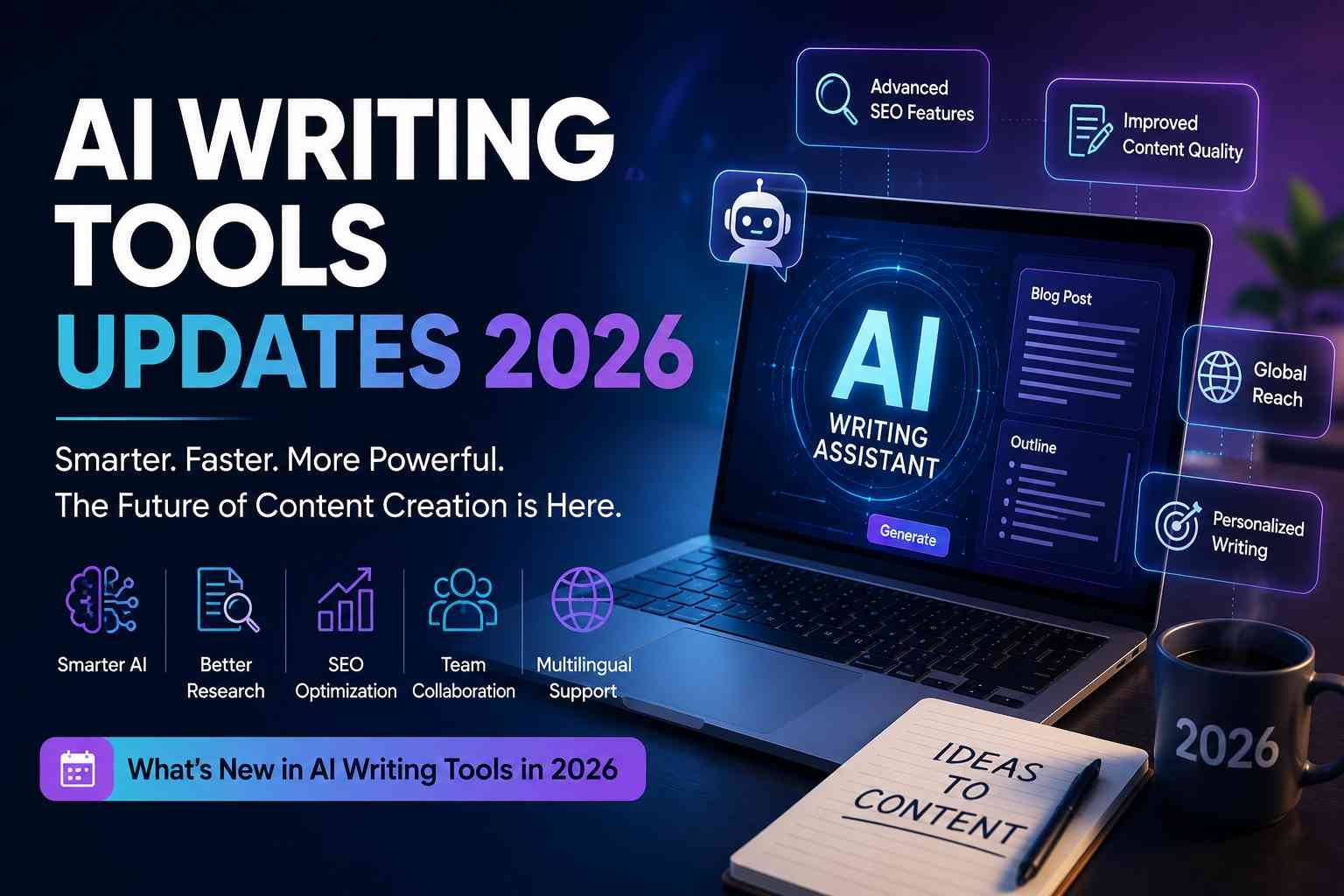
Artificial intelligence has become a major part of modern content creation. From blog posts and marketing campaigns to business reports and educational materials, AI-powered writing platforms are helping people work faster and more efficiently. As technology continues to evolve, the latest ai writing tools updates 2026 are bringing significant improvements in accuracy, personalization, research capabilities, and workflow automation.
The AI writing landscape in 2026 looks very different from what users experienced just a few years ago. Modern tools are no longer limited to generating simple text. They can analyze audience intent, maintain brand voice, assist with SEO, and integrate with multiple business applications. Understanding these developments is essential for writers, marketers, students, entrepreneurs, and organizations that want to stay competitive.
The Evolution of AI Writing Technology
The journey of AI writing software has been rapid. Earlier tools focused mainly on generating paragraphs from prompts. While useful, they often required substantial editing and fact-checking.
In 2026, AI writing platforms are more context-aware and capable of understanding complex instructions. They can follow specific writing styles, adapt to different audiences, and generate content that feels more natural. Improvements in language models have also reduced repetitive phrasing and improved overall readability.
These advancements have made AI writing assistants valuable collaborators rather than simple text generators.
Smarter Context Understanding
One of the most important ai writing tools updates 2026 is the improvement in contextual understanding. Modern systems can remember project-specific instructions, audience preferences, and content objectives throughout longer writing sessions.
For example, a business creating a series of articles can maintain a consistent tone across multiple pieces without repeatedly entering the same instructions. The AI can recognize previous content patterns and continue producing material that aligns with established guidelines.
This capability saves time while helping maintain consistency across websites, newsletters, and social media content.
Better Fact Awareness and Research Assistance
Accuracy remains a critical concern in content creation. Many AI writing platforms in 2026 include enhanced research features designed to improve reliability.
Instead of generating information solely from language patterns, newer tools can assist users by organizing information from trusted sources, highlighting data points, and identifying areas that require verification. Some platforms also provide citation suggestions and source tracking features.
Although human review remains essential, these improvements help reduce factual errors and make the content development process more efficient.
Personalized Writing Experiences
Personalization has become a major trend in AI-assisted content creation. Modern tools can learn user preferences over time and adapt their recommendations accordingly.
Writers can establish preferred sentence lengths, formatting styles, vocabulary choices, and audience characteristics. The AI then applies these preferences automatically when generating content.
This development creates a more customized experience and allows users to produce content that better reflects their unique voice and objectives.
Advanced SEO Content Support
Search engine optimization continues to be a priority for publishers and businesses. Among the most valuable ai writing tools updates 2026 are the advanced SEO features now built into many platforms.
Modern AI writing tools can analyze keyword opportunities, evaluate content structure, suggest topic clusters, and identify gaps in competitor coverage. Instead of focusing only on keyword density, these systems help writers create comprehensive content that addresses user intent.
Many platforms also provide recommendations for headings, readability improvements, internal linking opportunities, and content freshness strategies that support long-term search visibility.
Improved Multilingual Capabilities
Global communication requires content that works across different languages and regions. AI writing platforms in 2026 have significantly enhanced their multilingual capabilities.
Translation quality has improved substantially, with many tools capable of preserving tone, context, and cultural relevance. Businesses can now create localized content for international audiences more efficiently than ever before.
These improvements are particularly valuable for organizations expanding into new markets or managing multilingual websites and marketing campaigns.
Integration With Business Workflows
Another major development is the deeper integration of AI writing tools into everyday business operations.
Instead of working as standalone applications, modern platforms connect directly with content management systems, project management software, customer relationship management platforms, and collaboration tools.
This integration reduces repetitive tasks and streamlines workflows. Teams can create, edit, review, and publish content without constantly switching between multiple applications.
The result is improved productivity and better coordination among content creators, editors, and marketing professionals.
Enhanced Brand Voice Management
Maintaining a consistent brand voice is essential for building trust and recognition. Many of the latest ai writing tools updates 2026 focus on helping organizations achieve this goal.
AI platforms can analyze existing content libraries and identify patterns in tone, style, messaging, and vocabulary. These insights are then applied to future content generation.
Whether a company prefers a professional, conversational, educational, or authoritative style, modern AI systems can help maintain consistency across different channels and content formats.
Collaboration Features for Teams
Content creation is often a team effort. AI writing platforms now include collaborative features designed to support multiple contributors.
Teams can share style guides, content briefs, keyword strategies, and project instructions within a centralized environment. Editors can review AI-generated drafts, leave comments, and approve changes more efficiently.
These capabilities improve communication and reduce delays throughout the content production process.
AI-Assisted Content Planning
Content success depends on more than writing alone. Strategic planning plays a major role in achieving results.
Many AI writing tools now assist with content calendars, topic ideation, audience analysis, and trend identification. They can suggest relevant article topics based on industry developments, seasonal trends, and search demand.
This shift from simple writing assistance to strategic content support represents one of the most important advancements in the industry.
Stronger Content Quality Controls
As AI-generated content becomes more common, quality control features have gained importance.
Modern platforms include readability analysis, tone evaluation, grammar checking, plagiarism detection, and content optimization tools. These features help writers refine their work before publication.
Rather than replacing human judgment, these systems provide valuable feedback that supports higher-quality content creation.
Ethical and Responsible AI Development
The conversation around responsible AI continues to grow. Developers are increasingly focused on transparency, bias reduction, privacy protection, and content authenticity.
Many providers now offer clearer explanations of how their systems operate and what limitations users should understand. Some platforms also include disclosure features and safeguards designed to promote ethical content creation.
These efforts help build trust among users while encouraging responsible adoption of AI technologies.
What Businesses Can Expect Moving Forward
The future of AI writing technology appears focused on deeper personalization, stronger research capabilities, and more intelligent automation.
Businesses adopting the latest ai writing tools updates 2026 can expect greater efficiency, improved content consistency, and enhanced workflow integration. However, human creativity, strategic thinking, and editorial oversight will remain essential components of successful content creation.
Organizations that combine AI capabilities with skilled human expertise are likely to achieve the best results.
Conclusion
AI writing technology has reached a new level of maturity in 2026. The latest advancements go far beyond simple text generation, offering smarter context awareness, improved SEO assistance, enhanced personalization, stronger collaboration tools, and better workflow integration.
The most significant ai writing tools updates 2026 demonstrate a clear trend toward creating more useful, reliable, and adaptable writing assistants. While AI continues to transform the content creation process, the most effective approach remains a partnership between technology and human expertise.
For writers, marketers, businesses, and content creators, understanding these developments is essential for making informed decisions and maximizing the benefits of modern AI-powered writing solutions.
More Details : PicLumen AI: A Powerful Free AI Image Generator Changing Digital Creativity ✨
FAQs
1. What are the biggest AI writing tool improvements in 2026?
The biggest improvements include better context understanding, advanced SEO support, personalized writing assistance, stronger research capabilities, and deeper business software integrations.
2. Can AI writing tools replace human writers?
No. AI can improve efficiency and assist with content creation, but human creativity, expertise, fact-checking, and strategic thinking remain essential.
3. Are AI writing tools useful for SEO?
Yes. Modern AI platforms can help with keyword research, content structure, topic planning, readability, and search intent optimization.
4. Do AI writing tools support multiple languages?
Most leading platforms now offer advanced multilingual support, including improved translation quality and localization features.
5. How should businesses use AI writing tools effectively?
Businesses should use AI for research assistance, drafting, optimization, and workflow automation while maintaining human oversight for quality, accuracy, and brand consistency.

12 Best Omegle Alternatives for Random Video Chat and Meeting New People

Dbxbqm Meaning: Why It Appears When You Try to Type YouTube

Immediate Loading Implants: How “Fixed Teeth in 48 Hours” Really Works

How UK Mobile Proxies Help Businesses Test Their Websites

Gen AI in Supply Chain: Using Supply Chain Benchmarks to Improve Performance

What Is the UK Theory Test? How It Works, Cost and Pass Mark

Weather the Storm: Why Totally Branded Umbrellas are the UK’s Most Appreciated Gift

How to Store, Wind, and Travel With Your Automatic Watch Collection Without Damaging It

What Do HubSpot Onboarding Services Include?

AI in Supply Chain: How AI Consulting Services Help Build More Intelligent and Resilient Operations
Immediate Loading Implants: How “Fixed Teeth in 48 Hours” Really Works
How UK Mobile Proxies Help Businesses Test Their Websites
12 Best Omegle Alternatives for Random Video Chat and Meeting New People
Dbxbqm Meaning: Why It Appears When You Try to Type YouTube
12 Best Omegle Alternatives for Random Video Chat and Meeting New People
Dbxbqm Meaning: Why It Appears When You Try to Type YouTube
Immediate Loading Implants: How “Fixed Teeth in 48 Hours” Really Works
How UK Mobile Proxies Help Businesses Test Their Websites
Gen AI in Supply Chain: Using Supply Chain Benchmarks to Improve Performance
What Is the UK Theory Test? How It Works, Cost and Pass Mark
Weather the Storm: Why Totally Branded Umbrellas are the UK’s Most Appreciated Gift
How to Store, Wind, and Travel With Your Automatic Watch Collection Without Damaging It
What Do HubSpot Onboarding Services Include?
AI in Supply Chain: How AI Consulting Services Help Build More Intelligent and Resilient Operations
-

 Tech9 months ago
xxx is equal to 2022: A Complete Informative Explanation of a Cubic Equation
-

 Celebrity9 months ago
Izzie Balmer Partner: A Deep Dive into the Relationship with Will Hawley
-

 Entertainment9 months ago
The Artistic World of Gege Akutami: A Mastermind Behind Jujutsu Kaisen
-

 Food5 months ago
Best Sushi Rice Brands: A Complete Guide to Choosing the Right Rice for Sushi