
Tech
Microservices Best Practices: A Practical Guide for Building Scalable Applications

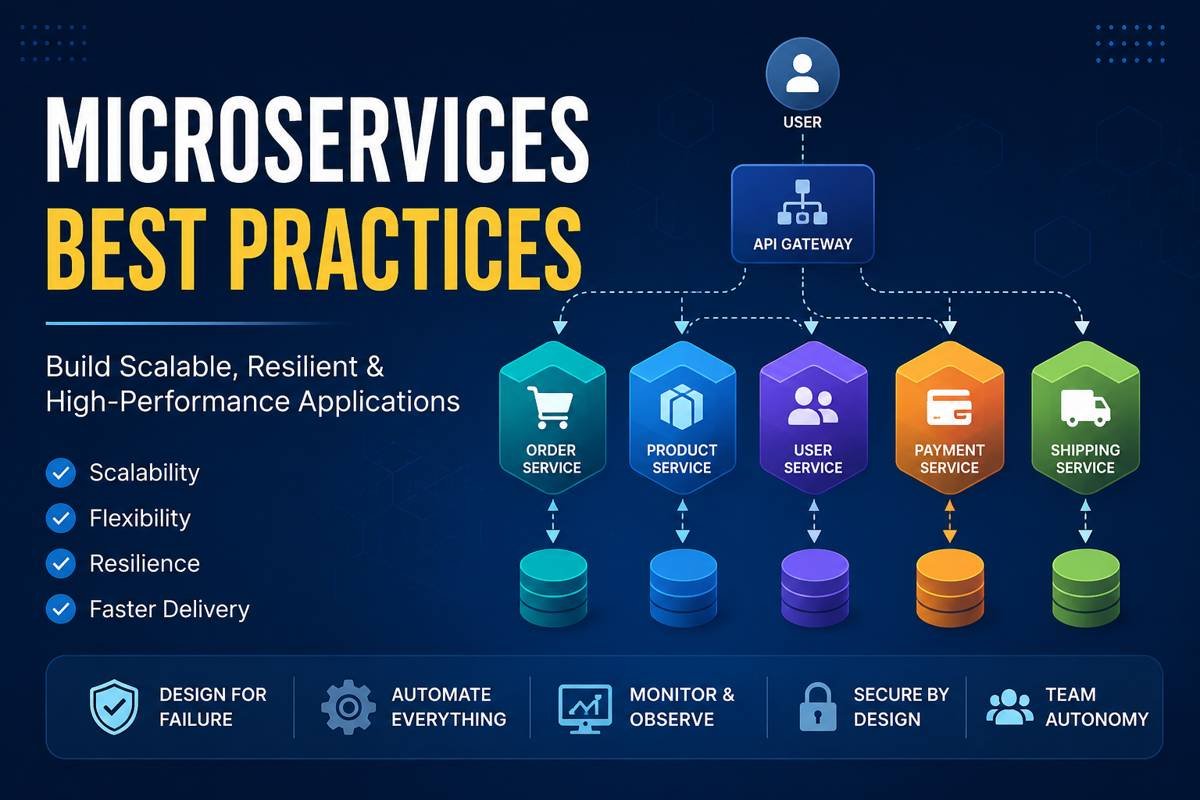
Modern software systems are expected to scale quickly, stay online without interruption, and support constant updates. As businesses grow, traditional monolithic applications often become difficult to maintain. This is why many organizations are moving toward microservices architecture. However, simply breaking an application into smaller services is not enough. Teams also need a clear strategy for development, deployment, security, monitoring, and communication.
Understanding microservices best practices can help developers avoid common architectural problems and build systems that remain reliable as traffic and complexity increase. This article explains the most important strategies, design principles, and operational methods used by successful engineering teams.
Understanding the Microservices Architecture
Microservices architecture is a software development approach where an application is divided into small, independent services. Each service handles a specific business function and communicates with other services through APIs or messaging systems.
Unlike monolithic applications, where all components are tightly connected, microservices allow teams to develop, deploy, and scale services independently. For example, an eCommerce platform may separate user authentication, payment processing, inventory management, and shipping into individual services.
This architecture provides flexibility, but it also introduces operational complexity. Without proper planning, organizations may experience deployment issues, inconsistent data handling, communication delays, and security vulnerabilities.
Start With Clear Service Boundaries
One of the most important decisions in microservices development is defining service boundaries correctly. Each service should focus on a single business capability. Poorly designed boundaries can create dependencies that reduce the benefits of distributed systems.
A useful approach is domain-driven design. This method helps teams divide applications based on business domains instead of technical layers. For example, customer management and billing should operate as separate services because they solve different business problems.
Keeping services small and focused improves maintainability. It also allows teams to update features without affecting unrelated parts of the system. However, services should not become excessively small. Extremely fragmented systems increase communication overhead and operational complexity.
Build Independent Databases for Each Service
A common mistake in distributed systems is sharing a single database across multiple services. This creates tight coupling and makes independent deployment difficult.
Each service should ideally own its own database. This allows teams to choose the most suitable database technology for their needs. For example, one service may use PostgreSQL for transactional data, while another uses MongoDB for flexible document storage.
Database independence improves scalability and fault isolation. If one database experiences issues, it does not necessarily affect the entire application.
Managing distributed data can be challenging, especially when transactions involve multiple services. Instead of relying on complex distributed transactions, many organizations use eventual consistency and event-driven communication.
Use API Gateways for Better Request Management
An API gateway acts as a central entry point for client requests. Rather than exposing every service directly, the gateway handles routing, authentication, rate limiting, and request aggregation.
This approach simplifies client-side communication and improves security. Mobile and web applications can communicate with one endpoint instead of multiple services.
API gateways also help reduce duplicated logic across services. Features like logging, caching, and token validation can be managed centrally.
When implementing gateways, developers should avoid turning them into bottlenecks. Proper scaling and load balancing are essential for maintaining performance.
Prioritize Service Communication Efficiency
Communication between services is a critical aspect of distributed systems. Poor communication patterns can increase latency and reduce reliability.
Synchronous communication using REST APIs is common because it is easy to understand and implement. However, excessive synchronous calls can create cascading failures when one service becomes unavailable.
Asynchronous messaging systems such as Kafka, RabbitMQ, or AWS SQS improve resilience by decoupling services. Instead of waiting for immediate responses, services exchange events and process tasks independently.
Choosing the right communication style depends on business requirements. Real-time operations may require synchronous APIs, while background tasks and notifications work better with asynchronous messaging.
Implement Strong Monitoring and Logging
Monitoring is essential in distributed environments because failures can occur across multiple services simultaneously. Without visibility, troubleshooting becomes extremely difficult.
Centralized logging systems help engineering teams collect logs from every service in one location. Tools like ELK Stack, Grafana, Datadog, and Splunk are commonly used for this purpose.
Application monitoring should include metrics such as response time, request volume, memory usage, CPU consumption, and error rates. These insights help teams detect performance issues before they impact users.
Distributed tracing is another important practice. It allows developers to track requests as they move through multiple services. Tools like Jaeger and OpenTelemetry make it easier to identify bottlenecks and latency problems.
Organizations following microservices best practices invest heavily in observability because it directly affects system reliability.
Focus on Security From the Beginning
Security becomes more complex when applications are divided into many independent services. Every API endpoint and communication channel introduces additional attack surfaces.
Authentication and authorization should be standardized across the system. Many organizations use OAuth 2.0 and JWT tokens to manage secure access.
Service-to-service communication should also be encrypted using TLS. Internal traffic is often overlooked, but attackers may exploit insecure communication inside private networks.
Secrets such as API keys, passwords, and certificates should never be hardcoded into applications. Instead, teams should use secure secret management tools like HashiCorp Vault or cloud-native secret managers.
Regular vulnerability scanning and dependency updates are equally important. Open-source libraries can introduce security risks if they are outdated.
Design for Failure and Resilience
Distributed systems are inherently unreliable because multiple components can fail independently. Successful systems are designed with failure handling in mind.
Circuit breakers help prevent cascading failures by temporarily stopping requests to failing services. Retry mechanisms with exponential backoff improve reliability without overwhelming systems.
Timeouts should also be configured carefully. Services should never wait indefinitely for responses.
Load balancing distributes traffic evenly across service instances, reducing the risk of overload. Auto-scaling further improves resilience by increasing resources during high traffic periods.
Chaos engineering is another valuable practice. By intentionally introducing failures, teams can identify weaknesses before real outages occur.
Automate Deployment With CI/CD Pipelines
Frequent deployment is one of the major advantages of microservices architecture. However, manual deployment processes quickly become unmanageable as the number of services grows.
Continuous integration and continuous deployment pipelines automate testing, building, and deployment. Tools like Jenkins, GitHub Actions, GitLab CI/CD, and CircleCI help streamline this process.
Automated testing should include unit tests, integration tests, and performance tests. Every deployment should pass quality checks before reaching production.
Containerization technologies like Docker simplify deployment consistency across environments. Kubernetes further improves orchestration by automating scaling, networking, and container management.
Teams that follow microservices best practices often rely on infrastructure as code tools such as Terraform or Ansible to maintain consistent environments.
Maintain Proper Version Control for APIs
As services evolve, APIs frequently change. Without proper versioning, updates may break dependent applications.
API versioning allows developers to introduce improvements without disrupting existing users. Common strategies include URL versioning, header-based versioning, and semantic versioning.
Backward compatibility should remain a priority whenever possible. Abrupt API changes can create downtime and frustration for clients.
Clear API documentation is equally important. Tools like Swagger and OpenAPI help teams maintain accurate and accessible documentation.
Avoid Overcomplicating the Architecture
Many companies adopt microservices too early without understanding the operational demands involved. Smaller projects may not require distributed systems.
Microservices introduce additional complexity related to networking, deployment, monitoring, and security. Teams should evaluate whether the benefits outweigh the challenges.
In some cases, a modular monolith may be a better starting point. Organizations can later transition to independent services as the application grows.
Successful architecture decisions are based on business needs rather than industry trends.
Optimize Performance Carefully
Performance optimization in distributed systems requires a balanced approach. Excessive service communication can create network latency that affects user experience.
Caching frequently requested data reduces database load and improves response times. Technologies like Redis and Memcached are commonly used for this purpose.
Database queries should also be optimized to prevent unnecessary resource consumption. Slow queries can affect multiple services simultaneously.
Developers should continuously monitor system performance under realistic traffic conditions. Load testing helps identify weaknesses before production issues occur.
Encourage Team Ownership and Collaboration
Technical architecture alone does not guarantee success. Organizational structure also plays a major role.
Many companies organize teams around business domains, allowing each team to own specific services. This improves accountability and reduces coordination delays.
Clear communication between teams is essential for managing dependencies and shared standards. Documentation, code reviews, and architectural guidelines help maintain consistency.
A strong DevOps culture encourages collaboration between development and operations teams. Faster feedback loops improve deployment quality and incident response.
Conclusion
Building scalable distributed systems requires more than simply splitting applications into smaller components. Teams must focus on clear service boundaries, reliable communication, security, monitoring, deployment automation, and resilience.
Organizations that successfully implement microservices best practices gain greater flexibility, faster deployments, and improved scalability. At the same time, they understand the importance of managing operational complexity.
There is no universal blueprint for every company. The best architecture depends on business goals, team structure, technical expertise, and long-term scalability needs. By applying the principles covered in this guide, development teams can create systems that remain maintainable, secure, and reliable as they grow.
More Details : NVIDIA DGX Spark: A Practical Look at the Compact AI Powerhouse
FAQs
1. What are microservices?
Microservices are a software architecture approach where applications are divided into small, independent services that handle specific business functions.
2. Why are microservices important?
They improve scalability, flexibility, deployment speed, and allow teams to work independently on different parts of an application.
3. Which tools are commonly used with microservices?
Popular tools include Docker, Kubernetes, Kafka, Jenkins, Grafana, Prometheus, and API gateways like Kong or NGINX.
4. Are microservices better than monolithic architecture?
Not always. Microservices work best for large and complex applications, while smaller projects may benefit more from a monolithic structure.
5. How do microservices improve scalability?
Each service can scale independently based on demand, allowing organizations to allocate resources more efficiently.

12 Best Omegle Alternatives for Random Video Chat and Meeting New People

Dbxbqm Meaning: Why It Appears When You Try to Type YouTube

Immediate Loading Implants: How “Fixed Teeth in 48 Hours” Really Works

How UK Mobile Proxies Help Businesses Test Their Websites

Gen AI in Supply Chain: Using Supply Chain Benchmarks to Improve Performance

What Is the UK Theory Test? How It Works, Cost and Pass Mark

Weather the Storm: Why Totally Branded Umbrellas are the UK’s Most Appreciated Gift

How to Store, Wind, and Travel With Your Automatic Watch Collection Without Damaging It

What Do HubSpot Onboarding Services Include?

AI in Supply Chain: How AI Consulting Services Help Build More Intelligent and Resilient Operations
Immediate Loading Implants: How “Fixed Teeth in 48 Hours” Really Works
How UK Mobile Proxies Help Businesses Test Their Websites
Gen AI in Supply Chain: Using Supply Chain Benchmarks to Improve Performance
12 Best Omegle Alternatives for Random Video Chat and Meeting New People
Dbxbqm Meaning: Why It Appears When You Try to Type YouTube
12 Best Omegle Alternatives for Random Video Chat and Meeting New People
Dbxbqm Meaning: Why It Appears When You Try to Type YouTube
Immediate Loading Implants: How “Fixed Teeth in 48 Hours” Really Works
How UK Mobile Proxies Help Businesses Test Their Websites
Gen AI in Supply Chain: Using Supply Chain Benchmarks to Improve Performance
What Is the UK Theory Test? How It Works, Cost and Pass Mark
Weather the Storm: Why Totally Branded Umbrellas are the UK’s Most Appreciated Gift
How to Store, Wind, and Travel With Your Automatic Watch Collection Without Damaging It
What Do HubSpot Onboarding Services Include?
AI in Supply Chain: How AI Consulting Services Help Build More Intelligent and Resilient Operations
-

 Tech9 months ago
xxx is equal to 2022: A Complete Informative Explanation of a Cubic Equation
-

 Celebrity9 months ago
Izzie Balmer Partner: A Deep Dive into the Relationship with Will Hawley
-

 Entertainment9 months ago
The Artistic World of Gege Akutami: A Mastermind Behind Jujutsu Kaisen
-

 Food5 months ago
Best Sushi Rice Brands: A Complete Guide to Choosing the Right Rice for Sushi