
Lifestyle
Transactional Relationship: Meaning, Signs, Benefits, Challenges, and How to Build Healthier Connections

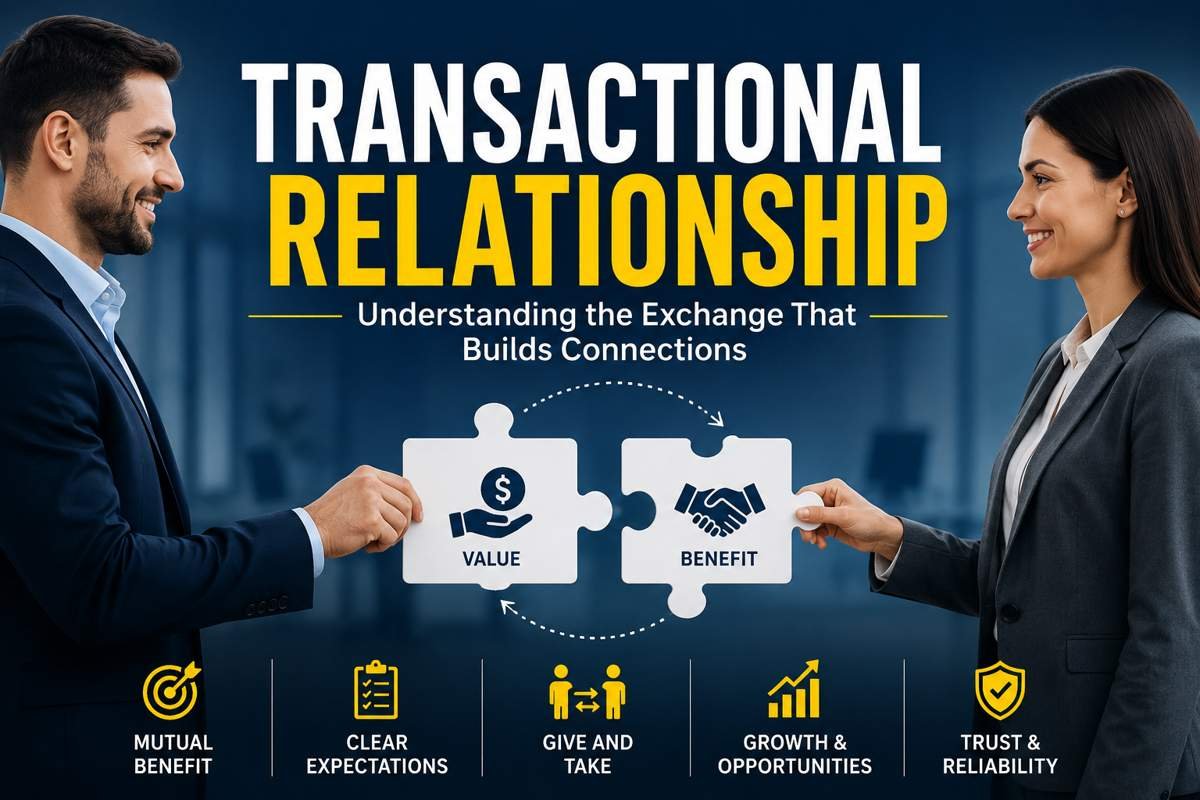
Relationships come in many forms, and not all of them are built on deep emotional bonds. Some connections are primarily based on an exchange of value, support, resources, or services between two people. This type of connection is often known as a transactional relationship. While the term may sound negative, these relationships are common in everyday life and can exist in both personal and professional settings.
Understanding how these relationships work can help people recognize their dynamics, set realistic expectations, and make informed decisions about the connections they maintain. In this article, we will explore the meaning, characteristics, advantages, disadvantages, and ways to create more balanced and meaningful relationships.
What Is a Transactional Relationship?
A transactional relationship is a connection in which both parties engage with each other primarily to receive a specific benefit or fulfill a particular need. The relationship is often based on an exchange rather than a deep emotional bond.
The exchange may involve money, services, social status, opportunities, information, favors, or other forms of value. In many cases, both individuals clearly understand what they are receiving and what they are expected to give in return.
These relationships are not necessarily unhealthy. In fact, many professional partnerships and business arrangements function successfully through mutually beneficial exchanges. The key difference is that the connection is largely driven by what each person gains from it.
Understanding the Core Principle
At its foundation, a transactional connection operates on reciprocity. Each person contributes something and expects something in return. This exchange can be explicit, such as a business contract, or implicit, where expectations are understood but not openly discussed.
For example, an employer pays an employee for their work. Both sides benefit from the arrangement, and the expectations are generally clear. Similarly, networking relationships often involve exchanging knowledge, opportunities, or professional support.
Problems can arise when expectations are unclear or when one person feels they are giving significantly more than they receive.
Common Characteristics of Transactional Connections
Recognizing the traits of a relationship based on exchange can help individuals better understand its nature.
Focus on Mutual Benefit
The primary characteristic is the emphasis on what each party gains. Interactions are often driven by practical outcomes rather than emotional connection.
Clear Expectations
Most exchange-based relationships involve defined expectations. Both individuals understand their roles and responsibilities within the connection.
Limited Emotional Investment
Although respect and friendliness may exist, emotional intimacy is often not the main purpose. The relationship functions effectively because of the benefits exchanged.
Performance-Based Value
The relationship may continue as long as both sides perceive value. If the benefits disappear, the connection may weaken or end.
Goal-Oriented Interactions
Conversations and activities are frequently centered around achieving specific objectives rather than building deep personal bonds.
Examples in Everyday Life
Many people participate in transactional interactions without realizing it. These examples demonstrate how common they are.
Workplace Relationships
Professional environments often involve exchanges of skills, time, and compensation. Employees provide services, while employers provide salaries and benefits.
Business Partnerships
Companies collaborate because each organization receives value from the arrangement. Shared resources, expertise, and market access are common motivations.
Networking Connections
Professionals frequently connect with others to exchange knowledge, referrals, mentorship, or career opportunities.
Client-Service Provider Relationships
A customer pays for a service, and the provider delivers expertise or assistance. Both parties benefit from the exchange.
Social Arrangements
Some social relationships may develop around convenience, shared resources, or specific advantages rather than emotional closeness.
How a Transactional Relationship Differs From a Genuine Relationship
Understanding the distinction between these relationship types is important.
In emotionally driven relationships, people often support each other regardless of immediate personal gain. Trust, empathy, affection, and shared experiences play a central role.
By contrast, a transactional relationship tends to focus more heavily on exchange and practical outcomes. While respect and care may still exist, the connection is often maintained because it serves a specific purpose.
This does not mean one type is automatically better than the other. Different relationships serve different functions in life.
Benefits of Transactional Relationships
Despite the negative reputation sometimes associated with the concept, these relationships can offer several advantages.
Efficiency and Clarity
When expectations are clearly defined, misunderstandings can be reduced. Both parties know what is expected and what they will receive.
Professional Growth
Many career opportunities emerge through strategic professional connections. Networking relationships can help individuals expand their knowledge and opportunities.
Mutual Advantage
When both sides benefit fairly, the relationship can create value for everyone involved.
Reduced Emotional Complexity
Because expectations are often straightforward, there may be fewer emotional complications compared to highly personal relationships.
Resource Sharing
People can access expertise, support, information, and opportunities that help them achieve their goals more effectively.
Potential Drawbacks and Risks
While these relationships can be useful, they also come with limitations.
Lack of Emotional Support
During difficult times, people may discover that exchange-based connections do not provide the emotional comfort they need.
Conditional Commitment
The relationship may continue only while benefits exist. If the value disappears, so may the connection.
Feelings of Being Used
When the balance of giving and receiving becomes uneven, one person may feel exploited or unappreciated.
Trust Challenges
If interactions are heavily focused on personal gain, building deep trust can be difficult.
Limited Long-Term Stability
Relationships built solely on benefits may be more vulnerable to change when circumstances shift.
Signs You May Be in a Transactional Relationship
Identifying relationship dynamics can help individuals evaluate whether their needs are being met.
Communication Happens Only When Needed
Interactions primarily occur when one person requires assistance, information, or a favor.
The Relationship Feels Like an Exchange
Each interaction seems tied to a specific benefit rather than genuine interest in each other’s well-being.
Support Is Conditional
Help and assistance are offered mainly when there is an expected return.
Personal Connection Is Minimal
Conversations rarely move beyond practical matters or shared objectives.
Value Determines Engagement
The level of attention or involvement changes depending on the benefits available.
Can Transactional Relationships Become Meaningful?
Yes, many relationships evolve over time.
A professional connection may gradually develop into a genuine friendship. Colleagues who initially interact for work purposes may discover shared interests, mutual respect, and emotional trust.
Growth often occurs through consistent communication, reliability, honesty, and shared experiences. As trust deepens, the relationship may move beyond simple exchanges and become more personally meaningful.
Not every relationship needs to evolve in this way, but it is certainly possible.
How to Maintain Healthy Boundaries
Healthy boundaries are important in any relationship, especially those based on exchange.
Define Expectations Early
Clear communication helps prevent misunderstandings and disappointment.
Evaluate the Balance
Consider whether both parties are benefiting fairly from the arrangement.
Protect Your Personal Values
Avoid agreeing to exchanges that conflict with your principles or long-term goals.
Communicate Openly
Address concerns when expectations change or when the arrangement no longer feels balanced.
Recognize the Relationship Type
Accepting a relationship for what it is can help reduce unrealistic expectations.
Building More Authentic Connections
While practical exchanges are a normal part of life, many people also seek deeper connections.
Authentic relationships often develop through trust, vulnerability, empathy, and mutual respect. Spending time together, showing genuine interest, and supporting each other beyond personal gain can strengthen emotional bonds.
The healthiest social networks usually include a combination of relationship types. Professional and exchange-based connections serve important purposes, while close friendships and family relationships provide emotional support and belonging.
Conclusion
A transactional relationship is a connection built primarily around the exchange of value, benefits, services, or opportunities. These relationships are common in workplaces, business environments, networking circles, and many everyday interactions. While they may not always involve deep emotional bonds, they can still be effective, productive, and mutually beneficial when expectations are clear and balanced.
Understanding the strengths and limitations of these relationships allows individuals to navigate them more effectively. By maintaining healthy boundaries, communicating openly, and recognizing the role each relationship plays, people can create a balanced social and professional life that includes both practical and meaningful connections.
More Details : The Hidden Cost of “Princess Treatment” in Modern Relationships
FAQs
1. What is a transactional relationship?
A transactional relationship is a connection where both parties interact mainly to exchange benefits, services, resources, or value.
2. Are transactional relationships always unhealthy?
No. Many professional and business relationships are transactional and can be healthy when expectations are clear and mutually beneficial.
3. Can a transactional relationship become a friendship?
Yes. Over time, trust, shared experiences, and genuine care can transform an exchange-based connection into a meaningful friendship.
4. What are the main signs of a transactional relationship?
Common signs include conditional support, goal-focused interactions, limited emotional intimacy, and communication that occurs mainly when a benefit is needed.
5. How can I make a relationship more meaningful?
Focus on trust, empathy, honest communication, and supporting others without always expecting something in return. These qualities help create deeper and more authentic connections.

12 Best Omegle Alternatives for Random Video Chat and Meeting New People

Dbxbqm Meaning: Why It Appears When You Try to Type YouTube

Immediate Loading Implants: How “Fixed Teeth in 48 Hours” Really Works

How UK Mobile Proxies Help Businesses Test Their Websites

Gen AI in Supply Chain: Using Supply Chain Benchmarks to Improve Performance

What Is the UK Theory Test? How It Works, Cost and Pass Mark

Weather the Storm: Why Totally Branded Umbrellas are the UK’s Most Appreciated Gift

How to Store, Wind, and Travel With Your Automatic Watch Collection Without Damaging It

What Do HubSpot Onboarding Services Include?

AI in Supply Chain: How AI Consulting Services Help Build More Intelligent and Resilient Operations
Immediate Loading Implants: How “Fixed Teeth in 48 Hours” Really Works
How UK Mobile Proxies Help Businesses Test Their Websites
12 Best Omegle Alternatives for Random Video Chat and Meeting New People
Dbxbqm Meaning: Why It Appears When You Try to Type YouTube
12 Best Omegle Alternatives for Random Video Chat and Meeting New People
Dbxbqm Meaning: Why It Appears When You Try to Type YouTube
Immediate Loading Implants: How “Fixed Teeth in 48 Hours” Really Works
How UK Mobile Proxies Help Businesses Test Their Websites
Gen AI in Supply Chain: Using Supply Chain Benchmarks to Improve Performance
What Is the UK Theory Test? How It Works, Cost and Pass Mark
Weather the Storm: Why Totally Branded Umbrellas are the UK’s Most Appreciated Gift
How to Store, Wind, and Travel With Your Automatic Watch Collection Without Damaging It
What Do HubSpot Onboarding Services Include?
AI in Supply Chain: How AI Consulting Services Help Build More Intelligent and Resilient Operations
-

 Tech9 months ago
xxx is equal to 2022: A Complete Informative Explanation of a Cubic Equation
-

 Celebrity9 months ago
Izzie Balmer Partner: A Deep Dive into the Relationship with Will Hawley
-

 Entertainment9 months ago
The Artistic World of Gege Akutami: A Mastermind Behind Jujutsu Kaisen
-

 Food6 months ago
Best Sushi Rice Brands: A Complete Guide to Choosing the Right Rice for Sushi