
Tech
What Is an SSL Handshake? A Complete Guide to Secure Website Connections

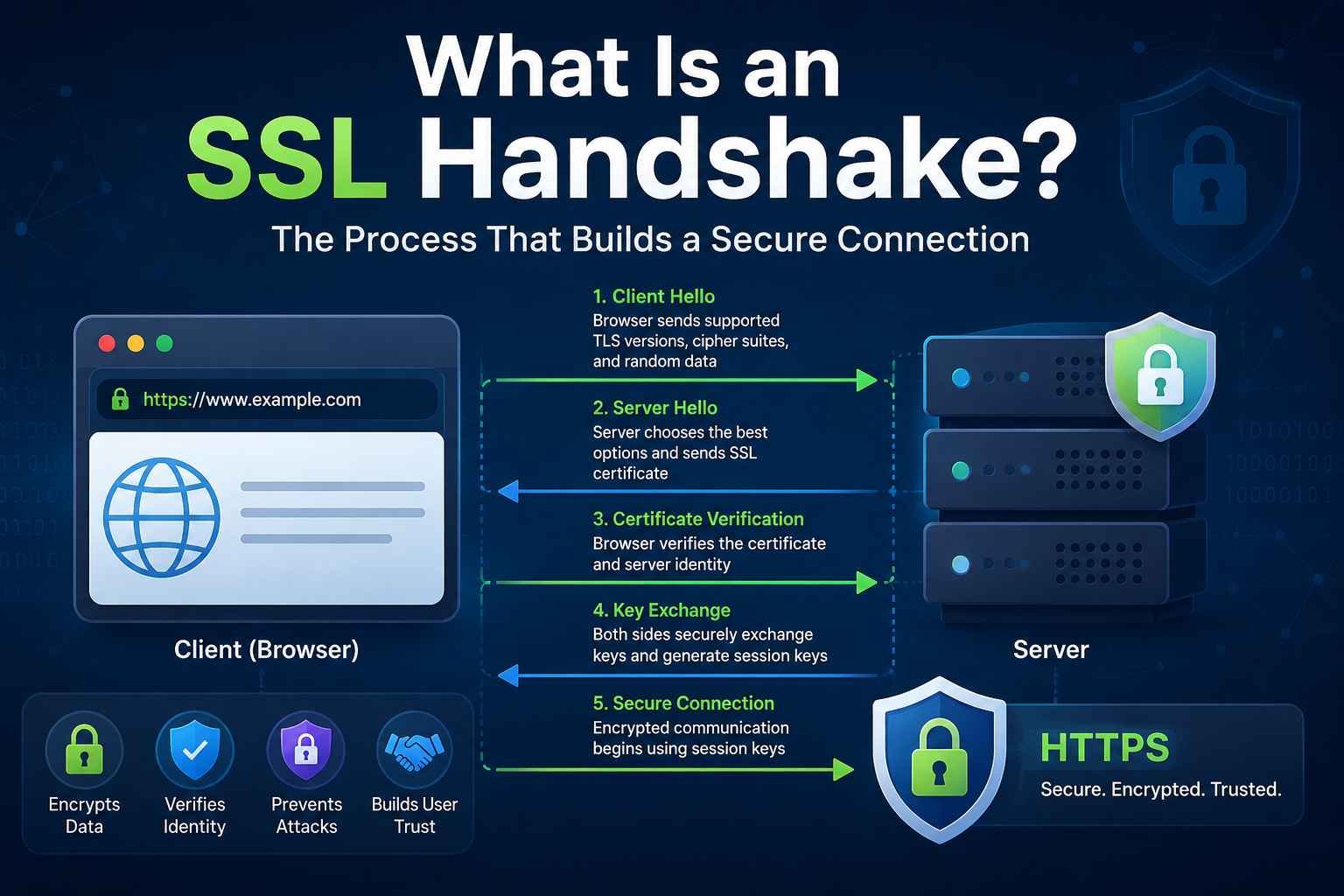
When you visit a website that uses HTTPS, a complex security process begins before any information is exchanged. Most internet users never notice it, yet this process plays a critical role in protecting passwords, payment details, personal information, and other sensitive data. This security procedure is known as the SSL handshake.
Understanding what is an SSL handshake is important for website owners, developers, digital marketers, and anyone interested in online security. It is the foundation of encrypted communication on the internet and helps ensure that users can interact with websites safely.
In this guide, you’ll learn how the SSL handshake works, why it matters, the steps involved, and how it helps create a secure browsing experience.
What Is an SSL Handshake?
An SSL handshake is the process through which a web browser and a web server establish a secure connection before exchanging data. During this process, both parties verify each other’s identity, agree on encryption methods, and generate the keys needed to protect information transmitted between them.
The handshake takes place in just a few milliseconds, but it performs several important security checks that help keep online communication private and secure.
Although the term “SSL” is still widely used, modern websites primarily use TLS (Transport Layer Security), which replaced the older SSL protocol years ago. However, the phrase SSL handshake remains the most commonly recognized term in the industry.
Why the SSL Handshake Matters
Every day, billions of pieces of information travel across the internet. Without encryption, this data could potentially be intercepted by hackers, cybercriminals, or unauthorized third parties.
The SSL handshake helps solve this problem by creating a trusted and encrypted communication channel between a user and a website.
Its primary purposes include:
- Verifying website authenticity
- Encrypting sensitive information
- Preventing data interception
- Protecting against cyberattacks
- Building user trust
Without this process, secure online banking, e-commerce transactions, and account logins would be significantly more vulnerable to security threats.
The Main Purpose of an SSL Handshake
To better understand what is an SSL handshake, it helps to look at its core objective.
Before any secure communication can begin, a browser must determine:
Is the Website Genuine?
The browser needs confirmation that the server truly belongs to the website the user wants to visit.
Which Encryption Method Should Be Used?
Both sides must agree on a secure encryption algorithm that they can support.
How Will Encryption Keys Be Shared Securely?
The browser and server must establish encryption keys without exposing them to potential attackers.
Once these goals are achieved, encrypted communication can begin safely.
Key Technologies Behind the SSL Handshake
Several technologies work together during the handshake process.
SSL/TLS Certificates
An SSL certificate serves as proof of a website’s identity. It contains information about the website owner, domain name, issuing authority, and public encryption key.
These certificates are issued by trusted Certificate Authorities (CAs).
Public Key Cryptography
Public key cryptography uses two separate keys:
- Public key for encryption
- Private key for decryption
This method allows information to be exchanged securely without sharing private keys publicly.
Session Keys
Once the handshake is complete, both parties generate temporary session keys that are used to encrypt ongoing communication.
Session keys provide faster encryption than public key cryptography and improve overall performance.
Certificate Authorities
Certificate Authorities verify the legitimacy of websites before issuing SSL certificates.
Browsers trust certificates issued by recognized authorities, making them an essential part of the security process.
How an SSL Handshake Works Step by Step
The SSL handshake follows a sequence of steps that establish a secure connection.
Step 1: Client Hello
The process begins when a user enters a website address or clicks a link.
The browser sends a message known as the Client Hello.
This message includes:
- Supported TLS versions
- Available cipher suites
- Random data for encryption
- Security preferences
The browser is essentially asking the server how it would like to establish a secure connection.
Step 2: Server Hello
The server responds with a Server Hello message.
This response contains:
- Selected TLS version
- Chosen cipher suite
- Server-generated random data
- SSL/TLS certificate
The server selects the most secure options that both sides support.
Step 3: Certificate Validation
The browser examines the certificate provided by the server.
Several checks take place:
- Is the certificate issued by a trusted authority?
- Has the certificate expired?
- Does the certificate match the domain name?
- Has the certificate been revoked?
If any of these checks fail, the browser may display a security warning.
Step 4: Key Exchange
After certificate validation, the browser and server exchange information needed to generate encryption keys.
Modern TLS versions use advanced key exchange methods that help prevent attackers from obtaining encryption keys even if communications are intercepted.
Step 5: Session Key Creation
Using information exchanged during the handshake, both sides independently generate matching session keys.
These keys will be used to encrypt all future communication.
Step 6: Secure Communication Begins
Once the session keys are created, the handshake is complete.
The browser and server can now exchange information securely through encryption.
Users can safely browse pages, submit forms, make purchases, and access accounts.
SSL Handshake and HTTPS
Whenever you see a padlock icon in your browser’s address bar, an SSL handshake has successfully taken place.
HTTPS relies on SSL/TLS technology to secure website communication.
Without a successful handshake:
- HTTPS cannot function
- Data remains unencrypted
- Browsers may display warning messages
- User trust decreases
This is why SSL certificates are considered essential for modern websites.
Common SSL Handshake Errors
Despite being automated, SSL handshakes can occasionally fail.
Expired Certificates
One of the most common causes is an expired SSL certificate.
Browsers immediately reject certificates that are no longer valid.
Unsupported TLS Versions
Older servers and browsers may not support modern security protocols.
When compatibility issues occur, the handshake may fail.
Incorrect Certificate Installation
Improper certificate configuration can prevent browsers from verifying website identity.
Cipher Suite Conflicts
If the browser and server cannot agree on an encryption algorithm, the connection cannot proceed.
Firewall Restrictions
Certain network security systems may block or interfere with encrypted traffic.
This can sometimes interrupt the handshake process.
How TLS 1.3 Improved SSL Handshakes
Modern websites increasingly use TLS 1.3 because it offers significant improvements.
Faster Connections
TLS 1.3 reduces the number of communication steps required to establish secure sessions.
This improves website loading speed.
Stronger Security
Outdated encryption algorithms have been removed, reducing potential vulnerabilities.
Better Privacy
TLS 1.3 provides stronger protection against interception and surveillance attempts.
Improved User Experience
Visitors benefit from secure connections that are established more quickly and efficiently.
Benefits of a Successful SSL Handshake
A properly functioning handshake delivers several important advantages.
Enhanced Security
Sensitive information remains protected while traveling across networks.
Increased Customer Confidence
Visitors feel safer interacting with websites that use HTTPS encryption.
Better Search Engine Performance
Google considers HTTPS a ranking signal, making website security beneficial for SEO.
Data Integrity
Encryption prevents attackers from modifying information during transmission.
Regulatory Compliance
Many privacy regulations require secure data transmission methods.
Best Practices for Secure SSL Connections
Website administrators can improve security by following a few key practices.
Keep Certificates Updated
Always renew certificates before they expire.
Use Modern Protocols
Enable TLS 1.2 and TLS 1.3 while disabling outdated SSL versions.
Monitor Certificate Health
Regular monitoring helps identify potential certificate issues before they impact visitors.
Maintain Proper Server Configuration
Correct SSL implementation reduces connection errors and improves security.
Conduct Security Audits
Routine testing helps uncover vulnerabilities and configuration weaknesses.
Final Thoughts
If you’ve ever wondered what is an SSL handshake, the answer is simple: it is the security process that makes encrypted internet communication possible. Before any information is exchanged, the browser and server work together to verify identities, negotiate encryption methods, and create secure session keys.
Although it happens behind the scenes in a fraction of a second, the SSL handshake is one of the most important technologies protecting the modern internet. From online shopping and banking to email and social media, secure communication depends on this process every day.
As cybersecurity threats continue to evolve, understanding how SSL handshakes work provides valuable insight into the systems that help keep personal and business data safe online.
More Details : From Root to Leaf: Understanding the what is an ssl certificate chain of Trust
FAQs
1. What is an SSL handshake in simple words?
An SSL handshake is the process that creates a secure and encrypted connection between a web browser and a website.
2. How long does an SSL handshake take?
Most SSL handshakes are completed within milliseconds and are usually unnoticeable to users.
3. Is SSL different from TLS?
Yes. TLS is the newer and more secure version of SSL, but many people still use the term SSL when discussing secure connections.
4. Why can an SSL handshake fail?
Common reasons include expired certificates, server configuration issues, unsupported TLS versions, and encryption mismatches.
5. Does an SSL handshake improve SEO?
Indirectly, yes. HTTPS is a Google ranking factor, and a successful SSL handshake is required for HTTPS to function properly.

Immediate Loading Implants: How “Fixed Teeth in 48 Hours” Really Works

How UK Mobile Proxies Help Businesses Test Their Websites

Gen AI in Supply Chain: Using Supply Chain Benchmarks to Improve Performance

What Is the UK Theory Test? How It Works, Cost and Pass Mark

Weather the Storm: Why Totally Branded Umbrellas are the UK’s Most Appreciated Gift

How to Store, Wind, and Travel With Your Automatic Watch Collection Without Damaging It

What Do HubSpot Onboarding Services Include?

AI in Supply Chain: How AI Consulting Services Help Build More Intelligent and Resilient Operations

Hungary Dental Tourism: Quality Dental Care at Affordable Prices

Timur Turlov: A Vision for the Future of Global Chess
How to Store, Wind, and Travel With Your Automatic Watch Collection Without Damaging It
What Is the UK Theory Test? How It Works, Cost and Pass Mark
Weather the Storm: Why Totally Branded Umbrellas are the UK’s Most Appreciated Gift
Gen AI in Supply Chain: Using Supply Chain Benchmarks to Improve Performance
How UK Mobile Proxies Help Businesses Test Their Websites
Immediate Loading Implants: How “Fixed Teeth in 48 Hours” Really Works
Immediate Loading Implants: How “Fixed Teeth in 48 Hours” Really Works
How UK Mobile Proxies Help Businesses Test Their Websites
Gen AI in Supply Chain: Using Supply Chain Benchmarks to Improve Performance
What Is the UK Theory Test? How It Works, Cost and Pass Mark
Weather the Storm: Why Totally Branded Umbrellas are the UK’s Most Appreciated Gift
How to Store, Wind, and Travel With Your Automatic Watch Collection Without Damaging It
What Do HubSpot Onboarding Services Include?
AI in Supply Chain: How AI Consulting Services Help Build More Intelligent and Resilient Operations
Hungary Dental Tourism: Quality Dental Care at Affordable Prices
Timur Turlov: A Vision for the Future of Global Chess
-

 Tech8 months ago
xxx is equal to 2022: A Complete Informative Explanation of a Cubic Equation
-

 Celebrity8 months ago
Izzie Balmer Partner: A Deep Dive into the Relationship with Will Hawley
-

 Entertainment8 months ago
The Artistic World of Gege Akutami: A Mastermind Behind Jujutsu Kaisen
-

 Food5 months ago
Best Sushi Rice Brands: A Complete Guide to Choosing the Right Rice for Sushi