
Tech
What Is Constructor in Java? A Complete Guide for Beginners

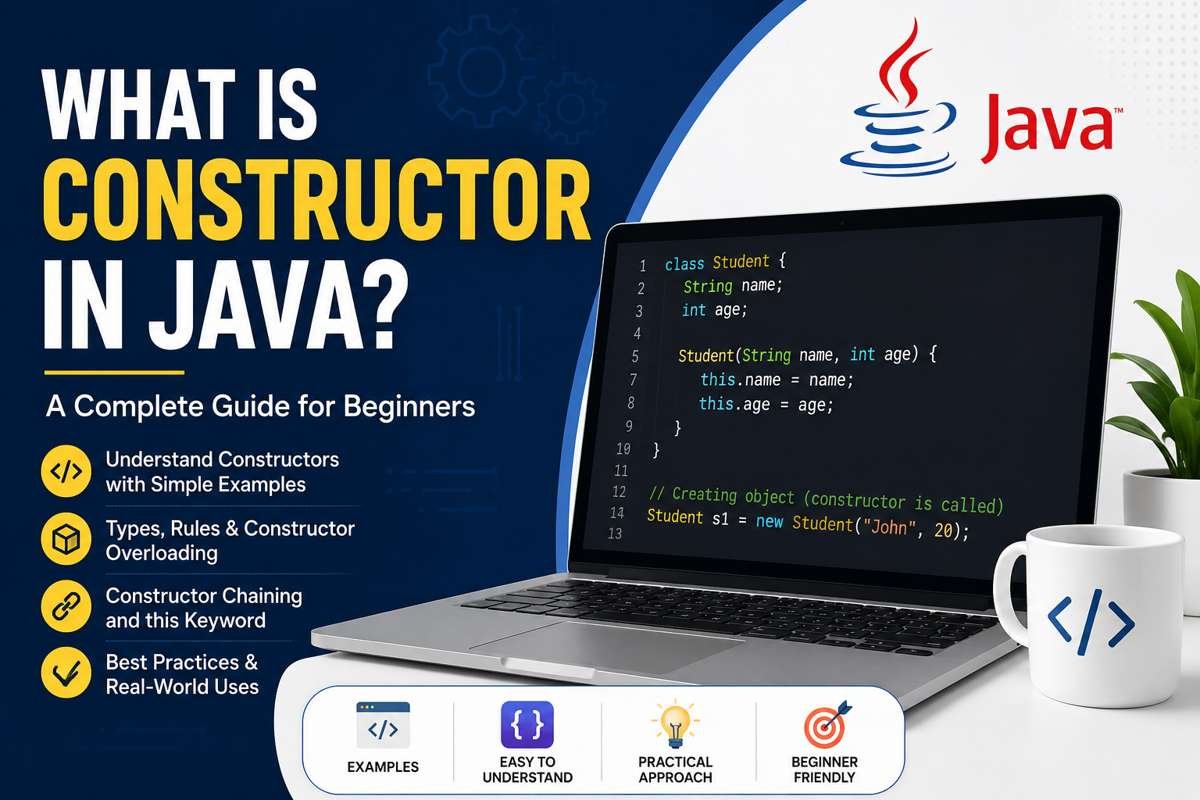
When learning Java, one of the first concepts you will encounter is the constructor. Constructors play a vital role in object-oriented programming because they help initialize objects when they are created. Without constructors, setting up objects with the required values would be much more difficult and repetitive.
Understanding what is constructor in java is essential for every beginner because constructors are used in almost every Java application. Whether you are building simple programs or enterprise-level software, constructors help ensure that objects start with the correct state and data.
This guide explains constructors in a clear and practical way, covering their purpose, types, rules, advantages, and common examples.
Understanding the Basics of Constructors
A constructor is a special method in Java that is automatically called when an object of a class is created. Its primary purpose is to initialize the object’s data members and prepare the object for use.
Unlike regular methods, a constructor does not have a return type, not even void. The name of the constructor must always match the name of the class.
Here is a simple example:
class Student {

    Student() {
        System.out.println("Student object created");
    }
}

public class Main {
    public static void main(String[] args) {
        Student s1 = new Student();
    }
}
When the object s1 is created, the constructor runs automatically and displays the message.
Why Constructors Are Important in Java
Constructors provide a convenient way to initialize objects with meaningful values from the beginning. Instead of creating an object and then assigning values separately, constructors allow everything to happen during object creation.
Some key benefits include:
- Initializing object variables automatically
- Reducing repetitive code
- Improving code readability
- Ensuring objects are created in a valid state
- Supporting object-oriented programming principles
Without constructors, developers would need additional methods to set values after object creation, which can make programs more complex.
What Is Constructor in Java and How Does It Work?
To understand what is constructor in java, think of a constructor as the setup process that occurs whenever a new object is created.
When Java encounters the new keyword, memory is allocated for the object. Immediately after memory allocation, the constructor executes and initializes the object.
For example:
class Car {
    String brand;

    Car() {
        brand = "Toyota";
    }
}
When a Car object is created, the constructor automatically assigns “Toyota” to the brand variable.
This automatic initialization helps ensure consistency across all objects created from the same class.
Rules for Creating Constructors
Java constructors follow several important rules that every programmer should remember.
Constructor Name Must Match the Class Name
The constructor’s name must be exactly the same as the class name.
class Employee {

    Employee() {
        System.out.println("Constructor called");
    }
}
Constructors Cannot Have a Return Type
A constructor should never specify a return type.
Incorrect:
void Employee() {
}
Correct:
Employee() {
}
Constructors Can Have Access Modifiers
Constructors can be declared as:
- Public
- Private
- Protected
- Default
These modifiers control where objects can be created.
Constructors Are Called Automatically
You do not need to call constructors manually. Java invokes them whenever an object is instantiated.
Types of Constructors in Java
Java mainly supports two common types of constructors.
Default Constructor
A default constructor is a constructor that takes no parameters.
Example:
class Book {

    Book() {
        System.out.println("Book object created");
    }
}
If you do not create any constructor, Java automatically provides a default constructor behind the scenes.
However, once you create your own constructor, Java no longer generates one automatically.
Parameterized Constructor
A parameterized constructor accepts values as parameters.
Example:
class Student {
    String name;

    Student(String n) {
        name = n;
    }
}
Object creation:
Student s1 = new Student("John");This constructor allows different objects to have different values during creation.
Parameterized constructors are commonly used in real-world applications because they provide flexibility and reduce the need for separate setter methods.
Constructor Overloading in Java
Java allows multiple constructors within the same class, provided they have different parameter lists. This feature is known as constructor overloading.
Example:
class Product {

    Product() {
        System.out.println("Default constructor");
    }

    Product(String name) {
        System.out.println(name);
    }

    Product(String name, int price) {
        System.out.println(name + " " + price);
    }
}
Different constructors can be called depending on the arguments supplied during object creation.
This approach makes classes more versatile and user-friendly.
Copy Constructor Concept in Java
Unlike some programming languages, Java does not provide a built-in copy constructor. However, developers can create one manually.
Example:
class Student {
    String name;

    Student(String name) {
        this.name = name;
    }

    Student(Student s) {
        this.name = s.name;
    }
}
The second constructor creates a new object by copying data from an existing object.
Copy constructors are useful when you want to duplicate objects without manually assigning each value.
Using the this Keyword in Constructors
The this keyword is frequently used inside constructors to distinguish between instance variables and parameters.
Example:
class Employee {
    String name;

    Employee(String name) {
        this.name = name;
    }
}
Here:
this.namerefers to the instance variable.namerefers to the constructor parameter.
Using this improves code clarity and avoids naming conflicts.
Constructor Chaining in Java
Constructor chaining occurs when one constructor calls another constructor within the same class.
This is achieved using the this() statement.
Example:
class Student {

    Student() {
        this("Unknown");
    }

    Student(String name) {
        System.out.println(name);
    }
}
When the default constructor runs, it calls the parameterized constructor.
Benefits of constructor chaining include:
- Reducing code duplication
- Improving maintainability
- Simplifying initialization logic
Difference Between Constructors and Methods
Many beginners confuse constructors with methods. Although they look similar, they serve different purposes.
| Constructor | Method |
|---|---|
| Initializes objects | Performs actions |
| Same name as class | Any valid name |
| No return type | Can have return type |
| Called automatically | Called explicitly |
| Runs during object creation | Runs whenever invoked |
Understanding these differences helps avoid common programming mistakes.
Common Mistakes Beginners Make
Adding a Return Type
Many beginners mistakenly write constructors with a return type.
Incorrect:
public void Student() {
}
This becomes a regular method rather than a constructor.
Using the Wrong Name
The constructor name must exactly match the class name.
Forgetting Parameter Assignment
Developers sometimes pass parameters but forget to store them in object variables.
Using this helps solve this issue.
Creating Too Many Constructors
While overloading is useful, excessive constructors can make a class difficult to maintain. Choose only the constructors that provide meaningful functionality.
Real-World Uses of Constructors
Constructors are widely used in software development.
Some practical applications include:
Creating User Accounts
When a new user registers, a constructor can initialize username, email, and account settings.
Managing Database Connections
Constructors often establish initial configuration settings for database objects.
Building Business Objects
Applications use constructors to initialize customer, product, employee, and order objects.
Framework Development
Popular Java frameworks such as Spring and Hibernate rely heavily on constructors for dependency injection and object creation.
Because of these real-world uses, understanding what is constructor in java is a fundamental skill for any Java developer.
Best Practices for Using Constructors
To write clean and maintainable Java code, follow these practices:
- Keep constructors simple and focused.
- Use parameterized constructors when object data is required.
- Avoid complex business logic inside constructors.
- Use constructor chaining to reduce duplicate code.
- Validate important input values when necessary.
- Use meaningful parameter names.
Following these guidelines helps create reliable and professional Java applications.
Conclusion
Understanding what is constructor in java is an important step in mastering Java programming. Constructors are special methods that initialize objects and ensure they start with the correct values. They are automatically executed whenever an object is created and help simplify object setup.
Java provides different constructor types, including default and parameterized constructors, while features such as constructor overloading and chaining add flexibility to object creation. By learning how constructors work and applying best practices, developers can write cleaner, more efficient, and more maintainable code.
Whether you are building a small educational project or a large enterprise application, constructors remain one of the most essential components of Java programming.
More Details : 135+ JavaScript Interview Questions (With Answers) Every Frontend Developer Should Know in 2026
FAQs
1. What is the main purpose of a constructor in Java?
A constructor is used to initialize an object when it is created and assign initial values to its variables.
2. Can a constructor have a return type?
No. Constructors cannot have any return type, including void.
3. How many constructors can a class have?
A class can have multiple constructors through constructor overloading, as long as their parameter lists are different.
4. Is a constructor called automatically?
Yes. Java automatically calls the constructor when an object is created using the new keyword.
5. What is the difference between a default constructor and a parameterized constructor?
A default constructor accepts no arguments, while a parameterized constructor accepts values that are used to initialize object data during creation.

How to Store, Wind, and Travel With Your Automatic Watch Collection Without Damaging It

What Do HubSpot Onboarding Services Include?

AI in Supply Chain: How AI Consulting Services Help Build More Intelligent and Resilient Operations

Hungary Dental Tourism: Quality Dental Care at Affordable Prices

Timur Turlov: A Vision for the Future of Global Chess

Meaningful Ways to Memorialise a Beloved Pet After Loss

Understanding Jerking Movements: An Ayurvedic Perspective

Are You Saving Enough for Retirement? Key Benchmarks by Age

Timur Turlov: A Visionary Leader Transforming Modern Finance

5 Ways a Probate Attorney Can Help When Estate Documents Are Missing
What Do HubSpot Onboarding Services Include?
Timur Turlov: A Vision for the Future of Global Chess
Meaningful Ways to Memorialise a Beloved Pet After Loss
Hungary Dental Tourism: Quality Dental Care at Affordable Prices
AI in Supply Chain: How AI Consulting Services Help Build More Intelligent and Resilient Operations
How to Store, Wind, and Travel With Your Automatic Watch Collection Without Damaging It
How to Store, Wind, and Travel With Your Automatic Watch Collection Without Damaging It
What Do HubSpot Onboarding Services Include?
AI in Supply Chain: How AI Consulting Services Help Build More Intelligent and Resilient Operations
Hungary Dental Tourism: Quality Dental Care at Affordable Prices
Timur Turlov: A Vision for the Future of Global Chess
Meaningful Ways to Memorialise a Beloved Pet After Loss
Understanding Jerking Movements: An Ayurvedic Perspective
Are You Saving Enough for Retirement? Key Benchmarks by Age
Timur Turlov: A Visionary Leader Transforming Modern Finance
5 Ways a Probate Attorney Can Help When Estate Documents Are Missing
-

 Tech8 months ago
xxx is equal to 2022: A Complete Informative Explanation of a Cubic Equation
-

 Celebrity7 months ago
Izzie Balmer Partner: A Deep Dive into the Relationship with Will Hawley
-

 Entertainment8 months ago
The Artistic World of Gege Akutami: A Mastermind Behind Jujutsu Kaisen
-

 Entertainment7 months ago
Semana Santa 2026: Dates, Traditions, and Global Celebrations