News
Pedantic: Meaning, Importance, and Why Being Pedantic Can Actually Be a Strength

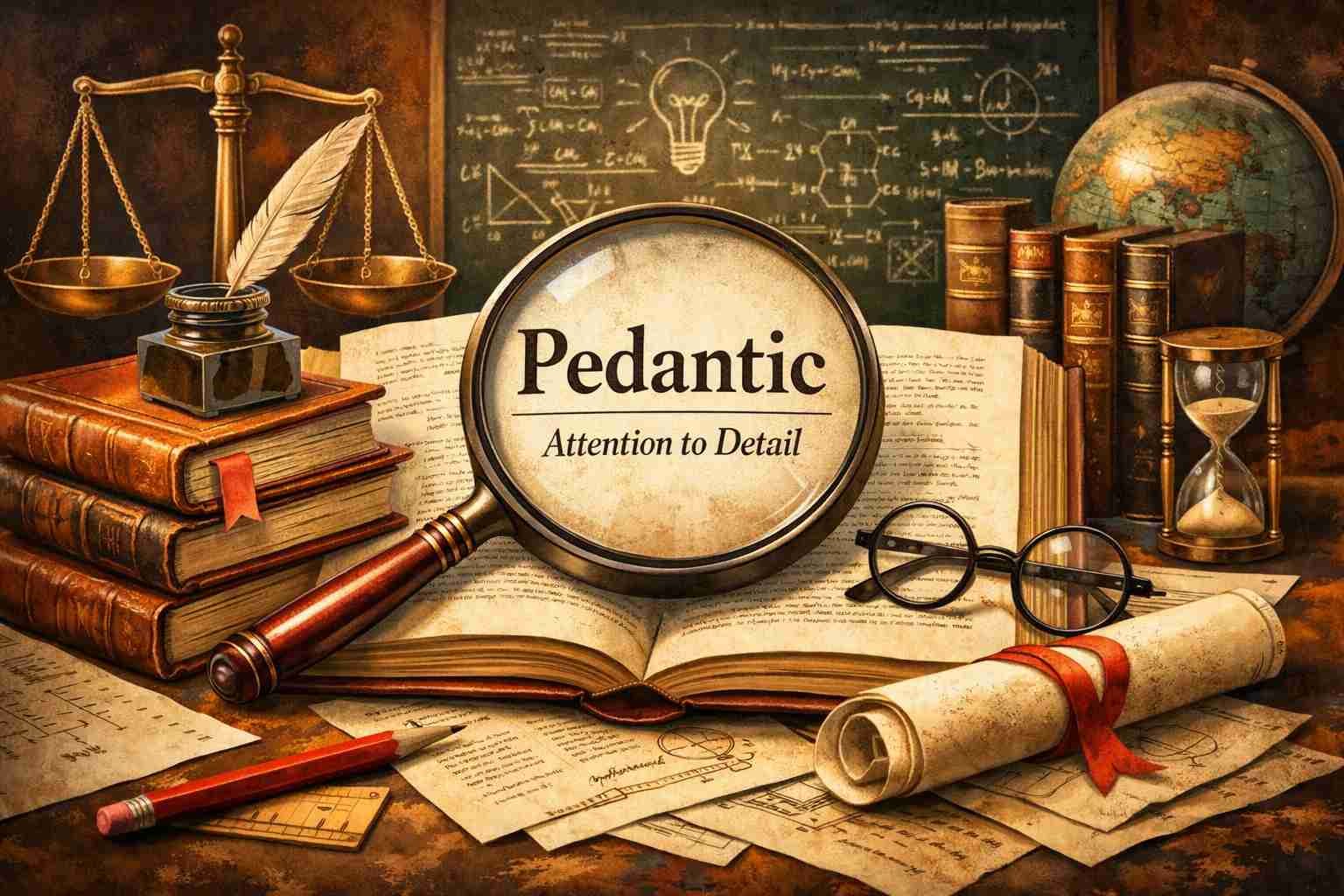
The word pedantic is often used in everyday conversations as an insult. People say someone is pedantic when they correct grammar unnecessarily, focus too much on minor details, or insist on strict rules even in casual settings. However, the real meaning of pedantic is much deeper and more important than how it is commonly perceived.
At its core, pedantic refers to a person who is overly concerned with formal rules, accuracy, and details—especially in teaching or explaining something. While this may sound negative, attention to detail is one of the foundations of knowledge, professionalism, and intellectual growth. Understanding the true value of being pedantic can completely change how we see precision and discipline in communication.
The Origin and Definition of Pedantic
The term pedantic comes from the Italian word pedante, which originally referred to a teacher. Over time, the meaning shifted to describe someone who focuses excessively on rules, minor details, or academic correctness. Today, dictionaries define pedantic as someone who emphasizes formal rules or trivial points of learning.
However, language evolves based on social attitudes. What was once a neutral description became negative because people began associating it with arrogance or unnecessary correction. Yet the definition itself does not inherently suggest wrongdoing. It simply describes an extreme focus on accuracy and formal knowledge.
To truly understand pedantic behavior, we must separate the behavior itself from the tone in which it is delivered. Precision is not the problem; attitude often is.
Why Precision and Detail Matter in Communication
Clear communication depends on accuracy. Small changes in wording can completely alter meaning. For example, in legal documents, the difference between “shall” and “may” determines whether something is mandatory or optional. In medical instructions, a single misplaced decimal point can lead to dangerous consequences.
What some people dismiss as pedantic attention to detail is often the reason serious mistakes are avoided. Precision ensures that everyone understands the same message. Without it, confusion spreads easily.
Even in daily life, misunderstandings often arise from vague language. Being careful with definitions, tone, and structure improves clarity and prevents unnecessary conflict.
Pedantic Thinking in Education
Education thrives on clarity and structured knowledge. Teachers must define terms clearly, explain rules precisely, and correct misunderstandings before they become habits. Without this structured approach, learning becomes inconsistent and unreliable.
Students who develop detail-oriented thinking perform better in analytical tasks. They learn to examine evidence, question assumptions, and organize information logically. These habits are often labeled pedantic by peers who prefer simplicity, but in reality, they build intellectual discipline.
Academic success depends on understanding exact meanings. In subjects like mathematics, science, and philosophy, one incorrect definition can collapse an entire argument or calculation. Precision is not optional—it is essential.
The Role of Pedantic Behavior in Professional Life
In professional environments, attention to detail protects reputations and ensures quality. Engineers must follow strict guidelines when designing structures. Accountants must calculate financial data accurately. Lawyers must interpret laws carefully.
Imagine an architect who ignores minor measurements because they seem trivial. Even a small miscalculation can weaken a building’s structure. What appears pedantic in conversation becomes lifesaving in practice.
Businesses rely on accuracy to maintain trust. Contracts, policies, and official statements require exact wording. Careless language can lead to legal disputes or financial losses. In this sense, pedantic precision becomes a professional strength.
The Difference Between Helpful and Harmful Pedantic Behavior
While precision is valuable, excessive correction in inappropriate settings can damage relationships. Correcting someone’s grammar in a casual chat, for example, may not improve understanding and might only create tension.
The key difference lies in purpose. If the goal is clarity and improvement, detail-oriented thinking is constructive. If the goal is to show superiority, it becomes harmful.
Being pedantic is most effective when applied thoughtfully. Context determines whether precision strengthens communication or disrupts it. Emotional intelligence must balance intellectual accuracy.
Pedantic Thinking and Critical Reasoning
Critical reasoning requires careful definition of terms. Many arguments fail because participants use the same words differently. When discussing topics like freedom, equality, or responsibility, precise definitions prevent confusion.
Detail-oriented thinkers question assumptions. They ask for clarification and evidence. This approach reduces misinformation and strengthens debate. In an era where information spreads rapidly online, careful examination is more important than ever.
Rather than dismissing such questioning as pedantic, society should recognize it as intellectual responsibility. Accuracy protects truth.
Language, Nuance, and Intellectual Integrity
Language carries layers of meaning. Words may appear similar but differ significantly in context. For example, “economic growth” and “economic development” are related but not identical concepts. Confusing them can mislead analysis.
A pedantic focus on language ensures that complex ideas remain accurate. Scholars, writers, and policymakers must carefully choose words to reflect intended meaning. Precision demonstrates intellectual integrity and respect for knowledge.
Without attention to nuance, oversimplification becomes common. Oversimplification may feel convenient, but it often distorts reality.
The Impact of Technology on Precision
Modern technology demands exact instructions. Computer programming languages require specific syntax. A single missing symbol can cause software failure. Machines interpret commands literally; there is no room for approximation.
Data analysis also depends on consistent definitions and categories. If variables are mislabeled or inconsistently recorded, results become unreliable.
In technological systems, what might be called pedantic accuracy is simply called correctness. The digital world operates on precise rules. Human communication benefits from similar discipline.
Psychological Perspective on Attention to Detail
Attention to detail reflects a cognitive style. Some individuals naturally analyze structure and patterns more deeply than others. This trait can enhance productivity and reduce errors.
However, excessive fixation on minor imperfections can slow progress. Balance is essential. The purpose of detail is to support understanding, not to paralyze decision-making.
Recognizing this balance allows individuals to use pedantic tendencies productively without becoming rigid or inflexible.
Reframing Pedantic as a Positive Trait
Society often celebrates creativity and spontaneity but underestimates discipline and precision. Yet progress in science, law, medicine, and engineering depends on careful documentation and rule-following.
Being pedantic is not inherently negative. It becomes valuable when combined with humility and context awareness. The person who double-checks facts, clarifies definitions, and insists on accuracy protects collective understanding.
Instead of mocking precision, we should recognize its contribution to reliability and trust.
Why the Word Pedantic Deserves a Second Look
Language shapes perception. Because pedantic is commonly used as criticism, people avoid being associated with it. Yet many of the world’s most respected professionals rely on the very qualities the word describes.
Perhaps the issue is not the trait itself but how it is expressed. Precision delivered respectfully enhances communication. Precision delivered arrogantly damages it.
Understanding this distinction allows us to appreciate detail-oriented thinking without encouraging unnecessary rigidity.
More Details : Snapchat Planets: Complete Guide to Order, Meaning, and How It Works
(FAQs)
1. What does pedantic mean in simple words?
Pedantic means paying too much attention to small details or formal rules, especially in teaching or correcting others.
2. Is being pedantic always a bad thing?
No. While it can seem annoying in casual settings, attention to detail is extremely valuable in academic, professional, and technical environments.
3. How can someone avoid sounding pedantic?
Focus on correcting only what truly affects understanding and choose respectful language when offering clarification.
4. Why is pedantic thinking important in professional life?
It prevents costly mistakes, ensures clarity in contracts and policies, and maintains high standards of accuracy.
5. Can pedantic behavior improve critical thinking?
Yes. Careful analysis of definitions, assumptions, and evidence strengthens logical reasoning and reduces misunderstandings.


12 Best Omegle Alternatives for Random Video Chat and Meeting New People

Dbxbqm Meaning: Why It Appears When You Try to Type YouTube

Immediate Loading Implants: How “Fixed Teeth in 48 Hours” Really Works

How UK Mobile Proxies Help Businesses Test Their Websites

Gen AI in Supply Chain: Using Supply Chain Benchmarks to Improve Performance

What Is the UK Theory Test? How It Works, Cost and Pass Mark

Weather the Storm: Why Totally Branded Umbrellas are the UK’s Most Appreciated Gift

How to Store, Wind, and Travel With Your Automatic Watch Collection Without Damaging It

What Do HubSpot Onboarding Services Include?

AI in Supply Chain: How AI Consulting Services Help Build More Intelligent and Resilient Operations
Immediate Loading Implants: How “Fixed Teeth in 48 Hours” Really Works
How UK Mobile Proxies Help Businesses Test Their Websites
Gen AI in Supply Chain: Using Supply Chain Benchmarks to Improve Performance
12 Best Omegle Alternatives for Random Video Chat and Meeting New People
Dbxbqm Meaning: Why It Appears When You Try to Type YouTube
12 Best Omegle Alternatives for Random Video Chat and Meeting New People
Dbxbqm Meaning: Why It Appears When You Try to Type YouTube
Immediate Loading Implants: How “Fixed Teeth in 48 Hours” Really Works
How UK Mobile Proxies Help Businesses Test Their Websites
Gen AI in Supply Chain: Using Supply Chain Benchmarks to Improve Performance
What Is the UK Theory Test? How It Works, Cost and Pass Mark
Weather the Storm: Why Totally Branded Umbrellas are the UK’s Most Appreciated Gift
How to Store, Wind, and Travel With Your Automatic Watch Collection Without Damaging It
What Do HubSpot Onboarding Services Include?
AI in Supply Chain: How AI Consulting Services Help Build More Intelligent and Resilient Operations
-

 Tech9 months ago
xxx is equal to 2022: A Complete Informative Explanation of a Cubic Equation
-

 Celebrity9 months ago
Izzie Balmer Partner: A Deep Dive into the Relationship with Will Hawley
-

 Entertainment9 months ago
The Artistic World of Gege Akutami: A Mastermind Behind Jujutsu Kaisen
-

 Food5 months ago
Best Sushi Rice Brands: A Complete Guide to Choosing the Right Rice for Sushi