
Lifestyle
Deal Breakers in a Relationship: What They Are and Why They Matter

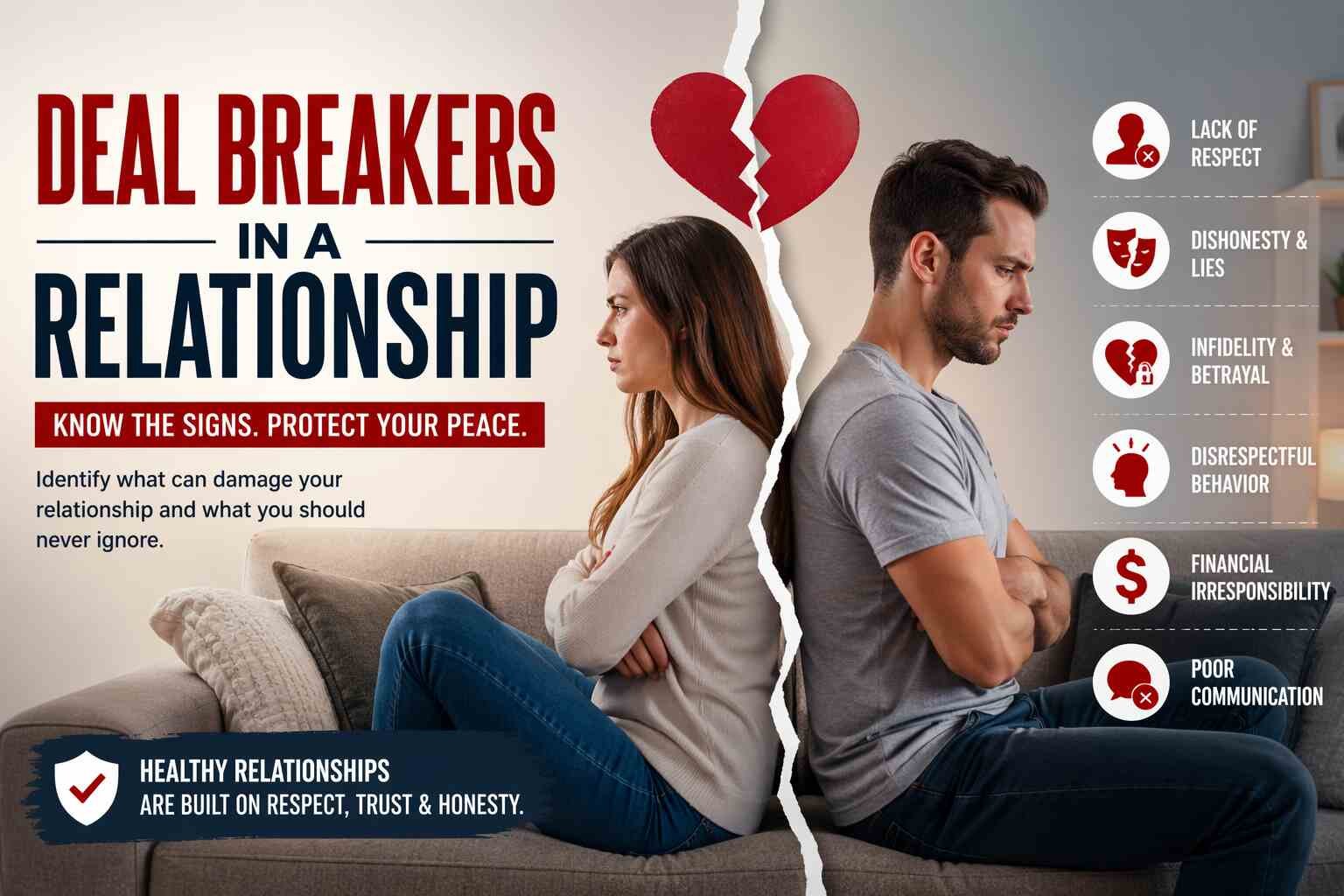
Every healthy partnership is built on trust, respect, communication, and shared values. While no relationship is perfect, there are certain behaviors or patterns that can seriously damage emotional connection and long-term stability. These are often called deal breakers in a relationship because they cross personal boundaries and make it difficult—or impossible—to maintain a healthy bond.
Understanding these warning signs can help people make better choices, protect their emotional well-being, and avoid staying in situations that cause harm. Deal breakers can be different for each person, depending on life goals, beliefs, and past experiences. However, some issues are widely recognized as serious concerns in most relationships.
This guide explains the most common relationship deal breakers, why they matter, and how to identify them early.
What Are Deal Breakers in a Relationship?
Deal breakers are behaviors, values, or habits that a person finds unacceptable in a romantic partnership. They are not small annoyances like leaving dishes in the sink or forgetting to text back quickly. Instead, they are deeper issues that affect trust, safety, respect, or long-term compatibility.
For one person, dishonesty may be the biggest problem. For another, lack of ambition or emotional unavailability may be impossible to accept. Knowing your deal breakers helps you set clear standards and choose relationships that support your happiness.
Lack of Trust and Constant Dishonesty
Trust is one of the most important foundations of love. Without it, relationships become stressful, confusing, and emotionally exhausting. If someone repeatedly lies, hides things, or breaks promises, trust slowly disappears.
Dishonesty can include lying about finances, cheating, secret communication with others, or giving false explanations. Even small lies can create doubt over time. When trust is damaged again and again, emotional security becomes hard to rebuild.
Many people consider dishonesty one of the biggest deal breakers in a relationship because honesty is essential for long-term stability.
Disrespect and Hurtful Behavior
Respect should exist in every stage of a relationship. It appears through kindness, listening, appreciation, and healthy communication. When disrespect becomes common, emotional connection often weakens quickly.
Examples include mocking a partner, insulting them during arguments, ignoring boundaries, embarrassing them publicly, or speaking in a controlling tone. Some people excuse this behavior as “just joking,” but repeated disrespect can deeply hurt self-esteem.
A loving relationship should feel safe and supportive, not humiliating or degrading.
Poor Communication and Emotional Shutdown
Strong communication does not mean never arguing. It means discussing problems honestly and respectfully. Couples who avoid difficult conversations often allow small issues to grow into major conflicts.
Poor communication may include silent treatment, refusing to listen, blaming instead of solving problems, or never expressing feelings clearly. Emotional shutdown can make one partner feel lonely even while in the relationship.
If conversations always turn into fights or avoidance, it may signal serious incompatibility.
Infidelity and Broken Loyalty
Cheating can damage trust more than almost any other issue. Whether physical or emotional, infidelity often leaves lasting emotional pain. Some couples recover through counseling and accountability, but many do not.
Loyalty means protecting the relationship even when challenges arise. Secret messaging, hidden dating apps, emotional affairs, or physical cheating can create deep betrayal.
For many people, betrayal is a non-negotiable boundary and one of the clearest deal breakers in a relationship.
Controlling or Manipulative Behavior
Healthy love allows both people to remain individuals. Control removes freedom and creates fear. Manipulation can be subtle at first, which makes it harder to recognize.
Examples include telling a partner what to wear, isolating them from friends, checking their phone, guilt-tripping them, or using emotions to control decisions. Some controlling partners disguise their behavior as care or protection.
True love supports independence and trust. Any pattern of manipulation should be taken seriously.
Different Core Values and Life Goals
Attraction alone cannot sustain a long-term relationship. Shared values often matter more over time than chemistry. When two people strongly disagree on major life topics, future conflict becomes likely.
Examples include opposing views on marriage, children, religion, finances, lifestyle, or where to live. These differences do not always end relationships, but if neither person can compromise, resentment may grow.
Compatibility in values often determines whether a couple can build a stable future together.
Abuse of Any Kind
Any form of abuse should be treated as a serious warning sign. Abuse may be emotional, verbal, physical, financial, or psychological. It can involve threats, intimidation, humiliation, or violence.
Sometimes abuse starts gradually, making it harder to identify. A partner may apologize repeatedly after harmful behavior, but patterns usually continue without professional intervention and real accountability.
No one should stay in a relationship where safety and dignity are being harmed.
Financial Irresponsibility
Money issues are one of the most common causes of relationship stress. While income level itself may not be the problem, irresponsibility often is.
Examples include excessive debt with no plan, secret spending, refusing to work without reason, gambling habits, or lying about finances. These behaviors can create instability and tension.
A healthy partnership requires honesty, teamwork, and responsible planning around money.
Lack of Effort and One-Sided Commitment
Relationships need care from both people. When one partner does all the emotional work while the other gives little effort, imbalance develops.
Signs include never initiating communication, avoiding responsibility, showing no interest in growth, or expecting constant support without giving any back. Over time, one-sided effort often leads to exhaustion and disappointment.
Mutual commitment helps both people feel valued and secure.
How to Identify Relationship Deal Breakers Early
Recognizing problems early can save time and emotional pain. Pay attention to patterns instead of excuses. Anyone can make mistakes, but repeated harmful behavior matters more than promises.
Watch how a person handles conflict, speaks about others, respects boundaries, and responds when they are wrong. Early dating stages often reveal important habits if you observe carefully.
Listening to your instincts can also be helpful. If something consistently feels wrong, it deserves attention.
Why Personal Boundaries Matter
Not every deal breaker is universal. Some people may tolerate habits that others cannot. That is why personal boundaries are important.
Knowing what matters most to you helps prevent confusion later. For example, one person may prioritize emotional openness, while another values financial discipline or family goals.
Clear boundaries are not selfish—they are healthy standards that protect emotional well-being.
Can Deal Breakers Be Resolved?
Some issues can improve if both partners are honest, committed, and willing to grow. Communication problems, emotional distance, or money habits may be repaired through effort and counseling.
However, repeated abuse, chronic dishonesty, or serious betrayal often require deeper reflection about whether the relationship is healthy to continue.
Change should be measured by consistent actions, not temporary promises.
Conclusion
Recognizing deal breakers in a relationship is not about expecting perfection. It is about understanding the difference between normal challenges and harmful patterns. Healthy relationships involve trust, respect, communication, shared effort, and emotional safety.
When these essentials are repeatedly missing, staying can lead to stress and heartbreak. Knowing your standards allows you to choose healthier connections and build a future based on mutual care.
The right relationship should add peace, support, and growth to your life—not constant pain and confusion.
More Details: What is a Toxic Relationship and How to Recognize It Early
FAQs
1. What are deal breakers in a relationship?
They are serious behaviors or values that make a healthy relationship difficult, such as dishonesty, abuse, or lack of respect.
2. Are deal breakers different for everyone?
Yes. Some are personal, while others—like abuse or cheating—are commonly considered unacceptable.
3. Can relationship deal breakers be fixed?
Some can improve through effort and counseling, but repeated harmful behavior often continues without real change.
4. Is poor communication a deal breaker?
It can be if problems are never discussed or resolved and one partner refuses to communicate.
5. Why is it important to know your boundaries?
Boundaries help you choose healthier relationships and avoid situations that damage your emotional well-being.

12 Best Omegle Alternatives for Random Video Chat and Meeting New People

Dbxbqm Meaning: Why It Appears When You Try to Type YouTube

Immediate Loading Implants: How “Fixed Teeth in 48 Hours” Really Works

How UK Mobile Proxies Help Businesses Test Their Websites

Gen AI in Supply Chain: Using Supply Chain Benchmarks to Improve Performance

What Is the UK Theory Test? How It Works, Cost and Pass Mark

Weather the Storm: Why Totally Branded Umbrellas are the UK’s Most Appreciated Gift

How to Store, Wind, and Travel With Your Automatic Watch Collection Without Damaging It

What Do HubSpot Onboarding Services Include?

AI in Supply Chain: How AI Consulting Services Help Build More Intelligent and Resilient Operations
Immediate Loading Implants: How “Fixed Teeth in 48 Hours” Really Works
How UK Mobile Proxies Help Businesses Test Their Websites
12 Best Omegle Alternatives for Random Video Chat and Meeting New People
Dbxbqm Meaning: Why It Appears When You Try to Type YouTube
12 Best Omegle Alternatives for Random Video Chat and Meeting New People
Dbxbqm Meaning: Why It Appears When You Try to Type YouTube
Immediate Loading Implants: How “Fixed Teeth in 48 Hours” Really Works
How UK Mobile Proxies Help Businesses Test Their Websites
Gen AI in Supply Chain: Using Supply Chain Benchmarks to Improve Performance
What Is the UK Theory Test? How It Works, Cost and Pass Mark
Weather the Storm: Why Totally Branded Umbrellas are the UK’s Most Appreciated Gift
How to Store, Wind, and Travel With Your Automatic Watch Collection Without Damaging It
What Do HubSpot Onboarding Services Include?
AI in Supply Chain: How AI Consulting Services Help Build More Intelligent and Resilient Operations
-

 Tech9 months ago
xxx is equal to 2022: A Complete Informative Explanation of a Cubic Equation
-

 Celebrity9 months ago
Izzie Balmer Partner: A Deep Dive into the Relationship with Will Hawley
-

 Entertainment9 months ago
The Artistic World of Gege Akutami: A Mastermind Behind Jujutsu Kaisen
-

 Food6 months ago
Best Sushi Rice Brands: A Complete Guide to Choosing the Right Rice for Sushi