
Tech
Understanding ELK Stack: Key Components and Benefits for Data Analysis

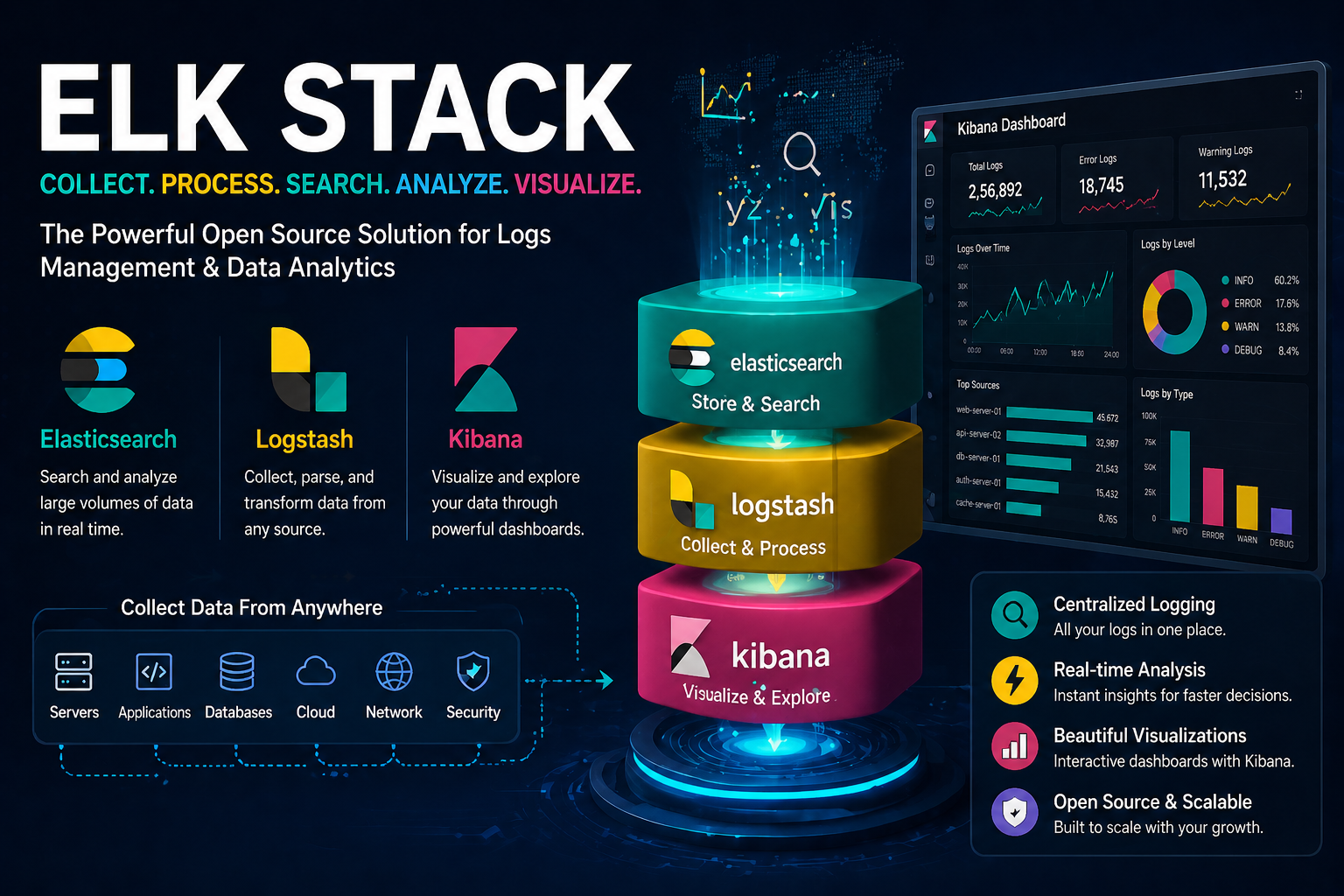
The ELK Stack has become a crucial tool for many businesses and developers looking to manage, analyze, and visualize large amounts of data. By combining Elasticsearch, Logstash, and Kibana, the ELK Stack allows organizations to monitor their systems in real-time, gain valuable insights from logs, and make data-driven decisions. In this article, we will break down the ELK Stack’s components, its benefits, and why it’s a preferred solution for data management and analysis.
What is the ELK Stack?
The ELK Stack is a powerful suite of tools that combines three open-source products: Elasticsearch, Logstash, and Kibana. These components work together seamlessly to provide a comprehensive solution for managing and analyzing data. The term “ELK” refers to these three tools, but over time, the stack has evolved and integrated other components such as Beats, making it even more versatile.
Each of the three core components serves a distinct function in the stack:
- Elasticsearch: This is the engine that stores, searches, and analyzes data.
- Logstash: This tool is responsible for ingesting and transforming data into the right format for Elasticsearch.
- Kibana: This component provides a user-friendly interface for visualizing and analyzing data from Elasticsearch.
Together, these tools help users collect, search, and visualize large sets of data, especially logs and metrics, in real-time.
Elasticsearch: The Heart of the ELK Stack
Elasticsearch is a distributed search and analytics engine that allows users to store, search, and analyze large volumes of data quickly and in near real-time. It is based on Apache Lucene, a high-performance search library, and is built to handle massive amounts of data efficiently.
Elasticsearch works by storing data in a format that allows for fast querying. Data is indexed, which makes searches incredibly quick, even with very large datasets. This indexing is crucial when dealing with logs, metrics, and other time-series data.
In addition to basic search functionality, Elasticsearch also supports advanced features like full-text search, complex querying, and aggregation. These features make it particularly useful for log analysis, where users often need to search through vast amounts of unstructured data to find specific events or trends.
Logstash: Data Processing and Transformation
Logstash is responsible for collecting, processing, and transforming data before it is stored in Elasticsearch. It acts as a data pipeline, pulling data from various sources, transforming it into the required format, and sending it to Elasticsearch for storage and indexing.
Logstash supports a wide range of input sources, including logs, metrics, and databases, and can process data in various formats, such as JSON, CSV, or plain text. It also includes powerful filters for transforming data, such as parsing log files, removing unnecessary fields, or enriching data with additional information.
Logstash is highly extensible, with a vast number of plugins available for integration with other systems and services. This flexibility makes it a key component of the ELK Stack, as it can handle data from diverse sources and ensure that it is properly formatted and ready for analysis.
Kibana: Visualizing Data in Real-Time
Once data is stored and indexed in Elasticsearch, Kibana comes into play. Kibana is the visualization layer of the ELK Stack, providing an intuitive user interface for exploring and visualizing data. Users can create dashboards, charts, and graphs that represent the data in an easily digestible format.
Kibana allows users to perform advanced analytics on their data by using Elasticsearch queries. The interface makes it easy to filter, sort, and visualize data, which is especially useful when monitoring systems or applications in real-time.
One of the most popular use cases for Kibana is log analysis. With Kibana, users can monitor logs in real-time, track performance metrics, and quickly identify issues or anomalies in their systems. Kibana’s interactive dashboards make it easy for users to drill down into specific data points, gaining deeper insights into the health and performance of their infrastructure.
The Benefits of the ELK Stack for Data Management
The ELK Stack provides numerous advantages for organizations that need to manage and analyze large volumes of data. Here are some of the key benefits of using the ELK Stack:
- Real-Time Data Analysis: The ELK Stack is designed for real-time data processing. Elasticsearch’s powerful search capabilities, combined with Logstash’s data processing and Kibana’s visualization tools, enable businesses to monitor their systems in real-time and quickly respond to issues as they arise.
- Scalability: The ELK Stack is highly scalable, making it suitable for organizations of all sizes. As data volumes grow, Elasticsearch can scale horizontally by adding more nodes to the cluster, ensuring that performance remains high even as the data set expands.
- Customizable Dashboards: Kibana’s dashboarding capabilities allow users to customize their views based on the data they care about most. This flexibility makes it easier for users to monitor specific metrics or logs, tailoring the dashboard to their needs.
- Comprehensive Data Integration: The ELK Stack can integrate with various data sources, such as application logs, network logs, and system metrics. This ability to pull data from multiple sources allows businesses to get a complete view of their operations and infrastructure.
- Open-Source and Cost-Effective: As an open-source solution, the ELK Stack is free to use and has a large community of developers contributing to its improvement. This makes it an attractive option for businesses that need powerful data management tools without the hefty price tag.
ELK Stack Use Cases
The ELK Stack is widely used across various industries for different purposes. Some of the most common use cases include:
- Log Management and Analysis: The ELK Stack is highly effective for log management. It allows organizations to collect logs from various systems and applications, process them with Logstash, and then analyze them using Kibana’s visualizations.
- Application Performance Monitoring: Many businesses use the ELK Stack to monitor the performance of their applications in real-time. By collecting and analyzing metrics, teams can identify bottlenecks, errors, and performance issues before they affect end users.
- Security Monitoring: The ELK Stack is also used for security information and event management (SIEM). By collecting security-related logs and analyzing them with Elasticsearch and Kibana, security teams can detect anomalies, intrusions, or other malicious activities in their systems.
- Business Intelligence: In addition to its IT and security use cases, the ELK Stack is also used for business intelligence (BI). Organizations can collect and analyze business data, such as sales figures, customer behavior, and marketing campaign performance, to make informed decisions.
ELK Stack Challenges and Considerations
While the ELK Stack offers numerous benefits, there are some challenges and considerations to keep in mind:
- Complex Setup and Management: Setting up the ELK Stack can be complex, especially when scaling it for large data volumes. Proper configuration and tuning are required to ensure optimal performance.
- Storage and Hardware Requirements: Elasticsearch can require significant storage and hardware resources, especially as data volumes grow. Businesses need to ensure they have adequate infrastructure in place to handle large-scale data ingestion and storage.
- Learning Curve: Although Kibana provides an intuitive interface, there can still be a learning curve for new users, particularly when working with complex queries and visualizations.
- Data Retention: Since the ELK Stack can process massive amounts of data, businesses need to implement proper data retention strategies to avoid storing unnecessary data for too long, which can lead to storage issues.
- More Details : Monitoring and Logging: A Comprehensive Guide to Enhancing System Reliability
(FAQs)
1. What is the ELK Stack used for?
The ELK Stack is used for collecting, processing, storing, and analyzing large amounts of data in real-time. It’s commonly used for log management, application monitoring, security monitoring, and business intelligence.
2. What is the difference between Logstash and Elasticsearch?
Logstash is responsible for collecting and processing data, while Elasticsearch is the search engine that stores and indexes the data for quick retrieval and analysis.
3. Can Kibana visualize data from other sources besides Elasticsearch?
Kibana is primarily designed to work with data stored in Elasticsearch. However, it can integrate with other systems through plugins or by using tools like Beats, which send data to Elasticsearch.
4. Is the ELK Stack free?
Yes, the ELK Stack is open-source and free to use. However, there are commercial versions available through Elastic (the company behind the ELK Stack) that offer additional features and support.
5. How scalable is the ELK Stack?
The ELK Stack is highly scalable. Elasticsearch can scale horizontally by adding more nodes, ensuring that it can handle increased data volumes as your needs grow.
In conclusion, the ELK Stack is an incredibly powerful tool for businesses and developers looking to manage and analyze large amounts of data. Whether it’s used for log analysis, monitoring, or business intelligence, the combination of Elasticsearch, Logstash, and Kibana provides a flexible and scalable solution that can meet a wide range of data management needs. With its open-source nature and robust features, the ELK Stack continues to be a go-to choice for organizations around the world.

How to Store, Wind, and Travel With Your Automatic Watch Collection Without Damaging It

What Do HubSpot Onboarding Services Include?

AI in Supply Chain: How AI Consulting Services Help Build More Intelligent and Resilient Operations

Hungary Dental Tourism: Quality Dental Care at Affordable Prices

Timur Turlov: A Vision for the Future of Global Chess

Meaningful Ways to Memorialise a Beloved Pet After Loss

Understanding Jerking Movements: An Ayurvedic Perspective

Are You Saving Enough for Retirement? Key Benchmarks by Age

Timur Turlov: A Visionary Leader Transforming Modern Finance

5 Ways a Probate Attorney Can Help When Estate Documents Are Missing
What Do HubSpot Onboarding Services Include?
Timur Turlov: A Vision for the Future of Global Chess
Meaningful Ways to Memorialise a Beloved Pet After Loss
Hungary Dental Tourism: Quality Dental Care at Affordable Prices
AI in Supply Chain: How AI Consulting Services Help Build More Intelligent and Resilient Operations
How to Store, Wind, and Travel With Your Automatic Watch Collection Without Damaging It
How to Store, Wind, and Travel With Your Automatic Watch Collection Without Damaging It
What Do HubSpot Onboarding Services Include?
AI in Supply Chain: How AI Consulting Services Help Build More Intelligent and Resilient Operations
Hungary Dental Tourism: Quality Dental Care at Affordable Prices
Timur Turlov: A Vision for the Future of Global Chess
Meaningful Ways to Memorialise a Beloved Pet After Loss
Understanding Jerking Movements: An Ayurvedic Perspective
Are You Saving Enough for Retirement? Key Benchmarks by Age
Timur Turlov: A Visionary Leader Transforming Modern Finance
5 Ways a Probate Attorney Can Help When Estate Documents Are Missing
-

 Tech8 months ago
xxx is equal to 2022: A Complete Informative Explanation of a Cubic Equation
-

 Celebrity7 months ago
Izzie Balmer Partner: A Deep Dive into the Relationship with Will Hawley
-

 Entertainment8 months ago
The Artistic World of Gege Akutami: A Mastermind Behind Jujutsu Kaisen
-

 Entertainment7 months ago
Semana Santa 2026: Dates, Traditions, and Global Celebrations