
Tech
The Ultimate Guide to Literary Devices: Exploring the Tools of Writing

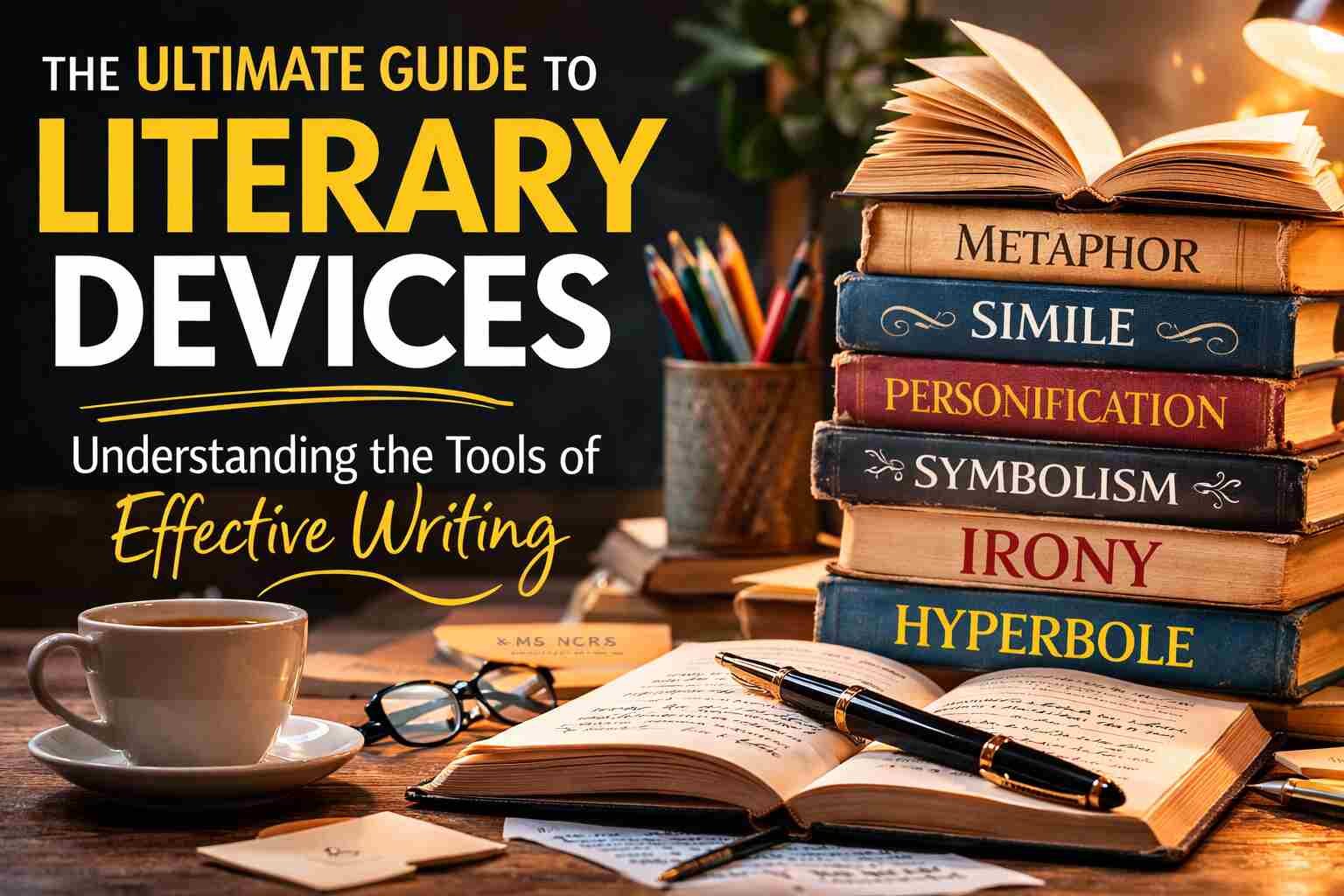
Literary devices are fundamental tools used by writers to enhance their work and make their messages more compelling, evocative, and memorable. Whether you’re a writer, reader, or student, understanding these devices can drastically improve your appreciation of literature. This comprehensive guide will explore various literary devices, their definitions, and how they are used to create richer, more engaging content.
What Are Literary Devices?
Literary devices are techniques that writers use to convey their messages and add depth to their work. These tools can help readers understand the themes, emotions, and ideas presented in a piece of writing. From symbolism to metaphors, literary devices enhance the aesthetic appeal and meaning of a text.
While some literary devices are simple and easy to recognize, others may be subtle, requiring a deeper understanding of language and structure. Writers often rely on literary devices to create imagery, evoke emotions, establish rhythm, and deepen the meaning of their stories.
Types of Literary Devices
Below, we’ll dive into some of the most common literary devices and provide examples to help you grasp their meaning and usage.
1. Metaphor: Connecting Ideas
A metaphor is one of the most frequently used literary devices. It compares two things without using “like” or “as.” Instead, a metaphor implies that one thing is another, creating a more direct and vivid connection.
Example: “Time is a thief.”
In this metaphor, time is being equated to a thief, suggesting that it takes away moments in life without literally being a thief.
Metaphors can evoke powerful emotions by connecting an abstract idea with something concrete. They are often used in poetry and fiction to create striking images.
2. Simile: Comparison with Clarity
A simile is a literary device that compares two different things using the words “like” or “as.” Unlike metaphors, similes make comparisons explicit, allowing the reader to understand the likeness between two concepts.
Example: “Her smile was as bright as the sun.”
This simile uses “as” to compare the brightness of the woman’s smile to the sun, making it easier for readers to imagine the intensity of her smile.
Similes are frequently used to make descriptions more vivid and relatable. They can describe people, places, emotions, or actions, helping readers visualize scenes more clearly.
3. Alliteration: Repetition of Sounds
Alliteration is the repetition of the same consonant sound at the beginning of closely connected words. This device can create rhythm, reinforce meanings, and add emphasis.
Example: “She sells seashells by the seashore.”
This is a classic example of alliteration, where the “s” sound is repeated to create a rhythmic effect.
Alliteration is often used in poetry and advertising, as it can make phrases catchy and memorable. It’s also useful for creating a certain tone, whether playful or serious.
4. Personification: Giving Life to Objects
Personification is the literary device in which human qualities are attributed to non-human things. Writers use this device to bring inanimate objects or abstract concepts to life, allowing readers to relate to them emotionally.
Example: “The wind whispered through the trees.”
In this sentence, the wind is given the human characteristic of “whispering,” which adds an element of mystery and depth to the description.
Personification is common in poetry, as it helps convey emotions and atmosphere. It can also create stronger visual images that evoke particular feelings.
5. Symbolism: Layers of Meaning
Symbolism is the use of symbols to represent ideas or qualities beyond their literal meaning. A symbol often has multiple interpretations, which can add layers of meaning to a piece of writing.
Example: A dove is often used as a symbol of peace.
The dove is not just a bird but represents peace and harmony, making it a powerful tool in writing to convey deeper concepts.
Writers use symbolism to add depth to their stories and make their messages more thought-provoking. Common symbols include colors, animals, and objects.
6. Irony: The Unexpected Twist
Irony is a literary device that presents a contrast between expectations and reality. It often involves a situation where the outcome is the opposite of what was anticipated, leading to surprise or humor.
Example: A fire station burns down.
The irony here is that a fire station, a place designed to protect against fires, is destroyed by one.
Irony can be used for various purposes, including humor, emphasis, or to highlight the absurdity of a situation.
7. Hyperbole: Exaggeration for Effect
Hyperbole is a device used to exaggerate a statement or description to emphasize its importance or create a dramatic effect. While hyperbole is not meant to be taken literally, it serves to convey strong emotions or an extreme reaction.
Example: “I’ve told you a million times!”
This hyperbole exaggerates the number of times the speaker has told something to emphasize their frustration.
Hyperbole is often used in everyday speech and literature to exaggerate experiences, emotions, or actions for effect.
8. Allusion: A Reference to Something Else
Allusion is a literary device that references another piece of literature, person, event, or cultural artifact. It draws connections between the text at hand and other well-known works or historical events, enriching the reader’s understanding.
Example: “He was a real Romeo with the ladies.”
This allusion refers to William Shakespeare’s Romeo and Juliet, using the character Romeo to suggest that someone is a passionate lover.
Allusions are used to add depth and context to a text by relying on the reader’s existing knowledge.
9. Onomatopoeia: Sound Words
Onomatopoeia refers to words that mimic the natural sounds they represent. These words bring a more sensory experience to the text, allowing readers to hear the action.
Example: “The clock tick-tocked through the night.”
The words “tick-tocked” mimic the sound of the clock’s movement.
Onomatopoeia is frequently used in both poetry and prose to enhance the sensory experience and make the description more vivid.
How Literary Devices Enhance Writing
Literary devices are essential tools for writers because they elevate the quality of writing. Here’s why they matter:
- Clarity and Precision: Literary devices help writers convey complex ideas in an easily understandable way.
- Emotional Impact: They can evoke strong emotional responses from the reader by creating vivid imagery or drawing attention to key themes.
- Engagement: The use of literary devices keeps readers engaged by introducing variety and enhancing the rhythm and flow of writing.
By using these devices, writers can add layers of meaning and make their work more interesting and impactful.
Conclusion
Understanding literary devices is crucial for anyone who wants to improve their writing or appreciate the depths of a text. These tools allow writers to create rich, multi-dimensional work that speaks to the emotions, thoughts, and imagination of their readers. Whether you are crafting your own stories or analyzing existing works, knowing how to identify and use literary devices will significantly enhance your reading and writing experience.
More Details : What Does “Tralalero Tralala” Mean? Unpacking the Mystery
FAQs About Literary Devices
- What is a literary device?
A literary device is a tool used by writers to enhance their writing. These include techniques like metaphors, similes, personification, and others that help convey ideas more effectively. - How do literary devices improve writing?
Literary devices improve writing by adding depth, clarity, emotional impact, and engagement. They help make complex ideas more accessible and give the text a rhythmic and meaningful flow. - Can literary devices be used in everyday language?
Yes, many literary devices are used in everyday speech and writing, including metaphors, similes, and hyperbole. They help convey meaning and create emphasis in our communication. - What is the difference between a metaphor and a simile?
A metaphor directly compares two things by stating one thing is the other, while a simile uses “like” or “as” to compare two things. - Are literary devices only used in fiction?
No, literary devices can be found in all types of writing, including poetry, essays, speeches, and even advertisements, helping to enhance their appeal and effectiveness.

Immediate Loading Implants: How “Fixed Teeth in 48 Hours” Really Works

How UK Mobile Proxies Help Businesses Test Their Websites

Gen AI in Supply Chain: Using Supply Chain Benchmarks to Improve Performance

What Is the UK Theory Test? How It Works, Cost and Pass Mark

Weather the Storm: Why Totally Branded Umbrellas are the UK’s Most Appreciated Gift

How to Store, Wind, and Travel With Your Automatic Watch Collection Without Damaging It

What Do HubSpot Onboarding Services Include?

AI in Supply Chain: How AI Consulting Services Help Build More Intelligent and Resilient Operations

Hungary Dental Tourism: Quality Dental Care at Affordable Prices

Timur Turlov: A Vision for the Future of Global Chess
How to Store, Wind, and Travel With Your Automatic Watch Collection Without Damaging It
What Is the UK Theory Test? How It Works, Cost and Pass Mark
Weather the Storm: Why Totally Branded Umbrellas are the UK’s Most Appreciated Gift
Gen AI in Supply Chain: Using Supply Chain Benchmarks to Improve Performance
How UK Mobile Proxies Help Businesses Test Their Websites
Immediate Loading Implants: How “Fixed Teeth in 48 Hours” Really Works
Immediate Loading Implants: How “Fixed Teeth in 48 Hours” Really Works
How UK Mobile Proxies Help Businesses Test Their Websites
Gen AI in Supply Chain: Using Supply Chain Benchmarks to Improve Performance
What Is the UK Theory Test? How It Works, Cost and Pass Mark
Weather the Storm: Why Totally Branded Umbrellas are the UK’s Most Appreciated Gift
How to Store, Wind, and Travel With Your Automatic Watch Collection Without Damaging It
What Do HubSpot Onboarding Services Include?
AI in Supply Chain: How AI Consulting Services Help Build More Intelligent and Resilient Operations
Hungary Dental Tourism: Quality Dental Care at Affordable Prices
Timur Turlov: A Vision for the Future of Global Chess
-

 Tech8 months ago
xxx is equal to 2022: A Complete Informative Explanation of a Cubic Equation
-

 Celebrity8 months ago
Izzie Balmer Partner: A Deep Dive into the Relationship with Will Hawley
-

 Entertainment8 months ago
The Artistic World of Gege Akutami: A Mastermind Behind Jujutsu Kaisen
-

 Food5 months ago
Best Sushi Rice Brands: A Complete Guide to Choosing the Right Rice for Sushi